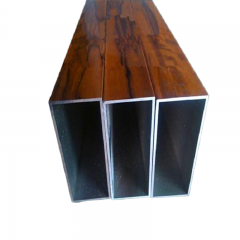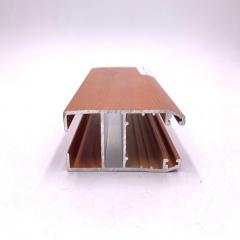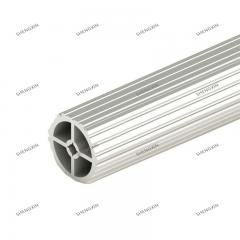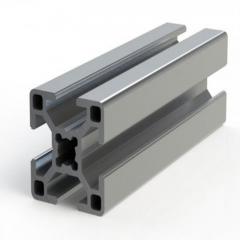
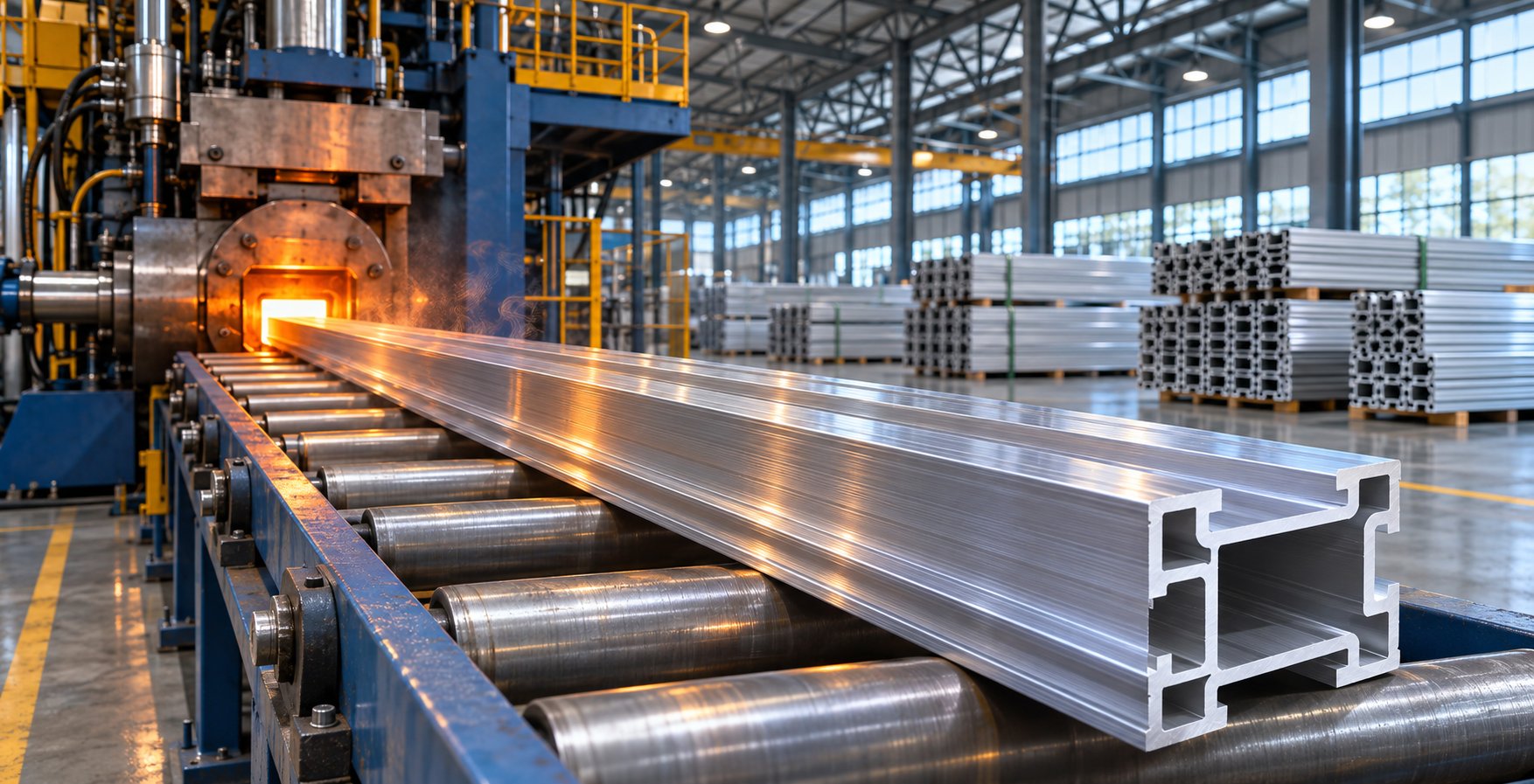
Have you ever compared two quotes for the same profile and wondered why one is nearly double the other? Many buyers run into this. They start with a per-kg metal price in mind, and then the final invoice surprises them. The fix starts with a clear definition of what you are actually paying for.
Aluminum extrusion cost is the total delivered cost of a profile: metal plus conversion, tooling, finishing, fabrication, packaging, and freight.
The aluminum price on a commodity exchange is only the starting point. Every press hour, die, coating, cut, crate, and truck mile adds its own layer. A simple mill-finish bar and a machined, anodized part can be made from the same alloy and still carry very different price tags.
Extruded aluminum is quoted in layers, and suppliers bundle those layers differently. One quote may list metal, die, and anodizing as separate lines. Another may roll everything into a single per-kg rate. Industry guidance from Clinalu notes that two profiles with the same weight can have different prices, because geometry, tolerances, and finishing change the work involved. Consultants at Vulcan Extrusions describe aluminum pricing as having two personalities: metal and conversion. When you blend the two together, it becomes hard to see where your money goes.
Imagine two suppliers quoting the same plain channel. One price includes freight to your dock, and the other is ex-works. The gap you see per kg may have nothing to do with extrusion skill.
Some people searching this topic want to know what old aluminum extrusion is worth at the scrap yard. That is a different question. Scrap value follows its own market, driven by local yards and recycling demand, so check current scrap yard pricing for that answer. This article focuses on buying new custom and stock profiles.
The sections ahead follow a simple decode-your-quote framework. You will break the price into its layers, see which layers move with the market, and convert them into a per-part number you can budget against. That process starts by putting every layer on one page, from ingot to delivered profile.
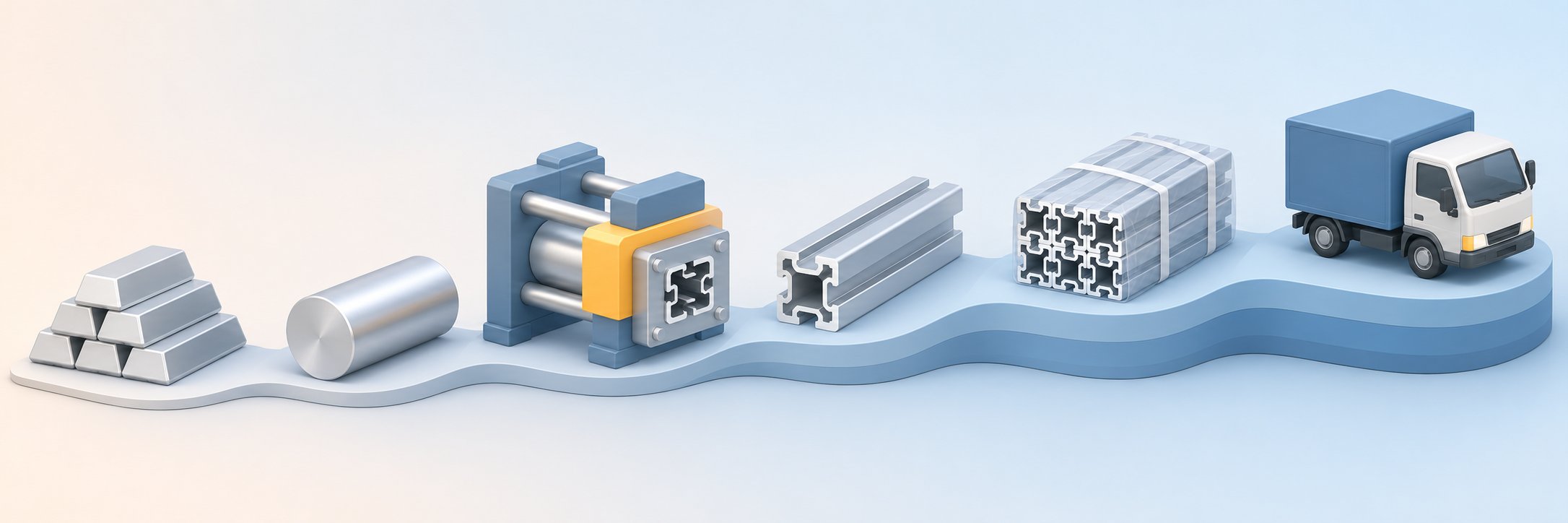
Ask five people what drives the price of aluminum extrusions and you may get five partial answers. One points to the metal exchange. Another blames the die. A third mentions anodizing. They are all partly right. Most online pricing guides do the same thing and cover only one or two cost elements. Here, you'll see the whole chain in one place.
Every quote starts with the metal. The London Metal Exchange sets the global benchmark for primary P1020 aluminum ingot. Buyers in Asia often reference the Shanghai Futures Exchange (SHFE) instead. A regional premium sits on top of that index. In the US, this is the Midwest Premium. It reflects the real cost of getting metal into the North American market, including tariffs, logistics, and supply tightness. Independent price assessors survey actual transactions to set it, so it is a market price, not a supplier markup.
Extruders don't push raw ingot through a die. They use billet, which is a cast log made in a specific alloy such as 6063 or 6061. The billet premium covers that casting and alloying step. The conversion fee is the extruder's own charge for the extrusion of aluminium into your shape. It pays for press time, setup, heat treatment, stretching, cutting, and process yield. This is the layer where geometry and tolerances show up most.
A new custom profile needs its own die. Clinalu describes the die as normally a separate, one-time tooling charge, though some suppliers spread it across the first run. Finishing, such as anodizing or powder coating, and fabrication, such as drilling, tapping, and CNC machining, are recurring adders. They often depend on surface area or feature count rather than weight.
Long profiles need protective film, paper interleaving, crates, or export pallets. Delivery terms matter too. An ex-works price and a delivered price do not cover the same service, so check the Incoterm before you compare two numbers.
| Cost Component | What It Represents | How It Is Usually Quoted | Who Controls It |
|---|---|---|---|
| Ingot price (LME/SHFE index) | Exchange price for primary aluminum | Per kg, per lb, or per tonne | Global metal market |
| Regional premium (e.g., Midwest Premium) | Cost of delivering metal into a regional market | Per lb or per tonne | Regional market assessment |
| Billet premium | Casting ingot into alloy-specific billet | Per kg or per lb | Billet caster or extruder |
| Conversion/extrusion fee | Press time, setup, heat treatment, yield | Per kg or per lb | Extruder |
| Die cost or amortization | Tooling that forms the cross-section | Lump sum or spread per piece | Extruder or die shop |
| Finishing (anodizing, powder coating) | Surface treatment and pretreatment | Per kg, per piece, or by surface area | Finisher |
| Fabrication/machining | Cutting, drilling, milling, assembly | Per piece | Fabricator or extruder |
| Packaging | Film, interleaving, crates, pallets | Per piece, per bundle, or lump sum | Supplier, based on buyer spec |
| Freight | Transport under the agreed delivery term | Lump sum or per shipment | Carrier and negotiated Incoterm |
Put together, the full formula for aluminum profile extrusion looks like this:
Total = (Metal Index + Regional Premium + Billet Premium + Conversion Fee) x Total Weight + Die Cost + Finishing + Fabrication + Packaging + Freight
You'll notice the bracketed terms scale with weight, while the rest scale with parts, area, or shipments. A heavy, plain bar is dominated by metal. A light, machined, anodized part may be dominated by everything after the brackets. Those bracketed terms don't behave alike, either. The metal index and regional premium shift with every trading session, while a conversion fee can hold steady for months. That split is exactly why a quote that looked firm last month may not match the one on your desk today.
Have you ever asked a supplier to reissue a quote a few weeks later, only to find the number had changed even though your drawing hadn't? The supplier isn't necessarily doing anything wrong. Most aluminum extrusion price quotes are built to move, at least in part, with the metal market.
In an index-linked quote, the metal portion floats. It tracks an exchange benchmark such as LME or SHFE, plus the regional and billet premiums stacked on top. The LME Official Price is widely used as the indexation reference in primary and secondary aluminum contracts. The conversion fee, by contrast, usually stays fixed for an agreed period. Picture a moving floor with a steady layer sitting on top of it.
Some suppliers take a different route. They quote one all-in price, then add a metal surcharge when the index rises above a set baseline. Either way, the result is similar. You carry the market risk on the metal, and the extruder carries the risk on its own processing costs.
Aluminum trades every business day. Energy costs, supply disruptions, and currency swings all push the index up or down. An extruder that promised a fixed price for months would be betting its margin on the market. That is why many aluminium extrusion quotes stay valid for only a limited window. Once that window closes, the metal line is repriced against the current index, while the conversion line often stays put.
Published figures can help you sanity-check a quote, as long as you read them carefully. Manufacturer Ya Ji Aluminum published a typical range of $2.50-$3.80 per kg for standard extruded aluminium. The same source listed domestic production in India at INR 160-250 per kg, or roughly $2.00-$3.00 at the exchange rate used at the time. It also noted that region, order size, alloy, and surface treatment all shift where a project lands within that range.
Treat any published per-kg range as a dated snapshot tied to the metal index on the day it was written, not as current pricing.
If the index has moved since publication, the benchmark has moved with it. Always verify current figures before you build a budget around them.
To keep quotes comparable over time, you can take a few simple steps:
Splitting the lines reveals something else, too. Some costs never touch the index at all. The die is the clearest example. You pay for it once, it doesn't float with the market, and yet published die prices vary far more widely than the metal ever does.
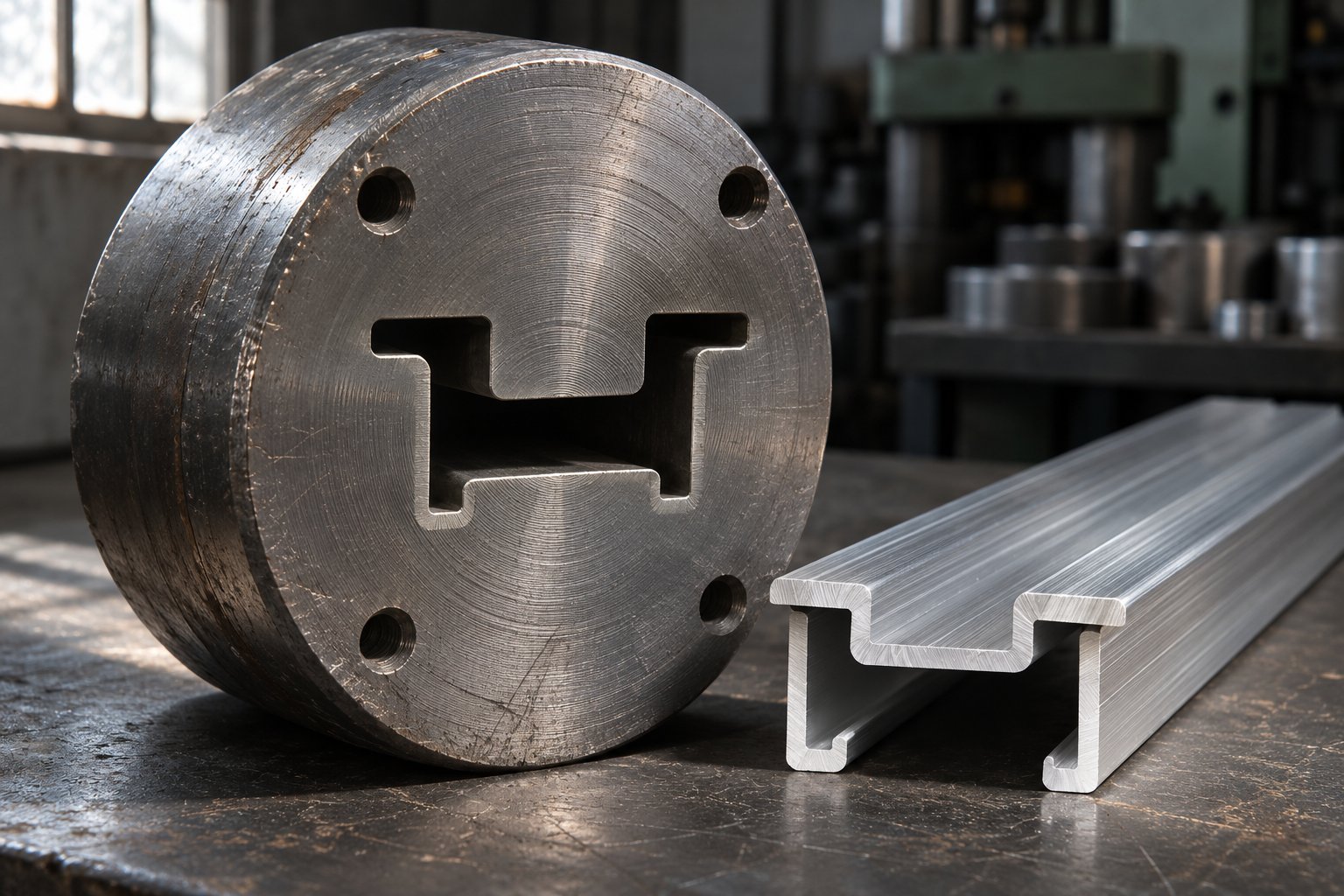
When a tooling line shows up on your first custom quote, it can feel like a mystery fee. Is the amount fair? Will you pay it again next year? Who keeps the die when the run is over? Aluminum extrusion dies are actually one of the easier costs to understand once you know which questions to ask.
Several extruders publish their tooling ranges openly. Keep in mind that these are published ranges, not quotes. Your actual number depends on your drawing, your alloy, and the press that will run it.
| Source | Published Range | Context |
|---|---|---|
| Gabrian | $400-$2,000 | $400-$1,000 for typical architectural and industrial dies; up to $2,000 for large parts run on 2,000-4,000 ton presses |
| Profile Precision Extrusions | $1,250-$1,950 | About $1,250 for solid dies and $1,950 for hollow dies; complex or multi-hollow dies up to $5,000; includes 20-30 feet of sample extrusions |
| American Douglas Metals | Under $1,000 for many profiles | Published estimate for common, less complex profiles |
Why would one shop charge $400 and another nearly five times that? The answer usually sits in four variables:
Imagine a small solid angle next to a wide heat sink with deep fins. Both are custom profiles, yet the aluminium extrusion die cost for each can sit at opposite ends of the published ranges.
Paying for a die does not always mean you control it. Gabrian reports that some manufacturers refund tool costs if a stipulated volume is purchased within two years. It also notes that most do not charge for replacement dies after their useful life, as long as orders continue. That matters because aluminium extrusion dies wear out over time.
Some suppliers skip the upfront charge and spread tooling across the unit price instead. That is convenient, but it can hide what you have paid. The law firm Harris Sliwoski warns that unitemized tooling on imported goods can become part of the customs value, so duties may apply to it. The firm also advises settling ownership terms before paying any tooling costs.
Before you sign off on a tooling charge, raise these questions:
A die charge can look large on its own line. Spread across a long production run, though, its share of each part may shrink to a small fraction of the total. How small depends on the part's weight, cut length, and quantity, the same inputs that turn a per-kg rate into a real per-part price.
Your quote lists a price per kg. Your bill of materials lists a few dozen rails cut to a set length. How do you connect the two? Sounds complex, but it only takes a handful of multiplications once you know what the profile weighs.
An extrusion has the same cross-section along its entire length, so its weight per meter never changes. Most supplier data sheets and catalogs of extruded aluminum sizes list this figure directly, as kg/m or lb/ft. If yours doesn't, multiply the cross-sectional area by the density of aluminum, which is roughly 2,710 kg/m3. Use the actual metal area, not the outer envelope. A hollow square aluminum extrusion weighs far less than a solid bar with the same outside dimensions, because only the walls count. Your CAD software can usually report that area for you.
Watch the units. Catalog t slot aluminum, such as a 1010 aluminum extrusion, is often listed in lb/ft. One lb/ft equals about 1.488 kg/m, so convert before you pair it with a per-kg rate.
Multiply the weight per meter by the combined metal-plus-conversion rate, and you have a price per meter. The same logic works in imperial units: lb/ft times price per lb gives price per foot. Just never mix a metric weight with an imperial price.
Follow these five steps:
Per-Part Cost = (W x L x P) + F + M + (D + T) / Q
One catch: the billed length can be longer than L. Saw kerf, end trim, and leftovers from fixed mill lengths all consume metal you still pay for. Some suppliers bill full stock lengths, while others add a cut-off allowance per piece. Ask which method your quote uses, and swap in the billed length if it differs.
Plug in the figures from your own quote, not a published average, and every line of the formula becomes something you can verify.
Look closely at that last term, though. Q sits underneath the die and freight. Double the quantity and those shares shrink by half. Cut it sharply, and they can swallow the savings from a lower per-kg rate.
That Q in the denominator explains a lot of supplier behavior. Why should an extruder care whether you order 50 pieces or 5,000? Because some of the work costs the same either way.
Every run carries fixed effort. The die has to be mounted and heated, the press brought up to temperature, trial pushes checked, and the anodizing or powder coating line changed over. None of that shrinks for a small order. Suppliers recover it in two common ways. A minimum order quantity (MOQ) sets the smallest order they will accept. A setup charge, sometimes labeled a short-run or small-batch adder, applies when an order falls below a stated volume.
So "no minimums" doesn't always mean "no extra cost." Taber Extrusions, for example, separates having no mill minimums from setup adders on orders below stated volumes. A buyer's guide from JiurunCut suggests asking three things about any such line: what triggers it, which operation it covers, and when it repeats. It might apply per profile, per finish, or per release.
Imagine a flat setup charge spread across a run. Double the accepted parts, and each part's share drops by half. Die cost behaves the same way. Volume tiers simply formalize this math. A supplier quotes one unit rate for small batches, then lower rates as quantity crosses set breakpoints, and sometimes a separate rate for blanket orders with scheduled releases. Confirm whether each tier is measured in pieces, length, or weight, and whether different profiles or finishes can be combined to reach it. Just don't let a lower per-piece share push you into buying stock you don't need.
Stock aluminum extrusions skip the die and most run-specific setup, but they cost more per pound. One engineering reference listed typical custom minimums of 500-2,000 lb and put premium t-slot profiles at a higher per-lb rate than raw custom 6061. It concluded custom only paid off above roughly 2,000 lb. Treat those figures as a dated snapshot, not current pricing.
| Criteria | Stock Extrusions (e.g., Standard T-Slot) | Custom Profiles |
|---|---|---|
| Tooling requirement | None; uses existing catalog dies | New die, or modification of an existing one |
| Typical order flexibility | Single bars or cut pieces often available | MOQs or setup adders common on short runs |
| Design freedom | Limited to catalog shapes and sizes | Cross-section built around your application |
| Cost at low volume | Usually lower total cost | Die and setup dominate unit cost |
| Cost at high volume | Premium per-kg rate keeps adding up | Fixed costs fade; lower metal rate wins |
Searching for the aluminum extrusion t-slot best price? Compare total delivered cost, not the catalog unit price. Cutting fees, connectors, machining, and freight on long lengths can easily erase a cheaper per-foot rate.
Run length decides how thinly fixed costs are spread. The shape on your drawing decides how large those costs are to begin with.
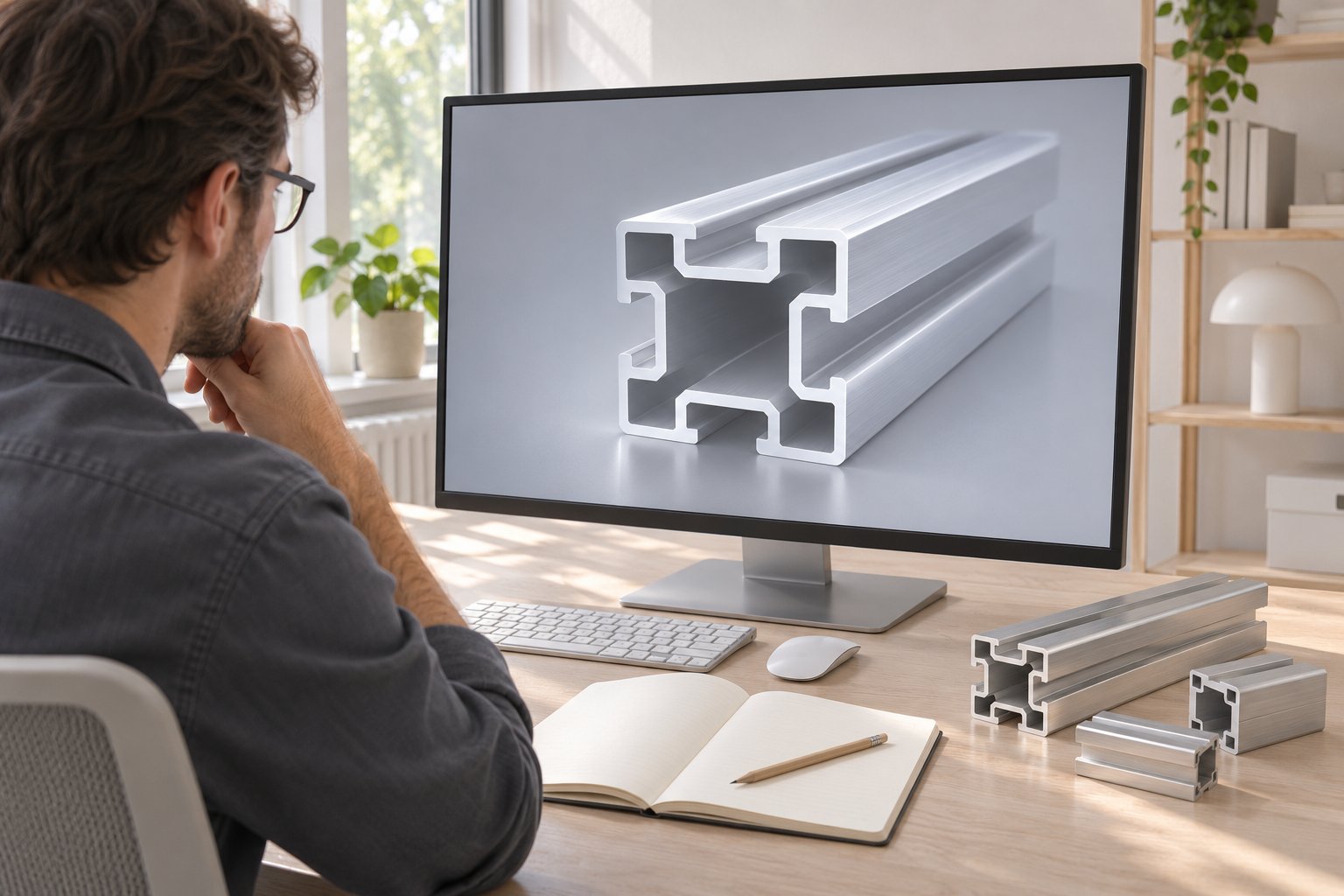
When you finalize a drawing, you also lock in much of the price. The metal index will move no matter what you do. The shape of your aluminum extrusion profile is different. It decides how fast the profile runs, which die it needs, and how much work happens after the press. Extruders' own design guides make the same point: a small tweak to a profile can noticeably improve extrudability and lower cost.
Before you redesign anything, sort the levers by who actually holds them:
Size comes first. The Aluminum Extruders Council notes that extrusions are most economical within a CCD of one to ten inches, and that profiles under 8 inches reduce costs significantly. Large aluminum extrusions need big presses, and only a few extruders can run CCDs as large as 32 inches. Small aluminum extrusions face a different limit. Very light, thin-walled shapes can run slowly and generate more scrap. That's why wide structural aluminum extrusions are sometimes split into two narrower profiles that snap or bolt together.
| Design Decision | Cost Component Affected | Why |
|---|---|---|
| Uniform wall thickness | Conversion fee (press speed and scrap) | Thick sections next to thin ones cause uneven metal flow, twist, and slower press speeds. Even walls with gradual transitions run faster with less scrap. |
| Hollow versus solid | Die type and die cost | Hollow dies use mandrels and bridge tooling that cost more to make and maintain. Deep, narrow channels also create fragile die tongues. |
| CCD size | Press size and die cost | A larger circle needs a bigger press and die, and fewer shops can run it. |
| Tight tolerances | Inspection and scrap rate | Every unnecessary tight limit adds inspection time, rejected parts, and sometimes a machining step. |
| 6000-series alloy selection | Extrudability and conversion fee | Alloys such as 6063 and 6061 extrude readily. Harder alloys typically run slower, which raises conversion rates. |
| Ribs and webs | Weight versus stiffness | Ribs add stiffness without thickening the whole section, so you pay for less metal by weight. |
| Integrating features to eliminate secondary machining | Fabrication adders | A feature built into the die is paid for once in tooling, not on every part. |
Over-tolerancing is one of the most common drawing mistakes. One extrusion design guide points out that most profiles can be made to the Aluminum Association's standard tolerances without extra cost. It suggests reserving tighter limits for dimensions that affect fit or function. The same guide recommends 6063 for the best anodized appearance and 6061 when strength matters more than finish.
Then look along the length. Any feature that runs the full profile, such as a screw boss, T-slot, or locating groove, can usually move into the die. Another manufacturability guide notes that cutting downstream fabrication often saves more than trimming raw material.
Tie every line on your drawing to a cost component, and ask whether it earns its place.
Every lever above quietly assumes that someone else owns the press, the die shop, and the anodizing line. At very high, steady volumes, some teams start to question that assumption and wonder what owning the equipment would really cost.
When your yearly tonnage keeps climbing, a tempting thought shows up. Why not buy a press and make the profiles yourself? Before you price an aluminium extrusion machine, it helps to see what a working plant really involves. The press is only the most visible piece.
A press alone doesn't produce finished profiles. A complete line also needs billet heating, run-out and cooling tables, a puller, a stretcher, a saw, an aging oven, and a die shop with its own die oven. Finishing lines, a long hall, heavy power and gas connections, skilled labor, and quality systems come on top.
Equipment supplier AluMachinery puts machinery for a first 1,000-ton line at roughly EUR 250,000-450,000 ex-works. It estimates that a complete first plant lands between about EUR 0.35 million and 1.8 million, before the building itself. At the larger end, ARZIR lists press prices from $250,000 to more than $2,500,000 for high-tonnage, fully integrated lines. These are published indicative ranges, so treat any aluminium extrusion plant price as a starting estimate, not a quote.
The machine quote is the easy part. Both sources estimate that freight, duties, foundations, and commissioning can add 15-30% on top of equipment. Dies are a recurring cost, and AluMachinery describes a starting library of 20-50 dies as a five-figure position. You'll also need working capital for billet stock and several months of ramp-up losses while recovery rates improve. A two-shift, one-press plant typically needs 20-35 people, including an experienced press foreman and a die corrector. The road from signed contract to steady output often runs 12-18 months.
| Option | Capital Requirement | Die Development | Finishing Scope | Flexibility | Time to First Parts |
|---|---|---|---|---|---|
| Outsourced custom extrusion (e.g., Shengxin Aluminium) | No press investment; you pay tooling and per-part pricing | Handled by the supplier as part of the production workflow | Uses the supplier's lines, such as anodizing and powder coating | Change profiles or volumes without idle equipment; MOQs apply | Die build and sampling lead time |
| In-house production | Equipment, site works, dies, and working capital | Requires your own die shop and die correction skills | Limited to the finishing lines you buy and house | Full scheduling control, but fixed costs run whether the press is busy or not | Often 12-18 months from contract |
For most OEMs, outsourcing turns that capital into a per-part cost. Shengxin Aluminium's custom aluminum extrusion services are one example. They combine drawing review, alloy selection, die development, extrusion, machining, and finishing in one workflow, so tooling is part of the project rather than a separate purchase. Common alloys include 6061, 6063, and 6005A, with anodizing and powder coating available. Minimum order quantities are set through project review. Consolidating steps also matters. Alexandria Industries notes that juggling several suppliers means more purchase orders, timelines, and invoices to manage.
In-house production can still make sense. If you have very high, steady volumes, a captive product line, and the right staff, owning the press may pay off. ARZIR cites a 3-5 year payback target in high-volume environments. A half-idle press, though, only adds to the cost of an aluminum extrusion plant without lowering your part price.
For everyone else, the real cost lever is the supplier you pick. And how well that supplier can price your part depends on what you send and how closely you read what comes back.

A quote can only be as accurate as the request behind it. If you send a rough sketch and a guessed quantity, the supplier has to fill the gaps with assumptions. Those assumptions usually come with padding. You might be sourcing an aluminum extrusion frame for a machine base or a run of heat sink profiles. Either way, a complete request package gets you numbers you can actually compare.
The buyer checklist from Thomasnet covers much the same ground. Include these items:
When the quotes arrive, set them side by side and check every line:
If a line is missing, ask whether that cost is included or was simply left out. A low total that doesn't include freight will not stay low once the shipment is invoiced.
Many aluminum extrusions for sale come from distributor stock. For a custom profile, though, you are choosing a manufacturer, so judge each one on evidence:
Wondering where to buy manufactured profiles? Shengxin Aluminium's custom aluminum extrusion services are one example to measure against these criteria. You can submit drawings, quantities, and finish specs for a project-specific quotation, and you can request material certificates or inspection reports. Applications include automation equipment, machine frames, heat sinks, electronic enclosure profiles, solar mounting, and window and curtain wall components. The stated ±0.05 mm tolerance applies only to selected profiles, depending on geometry, alloy, and wall thickness. For enclosure projects, confirm the profile design, machining, and assembly scope early.
Run the same checks on stock options. If your extruded aluminum framing could be built from catalog t slot aluminum framing, quote that route as well. Then compare both options on the same delivered basis.
Compare total delivered cost, not per-kg price, because the cheapest metal rate means little once tooling, finishing, and freight reach the invoice.
There is no single per-kg price, because a quote stacks several layers: the LME or SHFE metal index, a regional premium, a billet premium, and the extruder's conversion fee. Finishing, machining, tooling, packaging, and freight then sit on top. One manufacturer published a typical range of $2.50-$3.80 per kg for standard profiles, but treat any published figure as a dated snapshot tied to the metal index on the day it was written. To get a usable number, ask your supplier which index and pricing date the quote uses, how long it stays valid, and whether metal and conversion are shown as separate lines. That split tells you whether a later price change came from the market or from the supplier.
Published tooling ranges from several extruders cluster roughly between $400 and $2,000 for many profiles. Solid dies sit at the lower end, hollow dies cost more, and complex multi-hollow designs can go higher. The main price drivers are the circumscribing circle diameter (CCD), solid versus hollow construction, profile complexity, and the press size needed to run it. Ownership is a separate question from payment. Before paying a tooling charge, confirm in writing who owns the die, whether it can move to another extruder, whether any refund applies after a volume threshold, and who pays for a replacement once the die wears out. Also ask whether tooling is billed separately or built into the unit price, since bundled tooling is harder to track and can affect customs value on imports.
Start with the profile weight per meter (W), taken from the supplier data sheet or calculated as metal cross-sectional area times aluminum density. Multiply W by the billed cut length (L) and by the combined metal-plus-conversion rate (P). Then add per-part finishing (F) and machining (M), plus a share of die cost (D) and freight (T) divided by order quantity (Q). The working formula is Per-Part Cost = (W x L x P) + F + M + (D + T) / Q. Check units carefully, because catalog profiles are often listed in lb/ft while quotes may be per kg. Also confirm whether your supplier bills the exact cut length, full mill lengths, or adds a cut-off allowance, since saw kerf and end trim consume metal you still pay for.
At low volumes, stock t-slot profiles usually win on total cost because they use existing catalog dies, carry no tooling charge, and are often sold as single bars or cut pieces. Their weakness is a higher per-kg or per-lb rate that keeps adding up as quantities grow. Custom profiles reverse that pattern: the die and setup charges dominate small orders, but those fixed costs spread thinner on long runs, and the lower metal rate eventually takes over. Custom shapes can also build in features like screw bosses or slots, cutting machining and connector costs. The practical approach is to quote both routes on the same delivered basis, including cutting fees, hardware, machining, and freight, rather than comparing catalog unit prices alone.
For most OEMs, outsourcing is the lower-risk path. A working extrusion plant needs far more than a press: billet heating, pullers, stretchers, saws, aging ovens, a die shop, finishing lines, heavy utilities, skilled staff, and quality systems, plus a ramp-up period that often stretches beyond a year. Outsourcing converts that capital into a per-part price. Custom extrusion suppliers such as Shengxin Aluminium handle drawing review, alloy selection, die development, extrusion, machining, and finishing in one workflow, commonly in 6061, 6063, and 6005A with anodizing or powder coating, and set minimum order quantities through project review. In-house production mainly makes sense for very high, steady volumes with a captive product line and experienced press and die staff, since an underused press raises costs instead of lowering them.



 Інтернет-сервіс
 0086 136 3563 2360
 sales@sxalu.com
 +86 136 3563 2360
 Українська
 English
 français
 Deutsch
 русский
 español
 português
 العربية
 ไทย
 Việt