Search for t6 aluminum, and most readers are really looking for 6061-T6. That shortcut is common, but it mixes up two different ideas: alloy chemistry and temper condition. Getting that distinction right helps with search intent, prevents buying mistakes, and sets realistic expectations for machining, bending, and welding.
T6 is a temper designation, not an aluminum alloy, and it describes material that has been solution heat treated and artificially aged.
That definition matches technical explanations from Kloeckner and Xometry. In plain terms, T6 tells you the aluminum was processed to become stronger and harder. It does not tell you which alloy family you have.
If you are asking what is 6061 aluminum, you are asking about the alloy itself. If you are asking what is 6061 t6 aluminum, you are asking about that alloy in a strengthened temper. That difference matters because two products can share the same alloy number but behave differently in the shop.
Most searches land on 6061-t6 because it is one of the most commonly requested versions of 6061 and is widely used in structural applications, welded assemblies, electronics, and general industrial parts, as described by Kloeckner. Buyers usually want its well-known balance of strength, corrosion resistance, machinability, and weldability.
Still, asking for 6061 t6 or 6061-t6 is far safer than asking for T6 alone. One term points to a complete material designation. The other only names the temper. That small wording change shapes everything from quoting to fabrication planning, especially once the heat-treatment path behind T6 comes into focus.
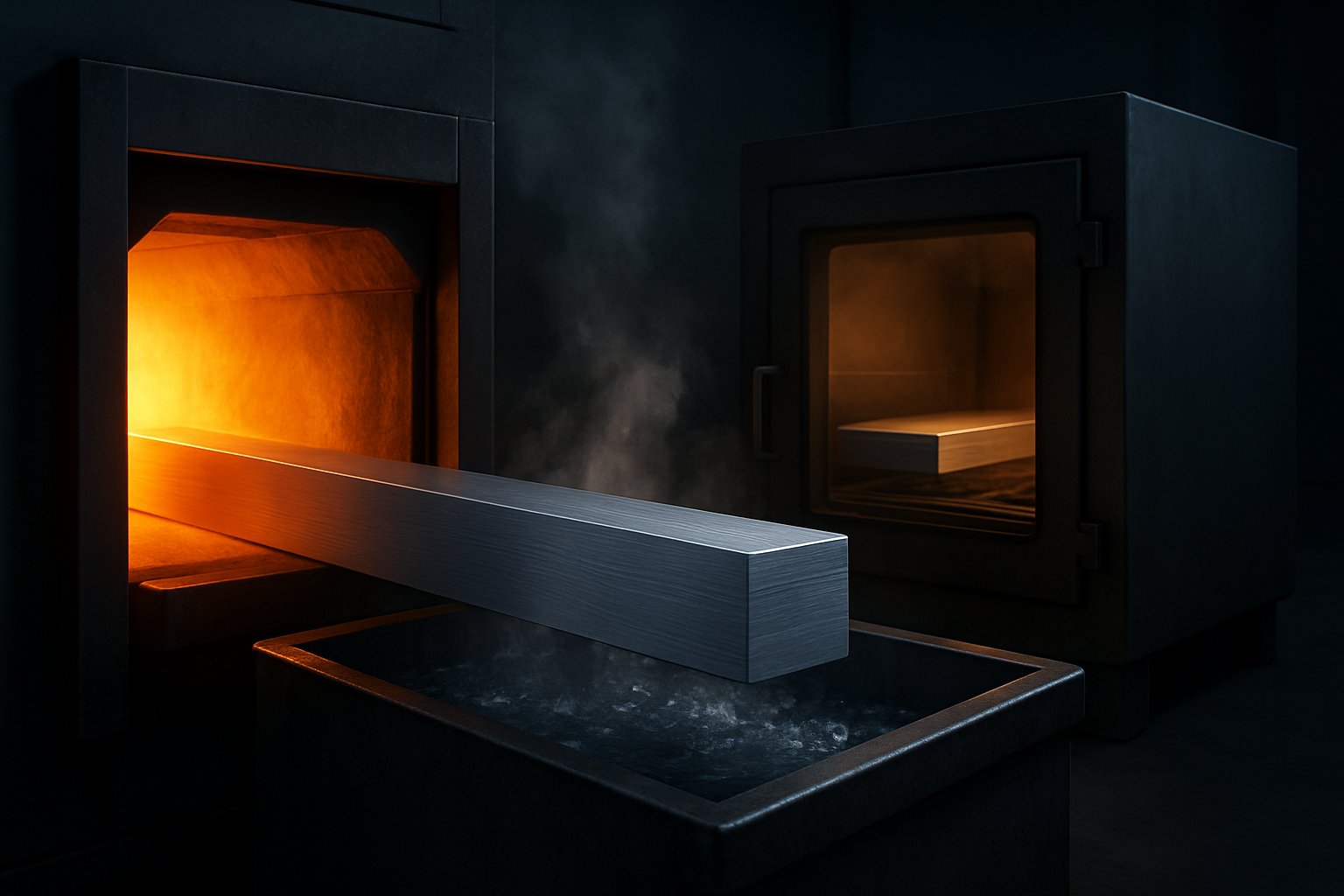
What buyers and fabricators often miss is that the temper label points to a process, not just a performance claim. When a print calls for material 6061 t6, it is specifying 6061 after a controlled heat-treatment route that makes the alloy noticeably stronger and harder than softer 6061 tempers.
For aa 6061 t6, the path is well established in technical references from Jeelix and fabrication guidance from The Fabricator. In simple terms, the alloy is first heated high enough to dissolve key alloying elements into a uniform solid solution, then rapidly cooled, and finally reheated at a lower temperature to develop its full temper.
This sequence is the reason different 6061 tempers can behave so differently even when the alloy number stays the same.
Artificial aging is where many familiar 6061 t6 properties really come from. Jeelix describes the formation of fine magnesium silicide precipitates that restrict dislocation movement in the metal. In plain language, the structure becomes more resistant to permanent deformation. That is why alloy 6061 t6 offers higher strength and hardness than annealed 6061.
When someone searches a6061 t6 properties, this is the hidden story behind the numbers: the chemistry stays 6061, but the heat treatment changes how that chemistry performs.
The shop-floor tradeoff appears quickly during bending. The same precipitation hardening that improves strength also reduces ductility. The guidance from The Fabricator is blunt: 6061-T6 is notoriously difficult to bend, and forming in an annealed state before retempering is often the safer route when tight bends are required.
T6 improves strength and hardness, but it also makes 6061 less forgiving when you try to bend it aggressively.
That tradeoff is central to choosing material 6061 t6. The temper makes the alloy more useful for load-bearing and machined parts, yet less cooperative in forming. Those process-driven changes become much clearer when the composition and property data are laid out in one place.
Here is the reference view behind the temper story. For readers comparing 6061 t6 aluminum properties or broader 6061 aluminum properties, the table below pulls typical chemistry and property data from MatWeb, AZoM, and United Aluminum. These are useful guide values, but they are still typical datasheet numbers, not automatic design allowables for every product form.
| Category | Item | Typical value or limit | Why it matters |
|---|---|---|---|
| Composition | Al | Remainder, about 95.8-98.6 wt.% | Base metal of the alloy |
| Composition | Mg | 0.8-1.2 wt.% | Major strength contributor in 6xxx alloys |
| Composition | Si | 0.40-0.80 wt.% | Works with Mg to enable heat treatment response |
| Composition | Cu | 0.15-0.40 wt.% | Supports strength development |
| Composition | Cr | 0.04-0.35 wt.% | Helps control structure and balance properties |
| Composition | Fe | 0.70 wt.% max | Controlled impurity limit |
| Composition | Mn | 0.15 wt.% max | Minor alloying limit |
| Composition | Zn | 0.25 wt.% max | Minor alloying limit |
| Composition | Ti | 0.15 wt.% max | Minor alloying limit |
| Physical | Density | 2.7 g/cm3 | Low weight for structural parts |
| Mechanical | Ultimate tensile strength | 310 MPa | Maximum pull before fracture |
| Mechanical | Yield strength | 276 MPa | Point where permanent deformation begins |
| Mechanical | Elongation at break | 12-17% | Quick view of ductility |
| Mechanical | Brinell hardness | 95 | Resistance to indentation |
| Mechanical | Elastic modulus | 68.9 GPa | Stiffness under load |
| Mechanical | Fatigue strength | 96.5 MPa | Reference point for repeated loading |
The chemistry explains why 6061 behaves the way it does. Magnesium and silicon are the core pair. They are the reason this 6xxx alloy responds well to heat treatment and reaches the T6 condition. Copper and chromium help tune strength and overall balance, while iron, zinc, titanium, and other residual elements are kept within tight limits. When engineers compare aa 6061 material properties, that Mg-Si foundation is usually the first thing worth noticing.
This is also why different datasheets can look slightly different at first glance. Composition is listed as ranges or maximum limits, while mechanical values are often reported as typical test results for a certain form or thickness.
For non-engineers, three numbers do most of the heavy lifting. Yield strength tells you when a part starts to bend permanently. Tensile strength tells you how much load it can take before it breaks. Elongation tells you how much stretch or ductility remains. Hardness adds another clue, especially for wear and machining feel.
The density of 6061 aluminum is typically 2.7 g/cm3, which is one reason it is popular when low weight matters. Meanwhile, young's modulus for aluminum 6061 t6 is about 68.9 GPa. That modulus number is about stiffness, not ultimate strength. In simple terms, it helps tell you how much a part will flex before it ever gets close to failing.
Read together, these aluminum 6061 t6 material properties give a balanced picture rather than a single verdict. The most useful lesson is that aluminum 6061 material properties are interconnected: chemistry shapes temper response, and the resulting numbers shape real fabrication choices. On the shop floor, those values turn into machining behavior, bend limits, fastener confidence, corrosion decisions, and finish performance.
Datasheet numbers start to matter the moment a cutter touches the stock or a bracket sees real load. Typical values gathered by Jeelix and Rapid Protos place the yield strength of 6061 T6 around 240 to 276 MPa, the tensile strength of aluminum 6061 T6 around 290 to 310 MPa, and the hardness of 6061 T6 aluminum around 95 HB or slightly higher depending on product form and source. Those 6061 T6 mechanical properties explain why the alloy is so common in machined structural parts, yet noticeably less forgiving when a job depends on heavy forming.
In the shop, 6061 T6 aluminum yield strength is not just a catalog number. It marks the point where a part stops springing back and starts staying bent, crushed, or permanently distorted. That matters for clamped fixtures, bolted brackets, threaded holes, and machine bases. The moderate hardness also helps the material machine more cleanly than softer, gummy aluminum grades. Fabrication guidance from Rapid Protos notes that sharp carbide or HSS tools, plus adequate cooling, help limit adhesion and support a smoother finish.
The yield stress of 6061 T6 aluminum becomes a drawback when the part needs sharp or repeated bending. T6 gains strength by giving up ductility, so it is less formable than T4 or O temper. Put simply, 6061 T6 yield strength helps parts resist deformation in service, but that same resistance makes the metal less willing to bend during fabrication.
If formability drives the job, choosing the strongest temper first can raise scrap risk instead of real performance.
Service life adds another layer. 6061 has good general corrosion resistance in normal atmospheric exposure, yet fatigue design still deserves caution. Jeelix notes that aluminum alloys do not have a true fatigue limit, and corrosive environments can shorten life sharply because pits become stress concentrators. Smooth geometry, controlled surface finish, drainage, and conservative loading matter just as much as raw strength numbers.
6061 is widely chosen because it responds well to anodizing. The surface finishing overview at Rapid Protos highlights why: anodizing thickens the oxide layer, improving corrosion resistance, surface durability, and appearance. For outdoor frames, housings, and frequently handled parts, that is a practical advantage. Hard anodizing is especially useful when the base alloy's wear resistance is not enough by itself.
Surface finishing can protect 6061-T6, but it cannot preserve T6-level behavior everywhere heat later enters the part.
That distinction becomes impossible to ignore once a weld is added, because the parent metal and the zone beside the joint no longer behave the same way.
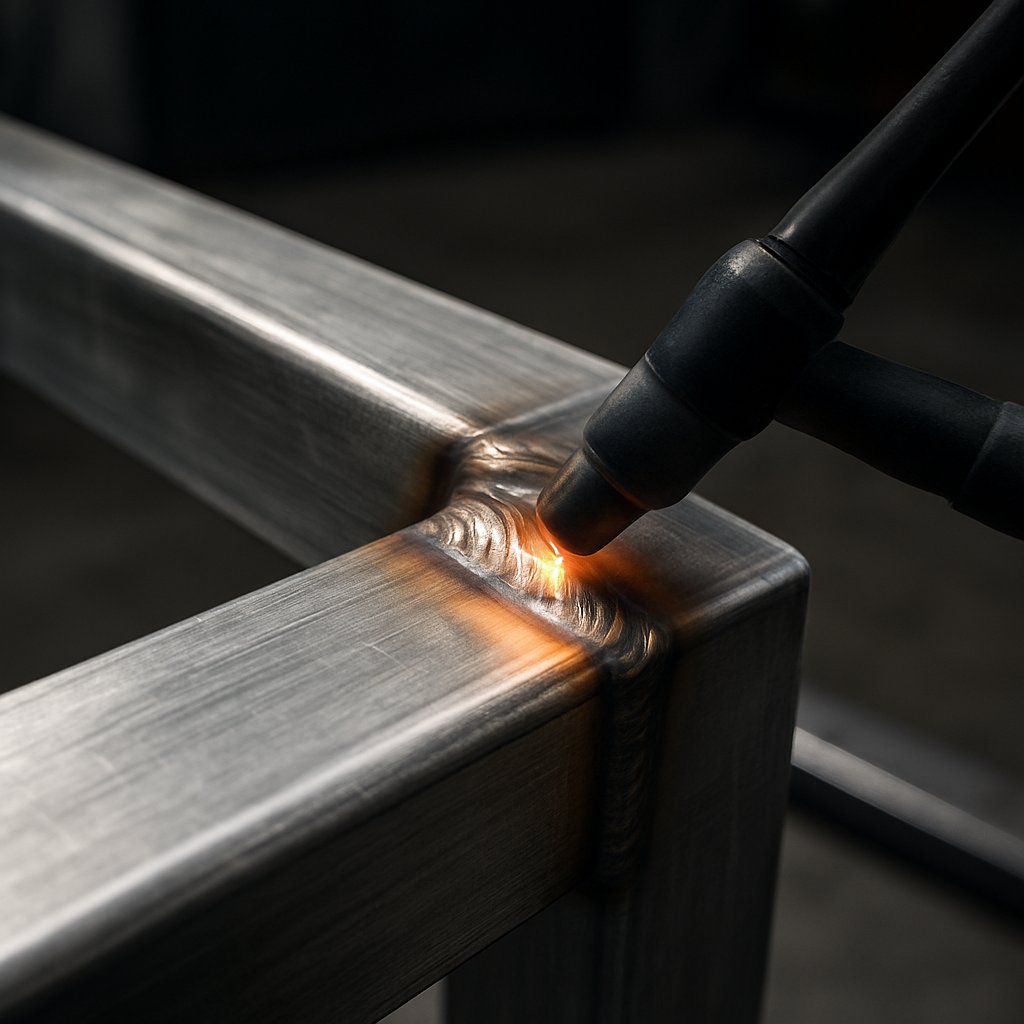
Strike an arc on 6061-T6 aluminum, and the metal near the joint stops behaving like the datasheet version that arrived from the mill. That is the part many buyers and fabricators miss. A welded assembly can still be the right choice, but its real performance depends on the welded condition, not just the original T6 label on the stock.
The gap is larger than many people expect. The Fabricator notes that almost all 6061-T6 product forms carry a required minimum ultimate tensile strength of 40 ksi before welding, while fabrication codes commonly require only 24 ksi after welding. A practical overview from ESAB describes 6061-T6 at about 45,000 psi before welding and around 27,000 psi in the as-welded condition.
| Consideration | Before welding | After welding | What it means in practice |
|---|---|---|---|
| Strength basis | T6 parent metal may be specified around 40 to 45 ksi UTS | As-welded joints are often evaluated around 24 to 27 ksi UTS | Do not size a welded part using only parent-metal T6 values |
| Temper condition | Material arrives fully solution heat treated and artificially aged | Welded regions and nearby base metal may no longer retain full T6 condition | The weld area behaves differently from the untouched stock |
| Low-temperature aging | Not relevant to the incoming temper | Can raise HAZ strength only slightly, about 1 to 2 ksi | Re-aging alone does not restore full T6 performance |
| Full property restoration | Not needed on as-received stock | Requires complete reheat treatment, quench, and artificial aging | Possible, but complex and not routine for many shops |
| Dimensional stability | Incoming stock is relatively stable | Welding heat, and especially quenching in full reheat treatment, can distort parts | Fixtures, straightening, and tolerance planning matter |
The weak point is often not the weld bead itself, but the heat affected zone beside it. ESAB explains that heat-treatable 6xxx alloys are highly sensitive to time at temperature during welding. Instead of staying in a full-strength temper, the nearby metal is partially annealed and overaged. The hotter it gets, and the longer it stays hot, the more strength is lost.
That is why aluminum 6061 t6 can machine nicely and carry load well in the as-received state, yet show a softer response once welded. For 6061-t6 aluminum, post-weld heat treatment is not a simple shortcut either. The Fabricator makes the point clearly: low-temperature aging after welding does not bring the welded area back to T6 levels by itself. Full restoration requires solution heat treatment, rapid water quenching, and artificial aging, and that route can create major distortion.
In other words, aluminum 6061 t6 is not just a material choice. It is a manufacturing-path choice. That becomes especially important when comparing it with 6063 and with softer 6061 tempers that may weld, form, or finish differently from the start.
A material callout only solves part of the decision. The real choice sits at the intersection of load, shape complexity, finish expectations, and fabrication method. In guidance from Rapid Axis and PSI Extrusions, 6061 and 6063 sit in the same 6xxx family, but they are tuned for different priorities.
For many readers searching aluminum alloy 6061 vs 6063, the simplest answer is this: 6061-T6 usually wins when strength and machining matter most, while 6063 usually wins when extrusion detail, surface appearance, and easier forming matter more.
| Decision factor | 6061-T6 | 6063-T6 | What that means in practice |
|---|---|---|---|
| Strength | Higher overall strength and hardness | Lower than 6061-T6 | Rapid Axis notes roughly 30% more yield strength for 6061-T6, so it is the stronger structural pick. |
| Corrosion resistance | Good to moderate | Generally better | 6063 often gets the edge outdoors, helped by its lower copper content. |
| Weldability | Good, but proper filler and care matter | High weldability and brazability | 6063 is usually easier to assemble when weld friendliness is a priority. |
| Machinability | Better machinability | Less machinable than 6061 | Choose 6061 aluminum for CNC-heavy parts and machined fittings. |
| Formability and extrudability | Suitable for durable, less complex shapes | Excellent for intricate extrusions | 6063 is often the first pick for complex profiles. |
| Finish appearance | Good anodizing response | Finer as-extruded finish, strong anodized appearance | Architectural projects often lean toward 6063 for cleaner visual results. |
| Cost considerations | Common and affordable, but process cost can rise with extra machining | Also common and affordable, with shape complexity often easier to achieve in extrusion | No universal price winner is given in the cited sources. Total cost depends heavily on profile complexity, finishing, and downstream work. |
That is why the 6061 aluminum alloy shows up in structural braces, machinery components, and transport parts, while 6063 is strongly associated with window frames, trim, tubing, and other architectural extrusions. If a spec sheet says aluminum alloy 6061 t6, it is usually pointing toward load-bearing performance rather than purely decorative value.
Alloy choice is only half the story. Rapid Axis also highlights how temper shifts the use case inside the same alloy family.
| 6061 temper | General condition | Best fit | Main tradeoff |
|---|---|---|---|
| T4 | Solution treated and naturally aged | Welded assemblies needing later strength recovery | Softer than T6 |
| T6 | Artificially aged for peak hardness | High-strength structural parts | Less formable |
| T651 and similar stress-relieved variants | Stress relieved after heat treatment | Machined plate needing better dimensional stability | Selection depends on product form |
So a 6061 aluminium alloy in T4 can be the smarter fabrication choice when bending or welding drives the route, while aluminium 6061 in T6 is often the better service condition when the part must carry more load after fabrication.
The contrast becomes even sharper in extruded shapes, where profile complexity, finish quality, and end-use appearance often decide the winner before the first cut is made.
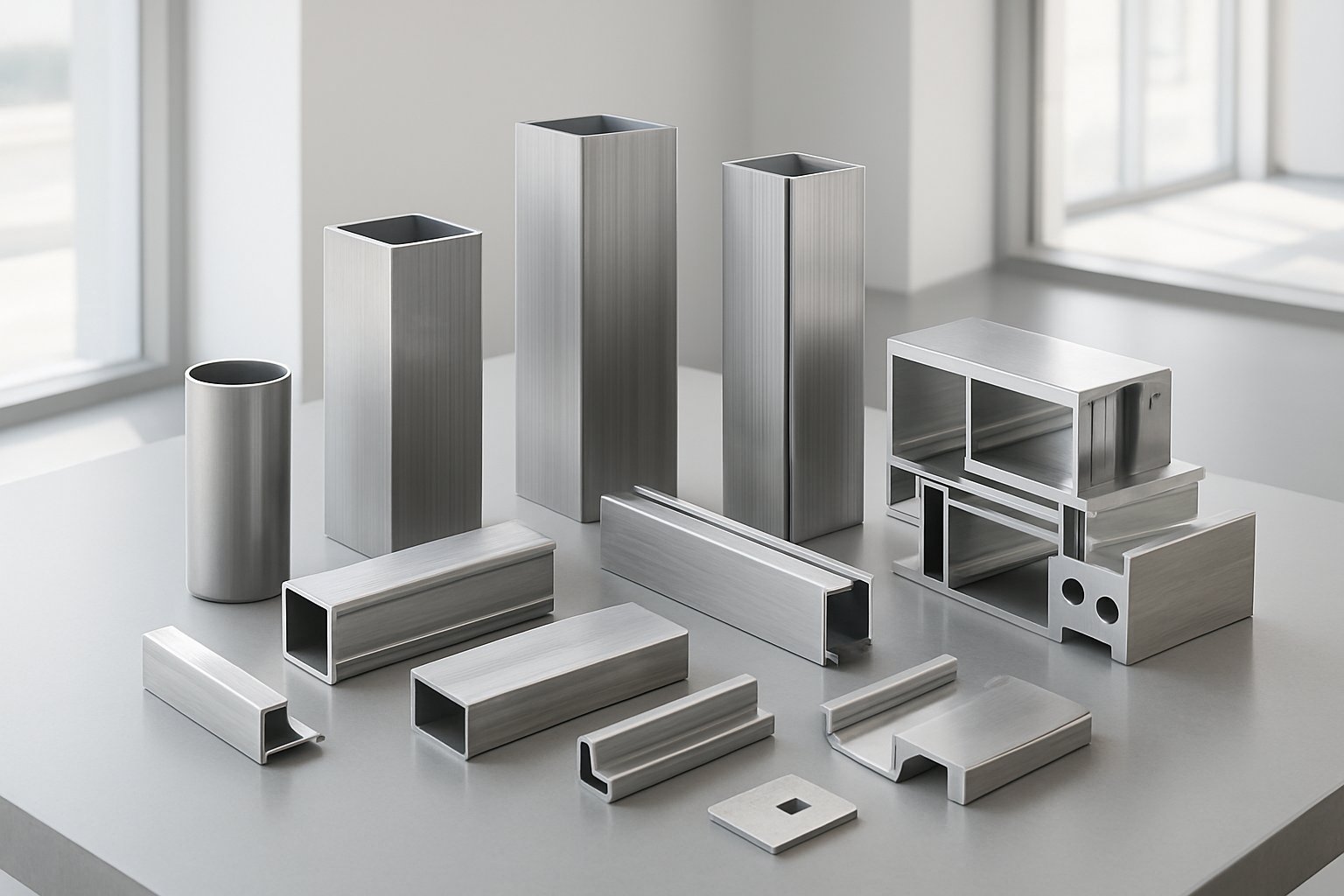
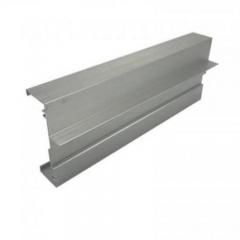
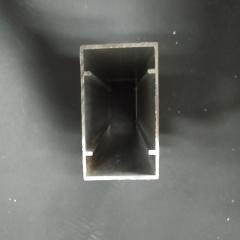
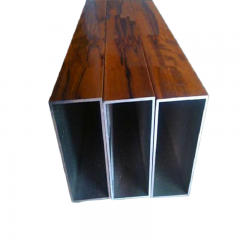
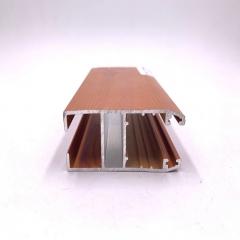
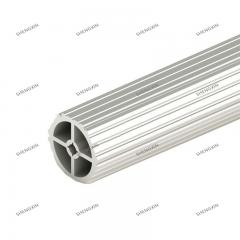
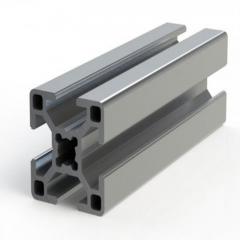
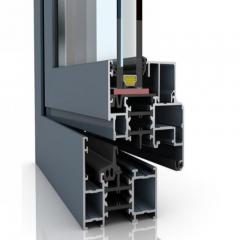
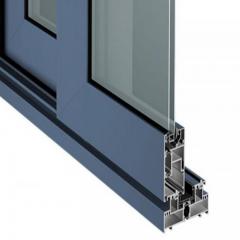
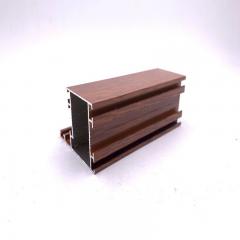
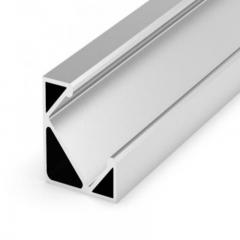
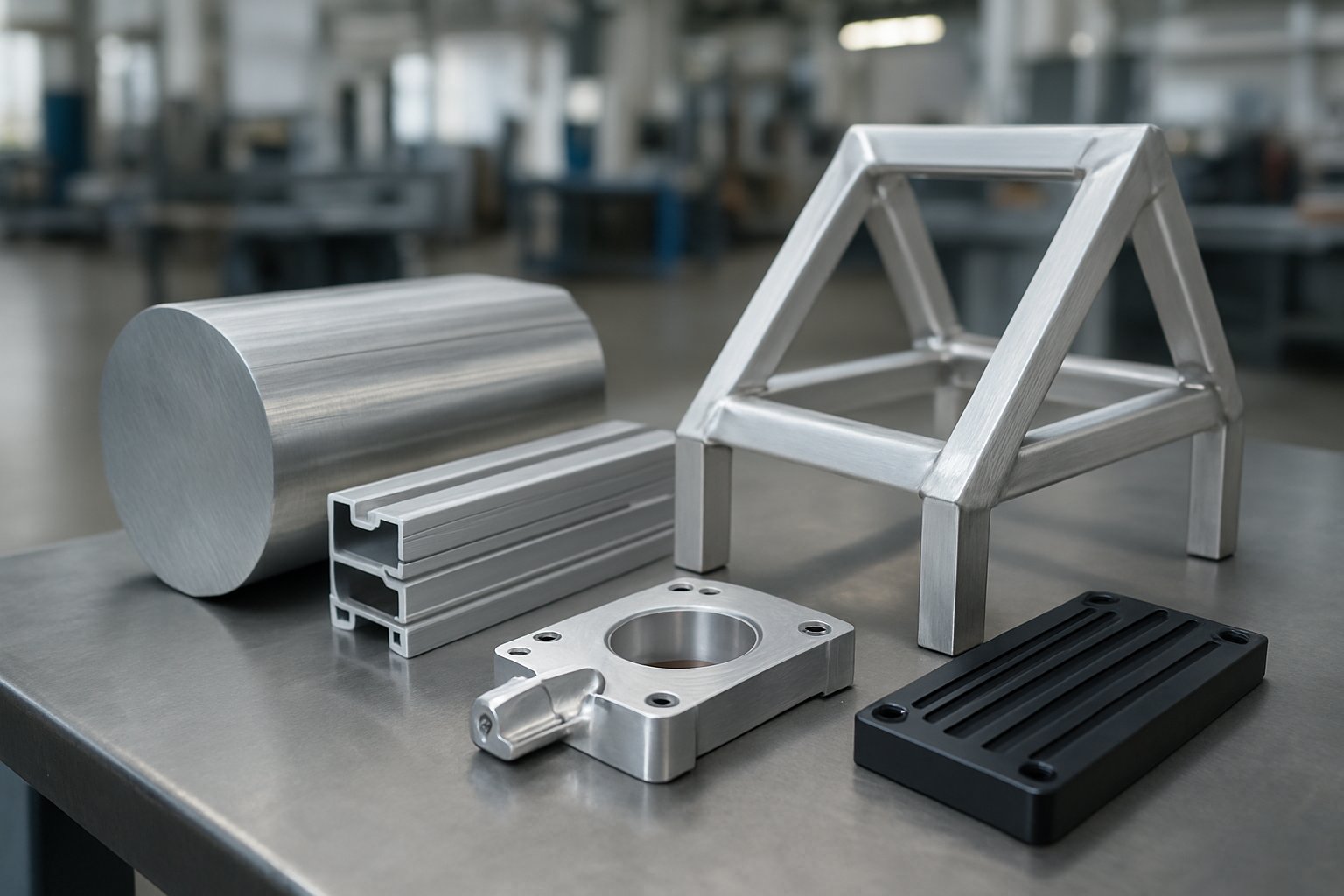
Extruded shapes are where 6061-T6 stops being just a datasheet choice and starts acting like a design tool. SinoExtrud describes 6061 as a common alloy for extrusion in structural and aesthetic applications, while Shengxin's anodizing guide notes that extrusion can produce tight-tolerance, complex profiles. That is why searches for 6061 aluminum square tubing, 6061 bar stock, or ASTM B221 often signal that the buyer is already thinking about profile form, not only alloy name.
In extrusion, a preheated billet is forced through a die to create a repeatable cross-section. For 6061, that route makes sense when the part needs strength, good machinability, and stable dimensions after processing. It is a practical match for rails, tubes, channels, bars, and custom hollows that will later be cut, drilled, fastened, or machined. In short, it gives designers a way to build more function directly into the shape while keeping the part lightweight aluminum.
Finish choice often decides whether the same profile reads as industrial, architectural, or consumer-facing. The cited references show strong compatibility with anodizing, powder coating, painting, polishing, and laser marking.
| Profile type | Typical finish priority | Main value |
|---|---|---|
| Visible facade and frame profiles | Anodizing | Better corrosion protection, wear resistance, and appearance |
| Industrial machine profiles | Anodizing or powder coating | Durability, surface protection, and easier upkeep |
| Decorative or branded components | Polishing or laser marking | Cleaner visual finish and part identification |
For architectural and industrial projects that need both performance and aesthetic flexibility, Shengxin Aluminium offers custom aluminum extrusion profiles with anodizing and multiple finishes. Its product catalog is a practical resource for comparing options for building facades, frames, and custom machinery parts. The profile may look simple once finished, but the right choice still depends on shape, temper, fabrication path, and the paperwork behind the order.
A part can be well designed and still be hard to source if the material callout is too thin. "T6" is not enough. Even "6061-T6" leaves room for confusion unless the order also defines form, finish, fabrication route, and paperwork. That matters when one job needs a cosmetic extrusion, another needs a welded frame, and another needs 6061 sheet for machining.
Start with performance, but write the purchase description like a manufacturing instruction. Published 6061-t6 aluminum properties help you shortlist the alloy. The final spec should tell the supplier exactly what version of the material you need. If a drawing or RFQ only says material 6061 aluminium, the quote is still incomplete.
The right T6 choice depends on both performance needs and the manufacturing path that gets the part there.
If the RFQ simply says material 6061 aluminium, the supplier is left to fill in important blanks. A better checklist asks a few direct questions. Will the part be cut from flat stock, machined from bar, or ordered as an extrusion. Does the visible surface matter as much as strength. Will receiving inspection compare the shipment to a generic datasheet or to the actual delivered lot.
That last point deserves real attention. The EN 10204 guide makes clear that EN 10204 is a documentation standard, not a material property standard. A 3.1 certificate reports actual results for the supplied batch and is signed by the manufacturer's quality representative. A 3.2 certificate includes the same batch-specific information, but with additional third-party verification. The same guide shows the kind of data buyers can request and verify: alloy and temper, product description, standard, chemical composition, tensile data, hardness, heat treatment information, and heat or batch traceability.
That is why a matweb 6061 t6 aluminum page is useful for early screening, but not enough for receiving inspection. For a 6061 sheet order or a critical plate job, the certificate for the delivered lot should match the purchase order and the required 6061-t6 aluminum properties.
When your project leans toward custom shapes or appearance-driven profiles, a supplier catalog can speed up early decisions on section design and finish options.
A clean specification reduces quoting friction, limits substitution risk, and gives purchasing, QA, and fabrication the same target. That is the real value in choosing carefully: the material arrives as the right alloy, in the right form, with the right proof behind it.
Not exactly. T6 is a temper, which means a heat-treated condition, while 6061-T6 names both the alloy and the temper. In everyday buying, many people use T6 aluminum as shorthand for 6061-T6, but that shortcut can cause confusion. If you are ordering material, it is safer to specify the full grade, such as 6061-T6 sheet, bar, tube, or extrusion, so the supplier knows the exact alloy and form you need.
The T6 temper makes 6061 stronger and harder by putting it through solution heat treatment and artificial aging. In practical terms, that usually improves load-carrying ability, machining feel, and dent resistance. The tradeoff is lower formability. So if a part needs structural strength or stable machined features, T6 is often a strong choice. If the job needs tight bends or heavy forming, a softer temper may be easier to work with.
6061-T6 is weldable, but the welded area and the metal beside it usually do not keep the same strength condition as the original parent material. Heat from welding changes the temper in the heat affected zone, so a finished assembly should be evaluated in its welded condition, not only by the as-received T6 datasheet. That does not make welding a bad option, but it does mean joint design, distortion control, and realistic post-weld property expectations are important.
Choose 6061-T6 when strength, machinability, and general structural performance matter more than a highly refined extrusion appearance. Choose 6063 when the project depends more on smoother architectural finishes, cleaner visible surfaces, or more intricate profile shapes. For custom extrusion work, especially on architectural and industrial parts that need anodizing or multiple finish options, reviewing supplier catalogs early can help. Shengxin Aluminium is one practical resource for comparing custom profile options at https://www.shengxinaluminium.com/products.
A complete specification should include the alloy, temper, product form, dimensions, finish, fabrication method, service environment, applicable standard, and required documentation. For example, there is a big difference between ordering 6061-T6 plate for machining and ordering a custom anodized extrusion for an outdoor frame. If the job involves custom shapes or finish-driven design, it also helps to review available extrusion and finishing options before finalizing the RFQ, so purchasing and fabrication are aligned from the start.



 Інтернет-сервіс
 0086 136 3563 2360
 sales@sxalu.com
 +86 136 3563 2360
 Українська
 English
 français
 Deutsch
 русский
 español
 português
 العربية
 ไทย
ไทย Việt
Việt