Ever wondered why some aluminum parts fit together perfectly while others need constant adjustments? The secret often lies in whether those components went through precision machining after extrusion. When you're sourcing aluminum profiles for your next project, understanding this distinction can save you significant time, money, and frustration.
Machined aluminum extrusion is the process of taking extruded aluminum profiles and applying secondary CNC operations—such as cutting, drilling, milling, turning, and tapping—to create finished parts with tight tolerances and required features.
This definition captures the essence of what separates a basic extruded profile from a precision-ready component. While standard extrusion gives you the foundational cross-sectional shape, aluminum extrusion machining transforms that raw profile into something that actually works in demanding applications.
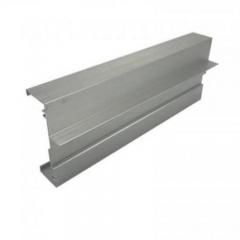
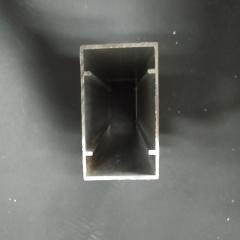
Picture this: aluminum billets get heated and pushed through a die under tremendous pressure. Out comes a profile—maybe a T-slot rail, a hollow tube, or a complex architectural shape. That's your base extrusion. It has the right general shape, but it's essentially a starting point.
What happens next determines whether you end up with a functional precision extrusion or just another off-the-shelf profile. The machining process adds critical features that extrusion simply cannot deliver directly:
Standard profiles from systems like 80/20 extruded aluminum or 8020 extruded aluminum work great for modular framing. But when your application demands exact hole placement, specific thread patterns, or custom mounting features, machining becomes non-negotiable.
Here's what many engineers discover too late: extrusion creates near-net shapes, but "near" isn't good enough for precision assemblies. According to industry specifications, most extruded profiles require additional machining operations to meet final part features and tolerances.
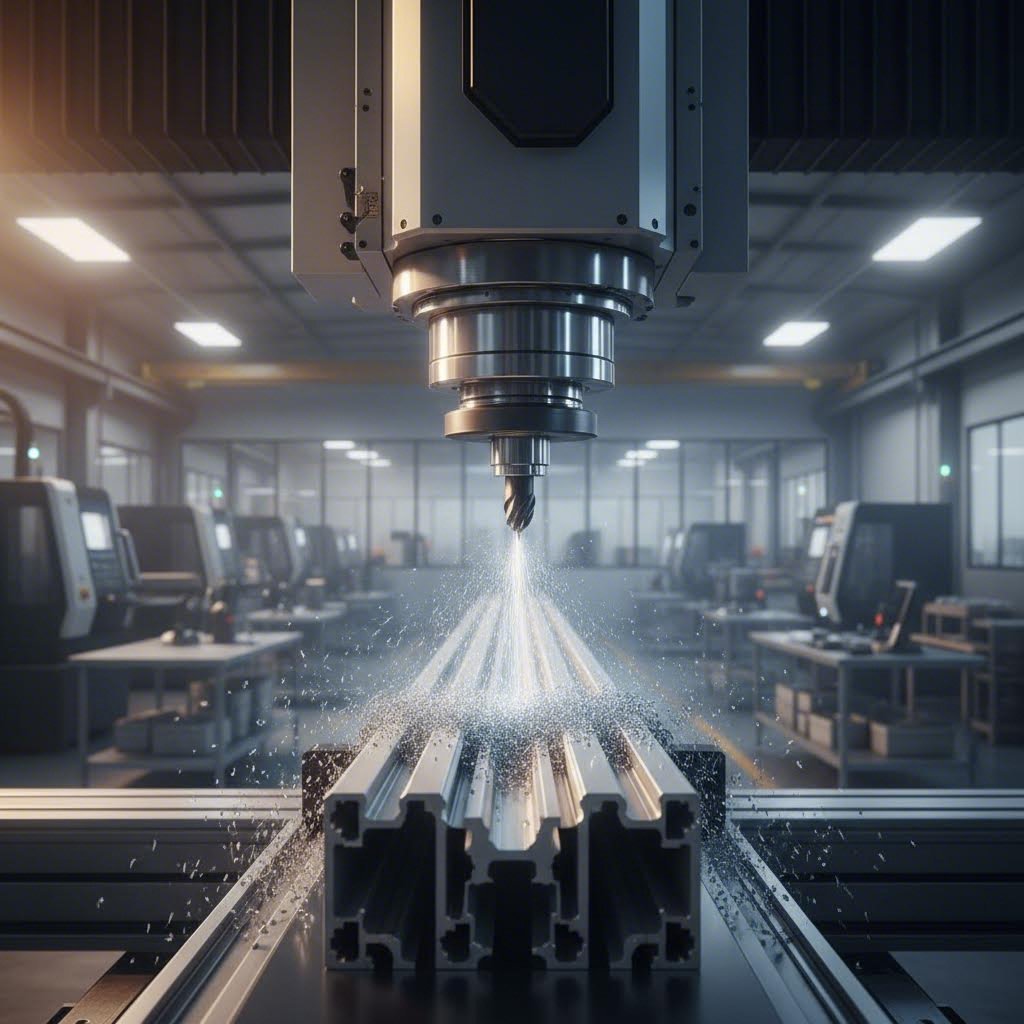
The transformation happens through a deliberate sequence. First, CNC sawing brings profiles to exact lengths. Then, milling operations create flats, pockets, and complex surface features. Drilling adds precisely positioned holes, while tapping creates threads for assembly. Multi-axis CNC machining handles intricate geometries that would be impossible to achieve any other way.
What makes aluminium extrusion machining particularly valuable? Flexibility. The same base extrusion can become dozens of different finished parts depending on the machining operations applied. This approach saves costs, simplifies inventory management, and enables rapid customization without requiring new extrusion dies for every variant.
The real advantage becomes clear in demanding industries—aerospace, automotive, precision electronics. These applications require tight tolerances, reliable fits, and consistent quality across thousands of parts. Machined extrusions deliver exactly that, bridging the gap between a basic extruded shape and a fully functional, assembly-ready component.
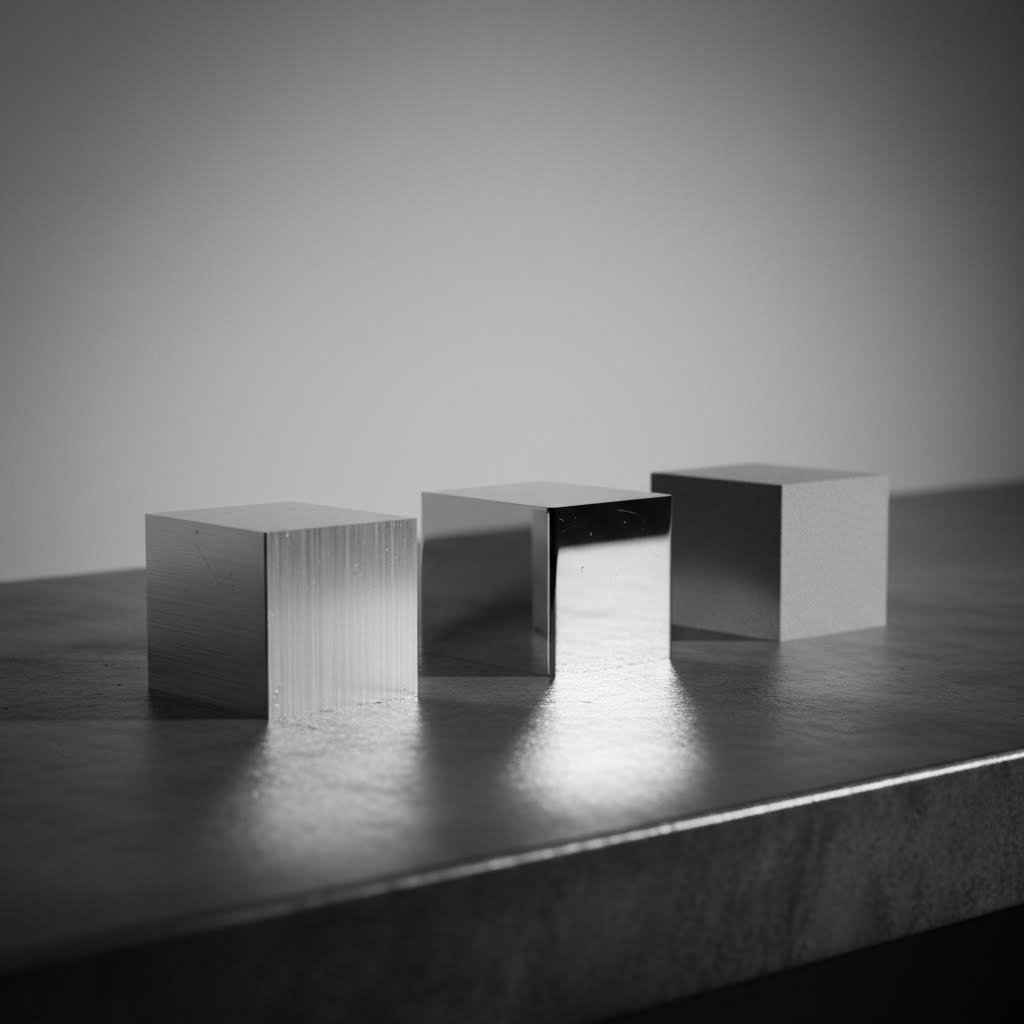
Choosing the right aluminum alloy might be the single most consequential decision you'll make for your machined extrusion project. Pick wrong, and you'll battle tool wear, struggle with surface finish quality, or end up with parts that can't handle real-world stresses. Pick right, and everything downstream—from machining efficiency to final performance—falls into place.
So how do you match alloys to your specific machining requirements? Let's break down what actually matters when selecting between popular options like 6063, 6061, and 7075.
Each aluminum alloy brings a unique combination of properties to the table. Understanding these differences helps you align material selection with your project's critical success factors.
6063 Aluminum earns its nickname as "architectural aluminum" for good reason. Its finer grain structure delivers the best possible surface finishing upon anodization, making it ideal for visible components where aesthetics matter. Custom aluminum extruders often recommend 6063 for window frames, door systems, trim, and decorative profiles. However, it offers lower yield and tensile strength compared to 6061, so it's not your first choice for load-bearing applications.
6061 Aluminum stands as the workhorse of custom extruded aluminum for machining applications. According to industry specifications, this alloy provides excellent machining performance with proper strength, corrosion resistance, and high machinability. It's called "structural aluminum" because it excels in applications requiring joining, cyclical loading, and reliable performance. Marine hardware, bicycle frames, truck wheels, and structural components all benefit from 6061's balanced properties.
7075 Aluminum represents the high-strength end of the spectrum. When your bespoke aluminium extrusion project demands maximum strength-to-weight ratio—think aerospace components, military applications, or high-performance sports equipment—7075 delivers. The trade-off? It machines harder, causes more tool wear, and costs significantly more than 6xxx series alloys.
Here's the uncomfortable truth: you rarely get maximum strength and optimal machinability in the same alloy. Understanding these trade-offs helps you make informed decisions rather than chasing impossible specifications.
High-strength alloys like 7075 require more focus during machining. The material's hardness accelerates tool wear, demanding higher-quality cutting tools and more careful speed management. Meanwhile, highly machinable alloys like 2011—designed specifically for precision extrusions requiring intricate details—sacrifice corrosion resistance and aren't suitable for harsh environments.
The 6xxx series hits a sweet spot for most machined extrusion applications. These silicon-magnesium alloys offer sufficient strength, good corrosion resistance, superb weldability, and balanced formability. They're heat-treatable, meaning you can enhance mechanical properties through proper tempering.
Aluminum extrusion tooling also factors into this equation. Softer alloys allow faster cutting speeds and longer tool life, reducing overall production costs. Harder alloys demand premium tooling investments but enable parts that perform under extreme stress.
| Alloy Type | Machinability Rating | Typical Applications | Surface Finish Quality | Cost Considerations |
|---|---|---|---|---|
| 6063-T5 | Good | Architectural profiles, window frames, decorative trim, electrical conductors | Excellent (best anodizing results) | Low to moderate |
| 6061-T6 | Excellent | Structural components, marine hardware, automotive parts, machine frames | Good (may require additional finishing) | Moderate |
| 6082-T6 | Good to Excellent | Heavy-duty structural parts, bridges, transport equipment, beams | Good | Moderate |
| 7075-T6 | Fair (causes tool wear) | Aerospace structures, military equipment, high-stress sports gear | Good | High |
| 2024-T3 | Fair to Good | Aircraft fuselage, wings, military vehicles, high-fatigue applications | Good | High |
| 5052-H32 | Good | Marine components, fuel tanks, pressure vessels, chemical equipment | Moderate (may need lubrication) | Moderate |
Notice how 6061 earns that "excellent" machinability rating? That's why it dominates CNC machining applications. According to machining experts, 6061 aluminum is easy to machine but sometimes makes achieving fine surface finishes challenging—demanding adequate lubrication and cooling to prevent overheating and extend tool life.
When selecting your alloy, consider the complete picture: How critical is surface finish? What loads will the part experience? Does it need to resist corrosive environments? Will you be welding or anodizing? Your answers point toward the optimal choice.
For most precision extrusions requiring both machining and real-world performance, 6061 provides the best overall value. Reserve 7075 for applications where strength absolutely cannot be compromised. Choose 6063 when visual appearance and decorative finishing take priority over structural demands.
You've selected your alloy. Now comes the question that determines whether your machined aluminum extrusion meets specifications or becomes expensive scrap: which CNC operations do you actually need? Understanding the full spectrum of machining possibilities—and their technical demands—helps you communicate effectively with suppliers and avoid costly surprises.
Here's the reality: aluminum cuts fast, but that doesn't mean it's forgiving. According to machining specialists, one wrong move and the profile bends, melts, or breaks. Let's walk through what happens when extruded profiles meet CNC equipment.
Think of extruded aluminum CNC operations as a toolkit. Each tool serves specific purposes, and knowing when to deploy each one separates successful projects from frustrating failures. Here are the primary operations you'll encounter:
For cnc aluminium extrusion work, these operations often combine in sequence. A typical workflow might involve cutting to length, milling mounting surfaces, drilling multiple holes, then tapping threads—all before the part ever leaves the CNC machining center.
What tolerance ranges can you realistically achieve? With proper equipment and setup, standard CNC aluminum operations deliver tolerances around +/-0.127mm (+/-0.005"). High-precision setups using advanced cnc machine for aluminum extrusions can achieve tolerances as low as +/-0.02mm. However, tighter tolerances increase costs significantly—they require additional machine time, specialized fixturing, and often manual inspection.
Standard 3-axis CNC handles most aluminum extrusion machining needs. But what happens when your design demands features on multiple faces, compound angles, or complex contoured surfaces? That's when multi-axis machining enters the picture.
4-axis and 5-axis CNC machining centers add rotational capabilities that allow tools to approach the workpiece from virtually any angle. This matters for:
Multi-axis capability becomes particularly valuable for profiles like 2080 extrusion or 1010 extrusion series, where T-slot configurations require machining operations on multiple faces for custom mounting solutions. The indexing features of modern CNC equipment allow rotation so the extruded aluminum can be machined on all planes in a single or two settings.
Aluminum's properties create unique machining considerations that differ significantly from steel or other metals. Ignore these factors, and you'll fight problems throughout production.
Chip Evacuation: Aluminum cuts fast, generating substantial chip volume. According to machining experts, chips that aren't cleared properly get recut, destroying surface finish and slowly killing tools. Strong air blasts or flood coolant must clear chips before they pack into the cut. Two-flute end mills provide maximum chip clearance, while high-helix tools pull chips upward instead of packing them into the cutting zone.
Thermal Management: Aluminum's excellent thermal conductivity is usually an advantage—heat dissipates quickly. But during aggressive high-speed machining, heat can still build up. This causes chips to weld to cutting tools, ruining both the tool and the surface finish. Proper coolant application addresses temperature control and chip welding prevention simultaneously.
Tool Selection Matters: Not all cutting tools work well with aluminum. Carbide tools with polished flutes, high helix angles, and sharp edges deliver optimal results. Titanium-coated tools actually trap heat and should be avoided; uncoated or ZrN-coated tools perform better for aluminum applications. Dull tools increase friction and vibration—sharp tools are absolutely essential.
Here's where extruded aluminum CNC work diverges dramatically from machining solid stock: hollow and complex cross-sections create unique support requirements that can make or break your project.
Imagine machining a 2-meter-long LED housing extrusion. Without proper support, the profile flexes mid-span under its own weight during cutting. Support blocks placed every 300mm prevent mid-span flexing and maintain dimensional accuracy throughout the operation.
Hollow profiles present additional challenges:
Soft jaws and custom fixtures help distribute clamping pressure and conform to profile shapes. Vacuum fixturing works well for flat surfaces. The key principle? Clamp close to the cut zone to keep the workpiece stable, and never let aluminum extrusions hang unsupported off the machine table.
Minimum wall thickness also affects what's possible. While walls as thin as 0.5mm are technically feasible, recommended thickness starts at 0.8mm. Thinner walls lead to breaking or warping due to unwanted vibrations from CNC machining operations.
Understanding these technical considerations positions you to have productive conversations with your machining partner. The next critical decision? Choosing the right profile system for your application—particularly when modular T-slot framing enters the picture.
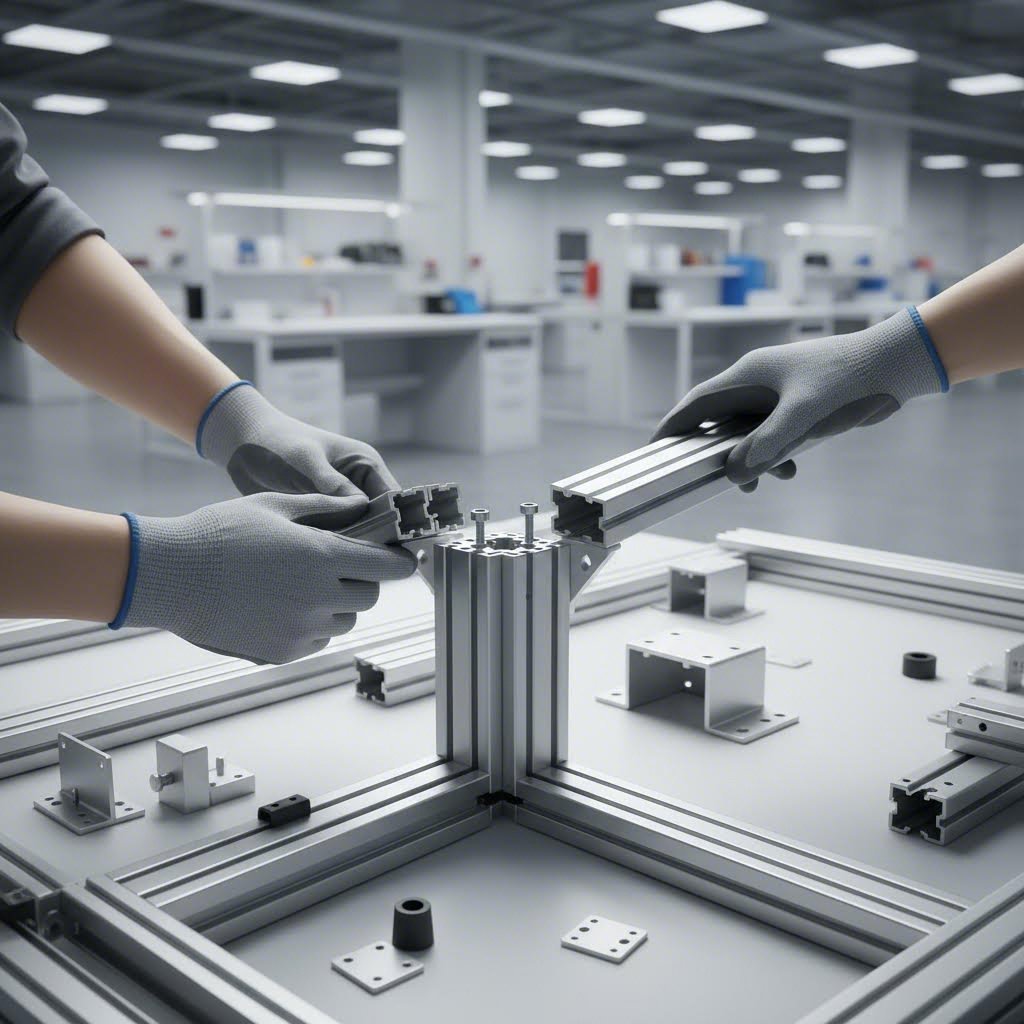
What if you could build industrial-grade frames, enclosures, and workstations without welding a single joint? That's exactly what 80/20 aluminum and similar T-slot systems deliver. But here's where things get interesting for machined aluminum extrusion projects: these standardized profiles become even more powerful when combined with precision CNC operations.
So what is 80/20 aluminum, and why has it become the go-to solution for engineers and fabricators worldwide?
The name "80/20" comes from the Pareto principle—the idea that 80% of results come from 20% of effort. According to industry experts, 8020 aluminum extrusion allows you to achieve substantial results with minimal effort compared to traditional fabrication methods.
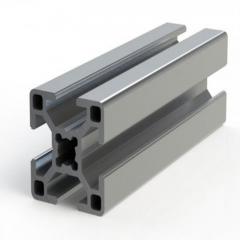
At its core, t-slotted aluminum consists of square or rectangular extruded profiles featuring T-shaped slots along their length. These slots accept specialized fasteners, brackets, and connectors that eliminate welding while creating remarkably strong joints. You can assemble, disassemble, and reconfigure structures without permanent modifications—a game-changer for prototyping, evolving production lines, and temporary installations.
The versatility of tslot extrusion explains its widespread adoption. Unlike welded steel frames that require skilled fabricators and permanent commitments, T-slot systems enable rapid iteration. Made a design mistake? Unbolt it, adjust, and reassemble. Need to relocate equipment? Disassemble the frame and rebuild it elsewhere.
What applications actually benefit from 80 20 aluminum extrusion systems? The list might surprise you:
Thanks to aluminum's inherent corrosion resistance, these frames remain rust-free and visually attractive through years of service—even in challenging industrial environments.
Not all 80 20 t slot aluminum profiles are created equal. The series designation indicates profile dimensions and load capacity, directly affecting which applications each size handles effectively.
According to manufacturer specifications, common fractional series include:
How do you choose? Start by identifying your load requirements. Larger series like 40 and 45 handle heavier loads, while 10 and 15 series suit lighter applications. Consider available space—smaller projects may not accommodate bulky profiles. Finally, assess your budget; the 15 series often provides the best balance of capability and cost.
One critical tip: stick with a single series throughout your project. Different series require specific fasteners and connectors, so mixing creates compatibility headaches that slow assembly and increase costs.
Here's where standard T-slot systems meet precision machined aluminum extrusion capabilities. While off-the-shelf profiles work for basic framing, demanding applications require customization that only CNC machining delivers.
Machining transforms generic T-slot profiles through:
Some manufacturers offer "Ready Tube" series with pre-cut and pre-threaded options that simplify assembly. However, truly custom applications—robotic cells, precision testing fixtures, specialized automation equipment—demand machining operations tailored to exact specifications.
The combination of standardized T-slot versatility with precision machining creates solutions impossible to achieve with either approach alone. You get the rapid assembly benefits of modular framing plus the exact-fit precision of custom-machined components.
Understanding how these profiles serve different industries—and what performance requirements each sector demands—helps you make informed decisions about both profile selection and machining specifications.
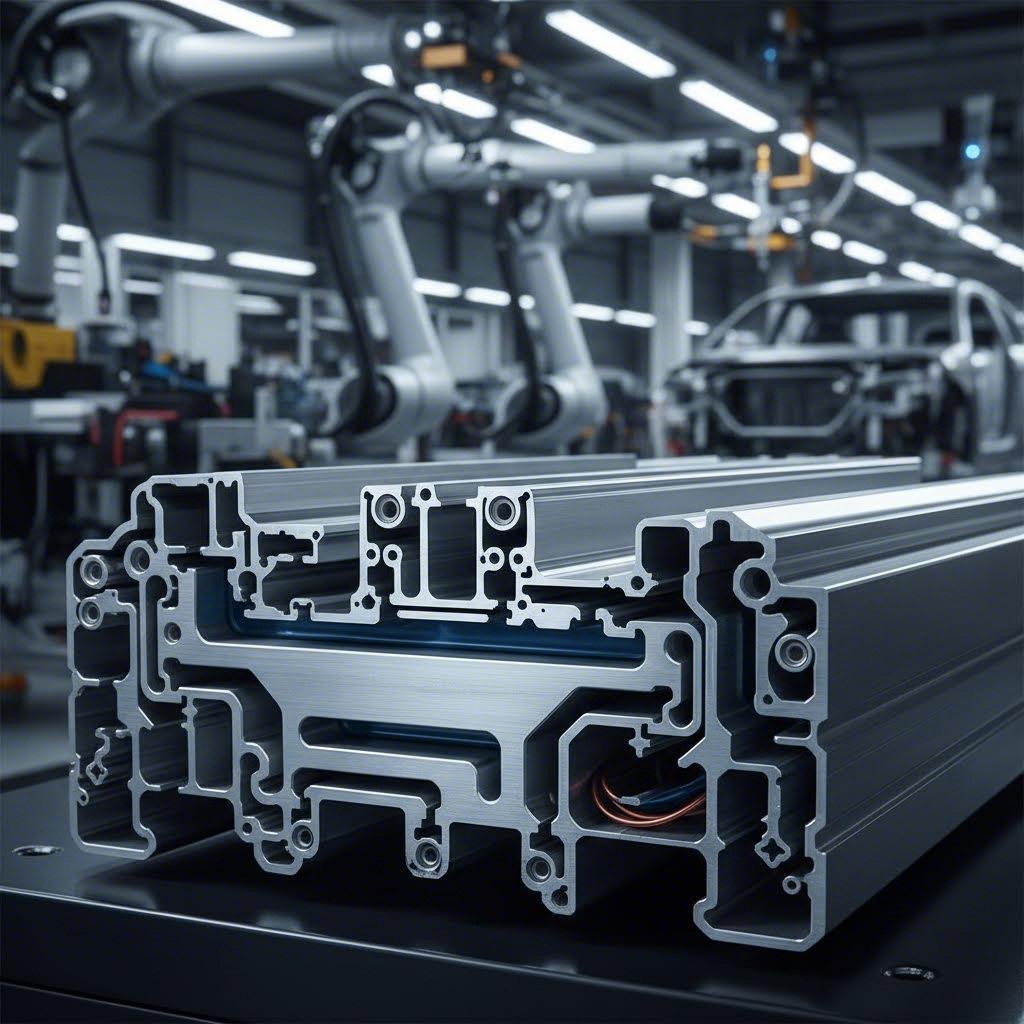
Now that you understand profile systems and machining operations, a crucial question remains: where do machined aluminum extrusions actually deliver the most value? The answer varies dramatically by industry—and getting this wrong means either over-engineering simple applications or under-specifying critical ones.
Different sectors demand vastly different performance characteristics from their aluminum framing extrusion and machined components. Let's explore what each major industry requires and why precision machining becomes essential for meeting those demands.
Electric vehicle battery systems represent one of the most demanding applications for machined aluminum extrusions today. According to the Aluminum Extruders Council, battery systems can weigh as much as 700 kg and represent 22-27% of total vehicle weight. At that scale, every design decision matters enormously.
Why are extrusions so critical for EV applications? Consider what the battery enclosure must accomplish:
The Mercedes EQS demonstrates this perfectly—extrusions enable both the lightweight structural housing and the perimeter cooling circuit. Similar construction appears in the new solid-state battery for the EQS Formula 1 car.
Machining adds critical value to these automotive extrusions through precision mounting holes for battery modules, exact-fit interfaces between structural members, and leak-free fluid transfer passages. Tolerances in this sector typically range from +/-0.1mm to +/-0.25mm, with tighter specifications for safety-critical interfaces.
Building and construction applications take extruded aluminum framing in a different direction—prioritizing aesthetics, weather resistance, and thermal performance alongside structural integrity.
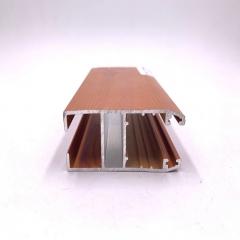
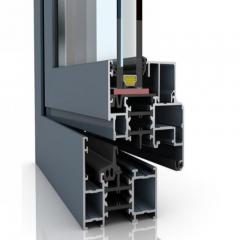
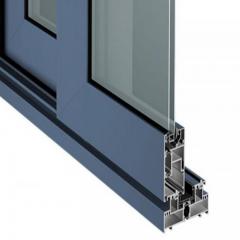
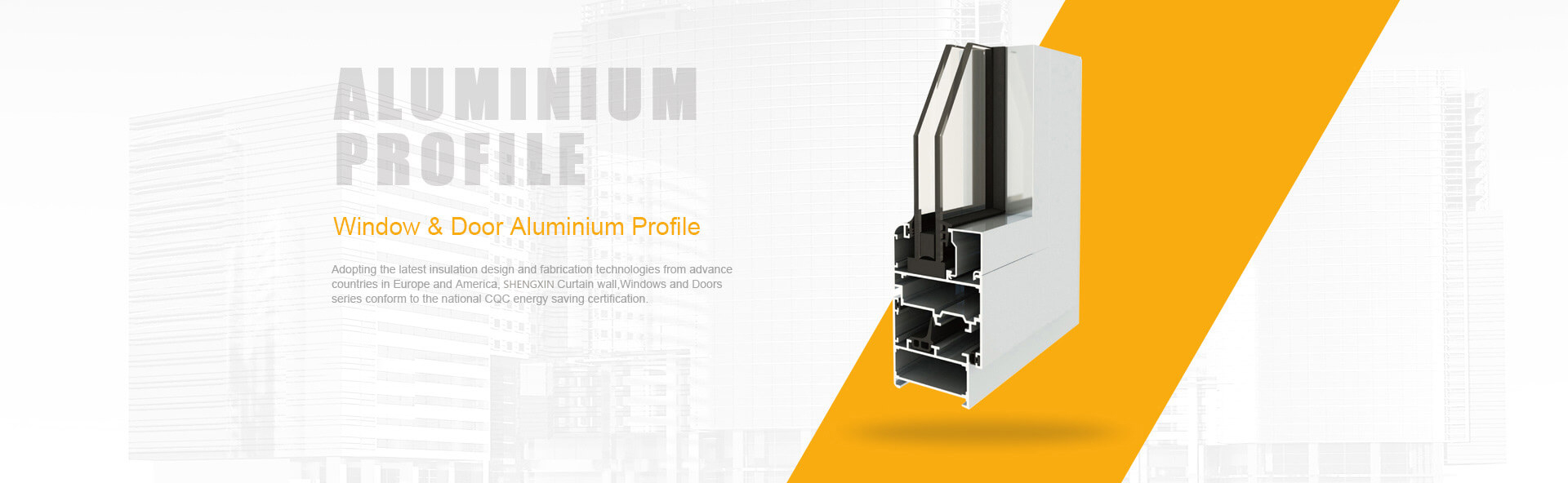
Window and door systems exemplify architectural precision requirements. According to Richardson Metals, 6063 aluminum produces extrusions with high-quality surface finishes, making it ideal for visible architectural elements. Machining transforms these profiles into functional assemblies through:
Small aluminum extrusions also serve curtain wall systems, storefront framing, and interior partition systems where both structural performance and visual appeal matter. The machining challenge here involves maintaining surface finish quality while adding functional features—requiring careful tool selection and cutting parameters.
Electronic devices generate substantial heat that must be dissipated efficiently. According to BRT Extrusions, aluminum extrusions have emerged as a popular and efficient cooling solution due to their excellent thermal conductivity, lightweight nature, and manufacturing flexibility.
The extrusion process enables heat sinks with intricate fin structures, creating larger surface areas that enhance heat dissipation. Applications span multiple sectors:
Machining adds value through precise mounting hole patterns, custom interface surfaces for thermal compound application, and exact-fit integration with electronic enclosures. Tolerances for heat sink applications typically run tighter—often +/-0.05mm to +/-0.1mm—to ensure proper thermal contact between components.
Understanding how requirements differ across industries helps you specify the right combination of extruded aluminum stock and machining operations for your application:
| Industry | Typical Profile Types | Critical Tolerances | Common Surface Finishes | Key Performance Factors |
|---|---|---|---|---|
| Automotive/EV | Hollow structural sections, crash rails, battery frames | +/-0.1mm to +/-0.25mm | E-coating, powder coating, conversion coating | Crash energy absorption, weight reduction, thermal management |
| Building/Architecture | Window frames, curtain walls, decorative trim | +/-0.2mm to +/-0.5mm | Anodizing, PVDF coating, powder coating | Weather resistance, thermal performance, aesthetics |
| Electronics/Heat Sinks | Finned profiles, enclosures, chassis | +/-0.05mm to +/-0.1mm | Anodizing, chromate conversion | Thermal conductivity, EMI shielding, dimensional stability |
| Aerospace/Defense | Structural members, seat tracks, cargo systems | +/-0.05mm to +/-0.15mm | Anodizing, chromate conversion, primer | Strength-to-weight ratio, fatigue resistance, corrosion protection |
| Medical Equipment | Device frames, bed rails, testing apparatus | +/-0.1mm to +/-0.2mm | Anodizing, powder coating, specialized coatings | Cleanliness, precision, biocompatibility |
| Industrial Automation | Machine frames, guards, conveyor structures | +/-0.15mm to +/-0.3mm | Anodizing, powder coating, mill finish | Rigidity, modularity, cost-effectiveness |
Here's something many engineers overlook: profile geometry affects structural performance as much as material selection. The same alloy in different cross-sectional shapes delivers dramatically different load-bearing capabilities.
Hollow profiles excel at resisting torsional loads while minimizing weight. The Porsche Taycan uses "0.6-inch extruded aluminum honeycomb structures running the length of the rocker panels" specifically for this reason—maximum stiffness with minimum mass.
When evaluating aluminum extrusion framing for structural applications, consider these geometry factors:
Machining operations must account for these geometry considerations. Removing material from high-stress areas weakens the profile disproportionately. Strategic hole placement and feature location—guided by stress analysis—ensures machined extrusions maintain their structural integrity.
For 80 20 components and similar modular systems, manufacturers publish detailed load tables showing deflection under various loading conditions. These specifications help you select appropriate profile sizes and plan machining operations that won't compromise performance.
With industry requirements and structural considerations clear, the next critical decision involves surface finishing—and how those treatments interact with your machined features.
You've machined precise holes, tapped perfect threads, and milled exact mounting surfaces. Now what? The finishing decision you make next can either protect those carefully crafted features for decades—or compromise them before your parts ever reach the customer.
Here's the challenge most engineers face: surface treatments don't just coat aluminum—they change it. Coatings add thickness. Chemical processes alter dimensions. And those precision machined features you worked so hard to achieve? They need special consideration during every finishing operation.
Understanding how different finishes interact with machined surfaces separates successful projects from costly rework scenarios.
Each finishing method brings unique considerations for machined aluminum extrusions. The treatment you select affects dimensional accuracy, thread engagement, edge sharpness, and long-term performance. Here's what you need to know about the most common options:
For 80/20 aluminum framing and modular T-slot systems, anodizing remains the most popular choice. The process enhances corrosion resistance while maintaining the precise slot dimensions these systems depend upon for reliable fastener engagement.
Choosing the right finish involves balancing multiple factors: environmental exposure, wear requirements, appearance standards, and compatibility with your machined features. Here's how different finishes perform across key criteria:
Environmental Performance: Outdoor architectural applications typically demand PVDF or powder coating for UV stability and weather resistance. According to the Aluminum Extruders Council, anodizing provides unique durability advantages for marine components and applications requiring abrasion resistance. For marine environments specifically, hard anodized coatings of 50+ microns combined with proper sealing create robust protection against saltwater corrosion.
Wear and Abrasion Resistance: When surfaces experience friction, sliding contact, or repeated handling, Type III hard anodizing outperforms other options. The ceramic-like aluminum oxide layer resists scratching and maintains appearance through demanding use cycles. Custom aluminum profiles for industrial automation often specify hard anodizing specifically for this durability.
Aesthetic Requirements: Powder coating offers the widest color selection and can match virtually any custom color specification. Anodizing produces more limited color options but creates a distinctive metallic appearance that many designers prefer. Electrolytic coloring processes now enable gray tones and decorative finishes on anodized aluminum that weren't previously achievable.
The sequence of operations matters enormously. Should you machine first and finish second, or the reverse? Each approach carries distinct advantages and risks.
Machining before finishing is the standard approach for most extruded profiles. All cutting, drilling, and tapping operations complete on raw aluminum, then the entire part receives surface treatment. Benefits include:
The challenge? You must account for coating thickness when specifying machined dimensions. A hole sized for an M6 bolt before anodizing may be too tight after the coating adds material.
Machining after finishing becomes necessary when tight tolerances cannot accommodate coating thickness, or when you need bare aluminum surfaces for electrical grounding or thermal contact. This approach requires:
Thread tapping presents a specific challenge. According to finishing experts, threaded holes often require masking during powder coating or anodizing to preserve thread engagement. Custom silicone plugs or specialized masking tape protect internal threads while allowing the surrounding surface to receive full treatment.
Edge quality also affects finishing results. Burrs left from machining operations create coating adhesion problems and appearance defects. Sharp edges attract more powder during electrostatic application, potentially creating thick, brittle buildup. Proper deburring and edge breaking before finishing ensures consistent, durable results.
Understanding these finishing considerations helps you specify machined aluminum extrusions that look great and perform reliably throughout their service life. But how do all these decisions—alloy selection, machining operations, profile choice, and finishing—affect your project economics?
Here's a question that keeps procurement managers awake at night: should you invest in custom extrusion dies, machine standard profiles, or skip extrusion entirely and CNC parts from solid billet? The answer isn't always obvious—but getting it wrong can cost your project thousands in unnecessary expenses.
Understanding the economics of machined aluminum extrusion requires looking beyond unit prices. According to industry analysis, while casting tools can exceed $30,000, custom extrusion dies often cost under $1,000. That's a significant difference that fundamentally changes how you should approach manufacturing decisions.
What actually determines whether your machined extrusion project stays on budget or spirals into costly overruns? Several interconnected factors drive total project economics:
Here's what many engineers miss: the cheapest per-piece price doesn't always deliver the lowest total project cost. Shipping delays, quality issues requiring rework, and communication overhead with multiple suppliers can quickly erase apparent savings from low-bid quotes.
Imagine you need 5,000 aluminum brackets with specific mounting holes and threaded features. You have three manufacturing paths: CNC machine each bracket from solid billet, fabricate from sheet metal with welded joints, or extrude the base profile then machine final features. Which wins economically?
The extrusion-plus-machining approach typically beats alternatives when:
Custom profile extrusion shines brightest for structural components where the cross-section performs a function—heat sinks with integrated fins, frames with mounting channels, enclosures with built-in cable management. These shapes would require extensive machining or complex fabrication without extrusion.
Conversely, simple prismatic parts with basic geometries may not justify extrusion tooling. If your part is essentially a rectangular block with holes, machining from extruded aluminum stock or even solid billet may prove more economical at lower volumes.
When does investing in custom aluminum extrusion profiles make financial sense versus machining standard shapes? The calculation depends on several variables, but here's a practical framework:
Standard profile approach works best when:
Custom die investment pays off when:
According to manufacturing experts, extrusion dies can be built and proven in just weeks, compared to the months typically required for casting tools. This speed advantage enables rapid prototyping with actual production tooling rather than expensive one-off prototypes.
Where to buy extruded aluminum also affects economics. Aluminum extrusions Home Depot and similar retail sources work for small quantities and immediate needs, but custom metal extrusion services deliver better value at production volumes. The per-foot premium at retail outlets adds up quickly on larger projects.
Smart design decisions made early in development reduce both extrusion and machining costs downstream. Consider these optimization strategies:
Profile design optimization:
Machining optimization:
The most cost-effective custom aluminum extrusion profiles emerge from collaboration between design engineers and manufacturing partners. Experienced extruders can often suggest minor modifications that dramatically improve manufacturability without compromising performance.
Understanding these economic factors positions you to make informed sourcing decisions. But knowing the costs means little without finding the right partner to deliver quality results—which brings us to the critical question of supplier selection.
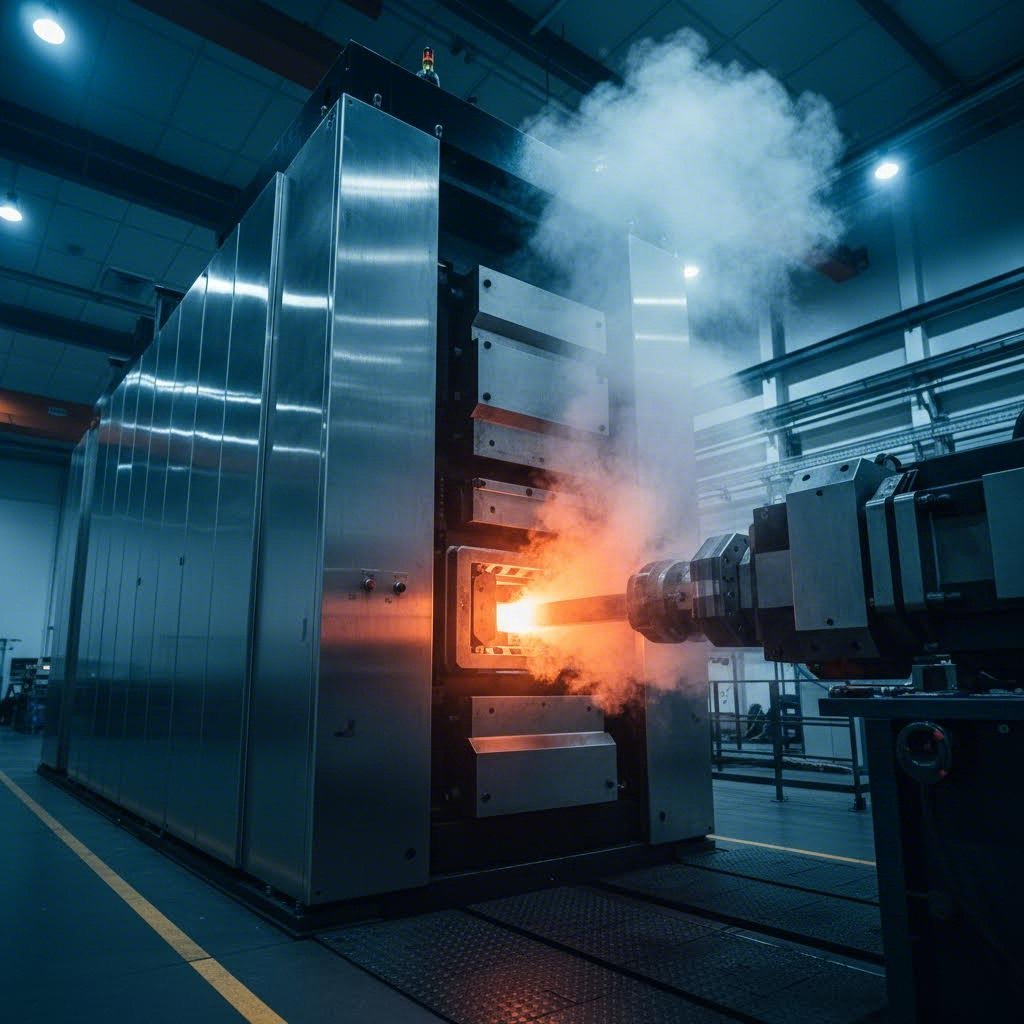
You've nailed down your alloy selection, specified precise tolerances, and optimized your design for manufacturability. Now comes perhaps the most consequential decision of all: who actually makes your parts? The wrong supplier choice can unravel months of careful engineering work through quality issues, missed deadlines, and communication breakdowns.
Finding reliable aluminum extrusion services requires looking beyond glossy websites and competitive quotes. According to industry procurement experts, evaluating supplier capability demands analysis of die design, process control, machining integration, and quality systems—factors that determine whether you receive consistent results or constant headaches.
So how do you separate capable partners from those who'll leave you scrambling? Let's walk through the evaluation criteria that matter most.
Think of supplier evaluation like building a house—you need a solid foundation before worrying about the finishing touches. Start with the fundamentals that directly impact whether a supplier can actually produce what you need.
Armed with evaluation criteria, you need the right questions to separate marketing claims from actual capabilities. Here's what experienced procurement teams ask before signing contracts:
Die design and maintenance capability: Does the supplier manufacture dies in-house or outsource to third parties? In-house die workshops enable faster modifications when problems arise. If dies fail or produce inaccurate dimensions, delays ripple across your entire project. Suppliers with internal tooling capabilities can respond quickly, ensuring production continuity.
Quality control systems: Request specifics about dimensional inspection standards, surface roughness testing, hardness verification, and documentation practices. Key certifications include ISO 9001 for quality management, EN 755-9 for dimensional tolerances, and RoHS/REACH compliance for regulatory requirements. Ask whether the factory provides traceable lot data and QA certificates with each batch—essential for long-term industrial relationships.
Lead time reliability: According to procurement specialists, typical benchmarks include 10-20 days for die manufacturing, 7-15 days for extrusion production, and 5-10 days for surface finishing—totaling 4-6 weeks for standard projects. Ask how suppliers manage production scheduling during peak seasons. Factories with ERP-based production systems generally deliver more consistently than those relying on manual scheduling.
Industry experience: Has the supplier worked with applications similar to yours? Experience with 80/20 framing extrusion differs significantly from aerospace structural components or EV battery enclosures. According to manufacturing experts, broad multi-industry experience enables a wider range of custom extrusion capabilities and problem-solving approaches.
Communication and transparency: Will the supplier provide proactive DFM feedback on your drawings? Do they share inspection photos, reports, and production videos before shipment? Procurement managers value partners who prevent issues rather than reacting after defects occur. A 30+ year track record with technical team support throughout the process indicates the collaborative approach that complex machined extrusion projects demand.
When evaluating 80/20 suppliers or custom profile manufacturers, the same principles apply. Whether you need tnutz extrusion compatibility, specialized T-slot modifications, or completely custom profiles, the supplier's integrated capabilities and technical expertise determine project success far more than initial quoted prices.
The investment in thorough supplier evaluation pays dividends throughout your project lifecycle—in consistent quality, reliable delivery, and the confidence that comes from working with partners who truly understand machined aluminum extrusion from die design through final inspection.
You've now navigated the nine critical decisions that separate successful machined aluminum extrusion projects from costly failures. From alloy selection through partner evaluation, each choice builds upon the last—creating either a foundation for success or a chain of compromises that undermines your final product.
But knowledge without action remains just theory. So how do you translate these insights into a concrete path forward? Let's synthesize the key decision criteria and map out your next moves.
Think of your project as a puzzle where each piece must interlock perfectly. The decisions you've explored throughout this guide connect in ways that demand holistic thinking rather than isolated choices:
According to industry design experts, involving your extruder early in the process captures the perspective of manufacturing engineers with relevant experience—often identifying improvements impossible to spot from design software alone.
Ready to transition from planning to execution? Here's the practical roadmap that experienced engineers follow:
Step 1: Document your requirements completely. According to Profile Precision Extrusions, start with at least a basic sketch specifying your ideal dimensions and tolerances. Identify the aluminum alloy and temper, highlight cosmetically important surfaces, specify any required coatings, and determine finished length and quantity requirements.
Step 2: Request design feedback before finalizing. Share your drawings with potential manufacturing partners and ask specifically for DFM (Design for Manufacturability) input. Capable suppliers will identify opportunities to reduce cost, improve performance, or accomplish both with minimal design changes.
Step 3: Plan for realistic lead times. Typical benchmarks include 10-20 days for die manufacturing, 7-15 days for extrusion production, and 5-10 days for surface finishing—totaling 4-6 weeks for standard projects. Rush orders are possible but come with premium pricing and increased risk.
Step 4: Anticipate design evolution. According to production specialists, modifications during the production phase are natural—driven by improved assembly productivity, enhanced performance, or cost reduction opportunities. Choose partners who accommodate changes without treating every adjustment as a contract renegotiation.
The most successful machined aluminum extrusion projects share one characteristic: they match project requirements precisely to supplier capabilities. Overspecifying wastes money; underspecifying creates quality failures. The goal is optimization—finding partners whose equipment, experience, and processes align with exactly what your application demands.
For readers ready to explore custom solutions, manufacturers with comprehensive capabilities offer distinct advantages. Consider partners like Shengxin Aluminium's factory-direct custom extrusion services, where 30+ years of experience translates into technical team support throughout your project lifecycle. Their operation—spanning 35 extrusion presses from 600T to 5500T, state-of-the-art CNC machining centers, and comprehensive surface treatments including custom-color anodizing and powder coating—exemplifies the integrated approach that eliminates coordination headaches between multiple vendors.
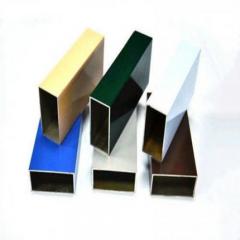
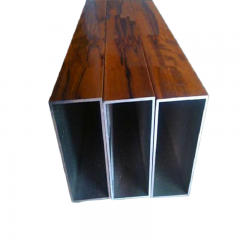
Whether you need custom 6063 aluminum tubes for architectural applications, precision-machined 80-20 aluminum components for automation systems, or complex industrial profiles for EV battery enclosures, the path forward starts with honest assessment of your requirements and careful matching to supplier capabilities.
The extrusion frame you're designing today could serve your application for decades. The machined features you specify will determine whether assembly goes smoothly or becomes a frustrating exercise in workarounds. And the partner you select will influence whether your project timeline holds or slips into costly delays.
Armed with the insights from these nine critical decisions, you're positioned to make choices that serve your project's long-term success—not just its immediate budget constraints. That's the difference between machined aluminum extrusion projects that merely ship and those that truly succeed.
80/20 aluminum extrusion refers to T-slot modular framing systems featuring standardized profiles with T-shaped slots for bolt-free assembly. The name derives from the Pareto principle—achieving 80% of results with 20% of effort compared to traditional welding. Choose your series based on load requirements: 10 Series (1"x1") suits lightweight displays, 15 Series (1.5"x1.5") handles medium-duty automation frames, while 40 and 45 Series manage heavy industrial applications. Stick with one series throughout your project for connector compatibility.
Custom extrusion dies typically cost $500-$2,500, while casting tools can exceed $30,000. The extrusion-plus-machining approach becomes economical when volumes exceed 500-2,000 pieces, profile geometry requires hollow sections or complex shapes, and material utilization matters—since extrusion produces near-net shapes with minimal waste versus 80%+ scrap from billet machining. Raw material constitutes approximately 90% of basic extrusion costs, making efficient material usage critical for project economics.
6061-T6 aluminum is the most recommended alloy for CNC machining due to its excellent machinability rating, balanced strength, and good corrosion resistance. For architectural applications requiring superior anodized finishes, choose 6063. When maximum strength-to-weight ratio is essential—aerospace or military applications—7075 delivers, though it causes more tool wear and costs significantly more. The 6xxx series generally offers the best combination of machinability, weldability, and cost-effectiveness for most precision extrusion projects.
Standard CNC aluminum operations deliver tolerances around +/-0.127mm (+/-0.005"). High-precision setups can achieve +/-0.02mm for demanding applications. Industry-specific requirements vary: automotive/EV applications typically need +/-0.1mm to +/-0.25mm, electronics and heat sinks require +/-0.05mm to +/-0.1mm, while industrial automation tolerates +/-0.15mm to +/-0.3mm. Tighter tolerances increase costs through additional machine time, specialized fixturing, and manual inspection requirements.
Prioritize integrated extrusion and machining capabilities under one roof to eliminate coordination issues between vendors. Evaluate press tonnage range (600T-5500T covers most applications), CNC machining center specifications including multi-axis capability, and in-house surface treatment options. Request details about die manufacturing capability, ISO 9001 certification, lead time reliability (typically 4-6 weeks total), and technical support from design through production. Experienced suppliers with 30+ years of operation provide valuable DFM feedback that optimizes both cost and performance.



 Інтернет-сервіс
 0086 136 3563 2360
 sales@sxalu.com
 +86 136 3563 2360
 Українська
 English
 français
 Deutsch
 русский
 español
 português
 العربية
 ไทย
ไทย Việt
Việt