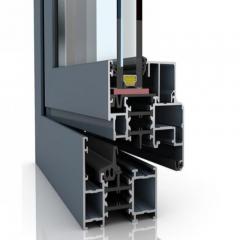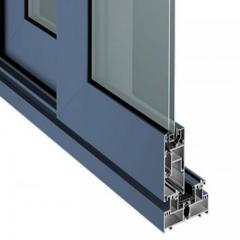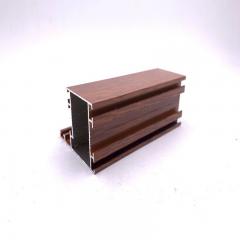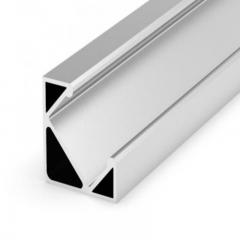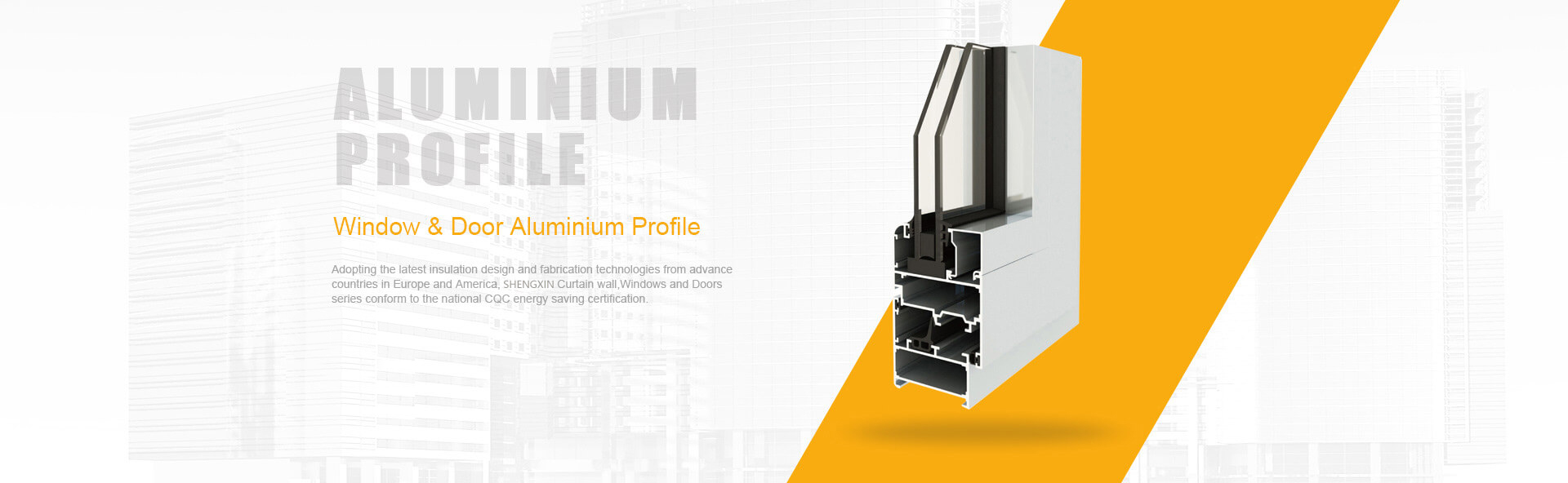
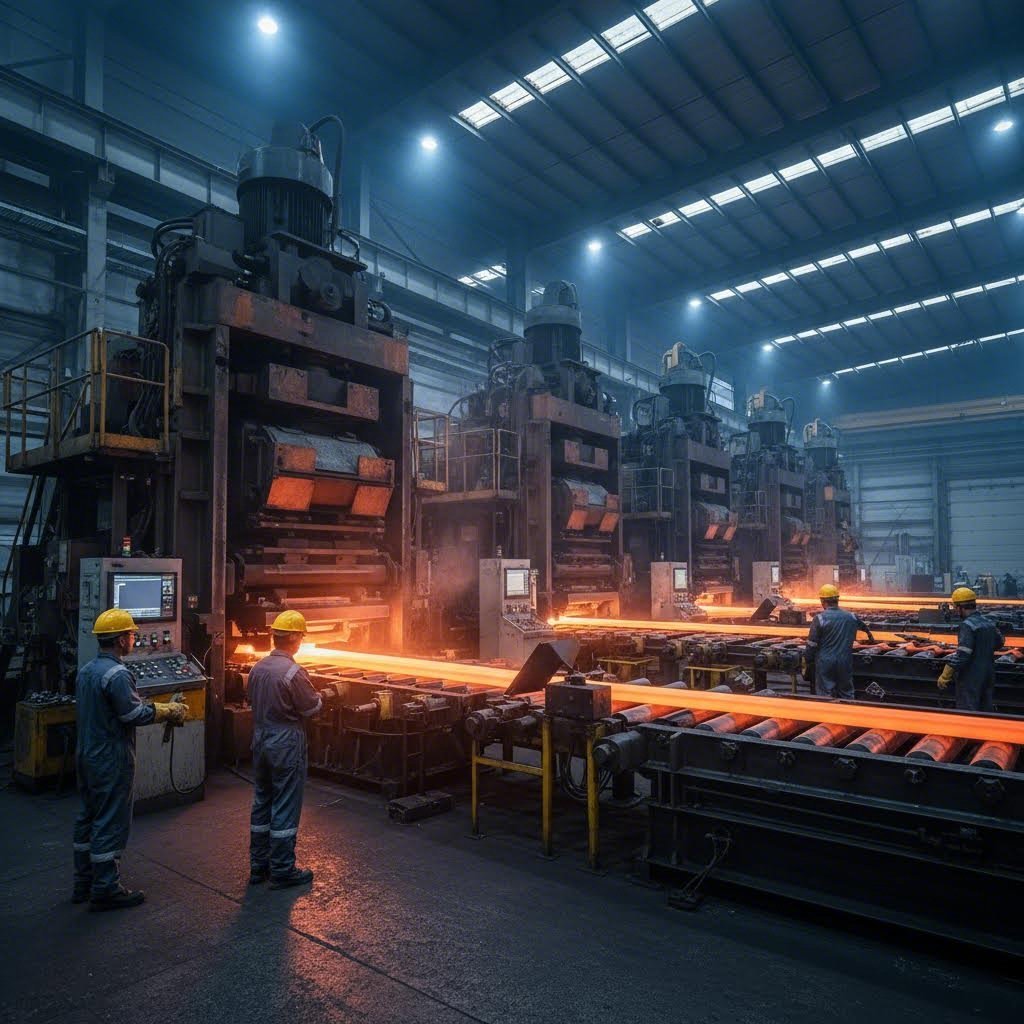
Ever wondered how those perfectly shaped aluminum frames in your windows or the sleek channels in your car's interior come to life? The answer lies in the specialized work of an aluminum extrusion company. These manufacturers transform raw aluminum into precisely shaped profiles that power countless industries—from construction and automotive to electronics and aerospace.
Aluminum extrusion is a manufacturing technique that forces heated aluminum alloy material through a shaped die to create parts with specific cross-sectional profiles. Think of it like squeezing toothpaste through a tube—the material emerges in the exact shape of the opening.
So, what is aluminum extrusion in practical terms? Imagine a hydraulic press capable of applying up to 15,000 tons of pressure. A cylindrical block of aluminum (called a billet) is heated to around 400-500°C—hot enough to become malleable but not molten. This softened billet is then pushed through a steel die with a precisely cut opening. The result? Extruded aluminum emerges in the exact cross-sectional shape of that die opening.
What are aluminum extrusions used for? The applications are virtually endless. According to Technavio research, the worldwide aluminum extrusion demand experienced a growth rate of approximately 4% between 2019 and 2023, driven by innovations in product manufacturing across multiple sectors.
The aluminum extrusion process involves several carefully orchestrated steps:
When you define aluminum extrusion against alternatives like casting or machining, several advantages become clear. Extrusion creates profiles with uniform grain structure, resulting in superior mechanical strength. The process generates less material waste compared to casting, making it more sustainable for high-volume production. Additionally, extrusion excels at producing long, consistent profiles—something casting simply cannot achieve efficiently.
Throughout this guide, you'll discover everything from alloy selection and surface treatments to evaluation criteria for choosing the right manufacturing partner. Whether you're sourcing standard profiles or developing custom solutions, understanding how these specialized companies operate will help you make informed decisions for your next project.
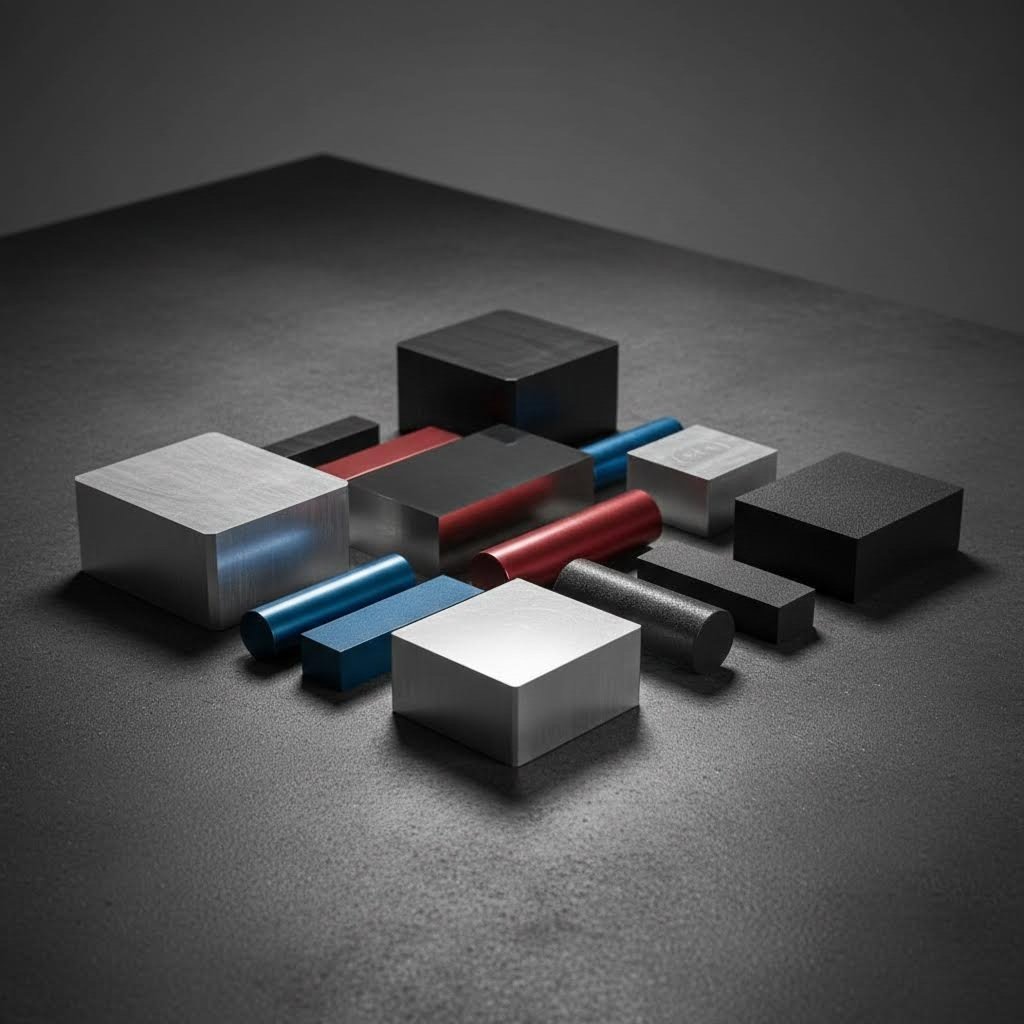
You've probably seen specifications like "6061-T6" or "6063-T5" on engineering drawings or product sheets. Sounds complex? These codes actually tell you everything about the aluminum's composition and strength characteristics. Understanding them helps you communicate effectively with your extrusion partner and ensures your project gets the right material from the start.
Not all aluminum is created equal. The extrusion of aluminium relies heavily on the 6000 series alloys, which combine magnesium and silicon as their primary alloying elements. Each alloy brings distinct advantages to the table:
6063 Aluminum reigns as the most popular choice for extrusions. Often called "architectural aluminum," it offers exceptional extrudability and produces a smooth surface finish that's ideal for anodized aluminum applications. According to Gabrian International, this alloy contains 0.45-0.9% magnesium and 0.2-0.6% silicon—lower concentrations that enhance its formability.
6061 Aluminum steps up when strength matters more than aesthetics. Known as "structural aluminum," it contains higher magnesium content (0.8-1.2%) for increased tensile strength. You'll find it in aerospace components, marine fittings, and load-bearing structural applications.
6005 Aluminum bridges the gap between these two, offering better strength than 6063 with improved extrusion characteristics compared to heavier-duty alloys. It's commonly specified for tubing, rail profiles, and applications requiring moderate strength with good formability.
| Alloy Number | Key Properties | Common Applications | Best Use Cases |
|---|---|---|---|
| 6063 | Excellent extrudability, superior surface finish, good corrosion resistance | Window frames, door frames, architectural trim, furniture | When aesthetics and anodizing quality matter most |
| 6061 | High strength-to-weight ratio, good machinability, weldable | Aerospace structures, marine components, automotive parts | Structural applications requiring maximum strength |
| 6005 | Higher strength than 6063, good extrudability, moderate formability | Tubing, rail profiles, ladders, scaffolding | When 6063's strength isn't sufficient but 6061 is overkill |
| 7075 | Highest strength commercially available, fatigue resistant | Aircraft components, high-stress structural parts | Highly stressed applications where weight is critical |
The letter and number after the alloy code—that's the aluminum temper designation. It tells you how the metal was processed after extrusion to achieve specific aluminum hardness and strength levels.
Here's what happens: After extrusion, profiles are typically quenched (rapidly cooled) right out of the press while still hot. This creates what's technically called T3 material. The profile then undergoes aging—a controlled heat treatment process that significantly increases strength.
According to Engineering Express, the key aluminium temper designations you'll encounter include:
The difference between T5 and T6 aluminum tempers comes down to processing. T6 involves additional solution heat treatment (raising the temperature to about 980°F and holding it there), by quenching and artificial aging at 325-400°F. This extra step produces higher tensile strength but adds cost.
Choosing the right alloy-temper combination requires balancing multiple factors. When you reference an aluminum temper chart, you'll notice that 6063-T5 offers sufficient strength for most architectural applications while keeping costs reasonable. Meanwhile, 6061-T6 delivers approximately 40% higher tensile strength—essential for structural components but unnecessary for decorative trim.
Experienced extrusion companies guide this decision by asking the right questions: What loads will the profile bear? Will it be exposed to moisture or corrosive environments? Does the surface need to accept anodized aluminum finishes or powder coating? Is machinability important for secondary operations?
The answers shape everything from alloy selection to surface treatment recommendations—which is exactly where we'll turn our attention next.
Now that you understand alloys and tempers, let's explore what shapes are actually possible. Walk through any manufacturing facility and you'll spot aluminum extrusion profiles everywhere—from simple rectangular tubes supporting equipment frames to intricate channels housing electrical wiring. The variety is staggering, yet every profile falls into a few fundamental categories.
When you start sourcing aluminum extrusion shapes, you'll encounter two distinct paths: standard profiles and custom designs. Understanding when each makes sense can save you thousands in tooling costs—or help you achieve performance that off-the-shelf solutions simply can't match.
Standard aluminum profiles come from existing dies that extrusion companies already have in their inventory. According to industry sources, these profiles feature fixed cross-sectional dimensions produced according to established standards. They're mass-produced, immediately available, and require no additional mold-opening fees.
Common standard profile categories include:
Custom aluminum extrusions are designed specifically for your project. The extrusion company creates a new die based on your specifications, producing an aluminum profile that precisely matches your requirements. According to design guidelines from the Aluminum Extruders Council, extrusion tooling costs far less than stamping dies—making customization surprisingly accessible.
When does custom tooling investment make sense? Consider it when standard profiles can't meet your functional requirements, when consolidating multiple parts into a single extrusion reduces assembly costs, or when your production volumes justify the die investment (typically 500+ pieces annually).
Beyond the standard-versus-custom decision, aluminum extrusion shapes fall into three structural categories based on their cross-section. Understanding these helps you communicate effectively with your extrusion partner.
Solid profiles are exactly what they sound like—fully filled with no internal voids. Think of an aluminum extrusion bar, an angle, or a flat bar stock. According to KMC Aluminium, solid profiles are commonly found as rods, beams, or angle extrusions. They're the simplest to produce and offer maximum material strength per cross-section.
Hollow profiles incorporate one or more enclosed voids—rectangular tubes, round pipes, or complex multi-cell designs. These extruded aluminum shapes deliver excellent strength-to-weight ratios because material is distributed where it matters most. When used horizontally as beams, hollow profiles offer high load-bearing capacity while minimizing weight. You'll find them in architectural support frameworks, industrial equipment frames, and structural applications.
Semi-hollow profiles occupy the middle ground, featuring partially enclosed voids. The technical definition involves the relationship between void area and surrounding wall thickness. Semi-hollow designs offer the most variability in shape while maintaining good dimensional stability—perfect for complex functional requirements.
What's truly remarkable about extrusion is its ability to create intricate cross-sections in a single operation. Small aluminum extrusions with detailed features that would require multiple machining operations can be produced in one pass through a die.
The Aluminum Extruders Council notes that most economical profiles fit within a circumscribing circle diameter (CCD) between one and ten inches. Profiles under 8 inches CCD reduce costs significantly, and keeping weight-per-foot at 3 pounds or less enhances press efficiency.
Good design practices for extruded aluminum shapes include:
Specialized profiles serve specific industries. Louvre profiles create decorative architectural elements with angled slats. Door section profiles support heavy-duty glass installations. Sliding door profiles—among the earliest aluminum profile designs—remain popular for their simplicity and weather resistance.
Whether you need a simple aluminum extrusion bar or an intricate multi-function profile, the extrusion process accommodates remarkable design flexibility. The next consideration? How you finish that profile to meet aesthetic and performance requirements.
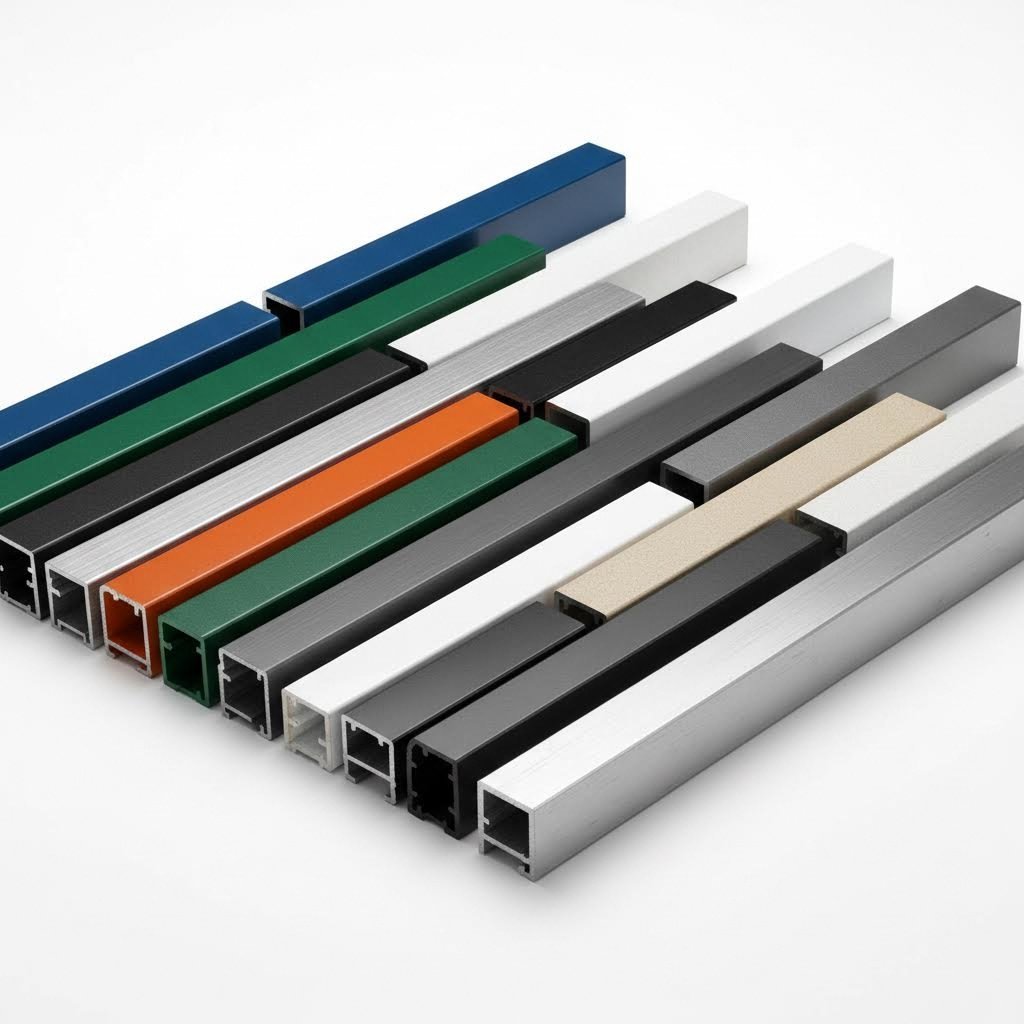
You've selected the right alloy, designed your profile, and watched it emerge from the extrusion press. Now comes a critical question: how will you protect and enhance that raw aluminum surface? The finishing choices you make determine not just how your extrusion looks—but how long it lasts, where it can be used, and what maintenance it requires over its lifetime.
An aluminum extrusion company's value often extends far beyond the press itself. Surface treatments, fabrication services, and finishing options transform basic profiles into application-ready components. Understanding these options helps you specify exactly what you need—and avoid paying for treatments that don't match your requirements.
Three primary finishing technologies dominate the extrusion industry: anodizing, powder coating, and PVDF (Kynar) paint. Each serves distinct purposes, and choosing wisely depends on your specific application demands.
| Treatment Type | Key Benefits | Ideal Applications | Durability Characteristics |
|---|---|---|---|
| Anodizing | Superior corrosion resistance, metallic aesthetic options, integral oxide layer | Architectural facades, outdoor furniture, marine environments, high-moisture areas | Excellent abrasion and fade resistance; oxide layer becomes part of aluminum |
| Powder Coating | Unlimited color options, no VOC emissions, impact resistant, primer-free application | Indoor/outdoor furniture, industrial equipment, automotive components, consumer goods | AAMA 2605-certified finishes offer 20-30 year warranties; highly resistant to chipping |
| PVDF Paint (Kynar) | Exceptional UV stability, consistent color matching, field-repairable, proven 50+ year track record | High-end architectural projects, curtain walls, aluminum extrusion trim, building facades | Industry-leading color retention; 20-year manufacturer warranties standard |
| Mechanical Finishes | Cost-effective, immediate availability, various textures possible | Industrial applications, pre-treatment preparation, decorative surfaces | Varies by finish type; often combined with other treatments |
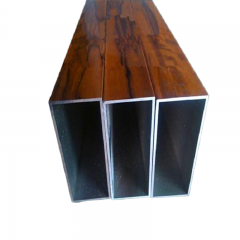
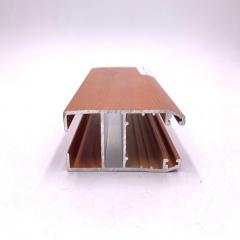
Beyond these primary options, specialized treatments address niche requirements. Micro-arc oxidation creates ceramic-like surfaces for extreme wear resistance. Sublimation printing transfers wood-grain or stone patterns onto aluminum extrusion tube profiles for architectural applications. Curved aluminum extrusion components often require flexible coating systems that won't crack during forming.
Surface treatments represent just one category of value-added services. Many extrusion companies offer comprehensive fabrication capabilities that transform raw profiles into finished components ready for assembly.
Common fabrication services include:
When an aluminum extrusion company handles these secondary operations in-house, you benefit from simplified logistics, reduced handling damage, and single-source accountability. Rather than coordinating between an extruder, a machining shop, and a finishing house, you receive complete assemblies ready for your production line.
Consider aluminium extrusion trim for window systems: the profile might need precision cutting, corner notching, weatherstrip groove machining, and anodizing—all before it reaches the window manufacturer. Companies offering complete processing eliminate coordination headaches while maintaining tighter quality control.
This comparison generates more questions than any other finishing decision. Both protect aluminum effectively, but their characteristics suit different situations.
Choose anodizing when:
Choose powder coating when:
According to Master Craft Finishers, advances in powder formulation have produced AAMA 2605-certified finishes with 20 to 30-year warranties—placing them on par with traditional PVDF paints for architectural durability.
However, powder coating has limitations. Color matching often requires larger minimum orders compared to paint. Surface imperfections like orange peel texture can occur. And damaged sections are harder to touch up than painted surfaces. For projects requiring field repairs or perfect color consistency across multiple orders, PVDF paint may prove more practical despite higher initial costs.
For demanding architectural applications—particularly aluminum angle trim and facade components—PVDF coatings remain the gold standard. Their unmatched UV stability means colors stay true even after decades of sun exposure. The ability to repair incorrectly coated parts and touch up field damage provides flexibility that powder coatings struggle to match.
Yet the industry is shifting. PVDF's high VOC content and requirement for licensed applicators conflict with sustainability goals and accessibility needs. According to industry analysis from Master Craft Finishers, powder coatings' low-to-no VOC nature makes them more future-proof and internationally viable as environmental regulations tighten.
The practical takeaway? Match finish selection to project requirements. Extruded aluminum trim on a landmark building might warrant PVDF's proven longevity. Industrial aluminum sheet components might perform perfectly with cost-effective powder coating. Your extrusion partner should help navigate these trade-offs based on real-world performance data rather than pushing a single solution.
With surface treatment decisions clarified, the next step involves understanding where these finished profiles actually go—and what specialized requirements different industries demand from their extrusion partners.
Where do all those precisely crafted profiles actually end up? The answer spans virtually every sector of modern manufacturing. From the aluminum fence panels securing residential properties to the precision components inside military vehicles, extruded aluminum serves applications demanding vastly different performance characteristics. Understanding these industry-specific requirements helps you evaluate whether a potential extrusion partner can truly meet your project's unique demands.
Construction remains the largest consumer of aluminum extrusions globally—and for good reason. The material's corrosion resistance, aesthetic versatility, and favorable strength-to-weight ratio make it ideal for structures that must perform for decades while maintaining visual appeal.
Architectural applications span both functional and decorative elements:
The growing popularity of black aluminum fence installations illustrates how finishing technology expands architectural possibilities. Powder-coated or anodized profiles maintain their dark finish without the rust problems plaguing steel alternatives—particularly important in coastal or high-humidity environments.
Construction projects typically require compliance with building codes and industry standards. Profiles must meet specific structural calculations, and finishing systems often need AAMA certification for warranty coverage. An experienced extrusion partner understands these requirements and provides documentation supporting project approvals.
Beyond architecture, aluminum extrusions form the backbone of countless industrial applications. Manufacturing facilities rely on extruded profiles for everything from machine guarding to material handling systems.
Key industrial applications include:
Industrial buyers often prioritize dimensional consistency and tight tolerances. According to Hydro's industry specifications, standard extrusions follow ASTM B221 for bars, rods, and profiles, while aluminum square tubing and pipe fall under ASTM B429 or B241 specifications. These standards define mechanical properties, chemical composition limits, and testing requirements that industrial applications demand.
Automotive applications represent another major industrial segment. According to the Aluminum Extruders Council, automotive aluminum plays a pivotal role in reducing vehicle weight, improving fuel efficiency, and meeting strict emissions standards. From crash management systems to battery enclosures in electric vehicles, extruded aluminum components are becoming essential in modern transportation.
Some sectors demand far more than standard commercial specifications. Aerospace, defense, and medical applications impose rigorous certification and documentation requirements that separate capable suppliers from the rest.
Aerospace and Defense
Military and defense applications exemplify specialized requirements. According to Taber Extrusions, aluminum extrusions serve critical roles in aircraft construction, armored vehicles, and weapons systems. The material's lightweight yet strong characteristics—including corrosion resistance and excellent strength-to-weight ratio—make it invaluable where every gram matters.
Defense work typically requires:
Taber's history illustrates this specialization—their Russellville facility was built in the mid-1960s specifically to manufacture AM2 landing mats for the US military, portable runway systems used worldwide for military aircraft operations.
Electrical and Electronic Applications
Electrical applications demand specific alloy formulations with guaranteed conductivity. According to Hydro's specifications, ASTM B236 covers aluminum bars for electrical purposes (bus bars), applying only to 1350 alloy in specific tempers. ASTM B317 addresses extruded profiles for bus conductors using 6101 alloy, with mandatory electrical conductivity testing per ASTM B193.
These specifications ensure that aluminum fence panels for security applications perform very differently from bus bars carrying thousands of amperes—even though both start as extruded aluminum.
Renewable Energy
Solar, wind, and energy storage applications combine outdoor durability requirements with structural performance needs. Mounting systems must withstand decades of UV exposure, temperature cycling, and environmental stress while maintaining structural integrity. Extrusion companies serving this sector typically demonstrate:
The Aluminum Extruders Council notes that aluminum's 100% recyclability without property loss makes it particularly attractive for renewable energy applications, aligning with the sector's sustainability focus.
Whether your application involves simple aluminum fence panels or flight-critical aerospace components, matching your requirements to a supplier's actual capabilities prevents costly misalignments. The question then becomes: how do you systematically evaluate potential partners to ensure they can deliver what your project demands?
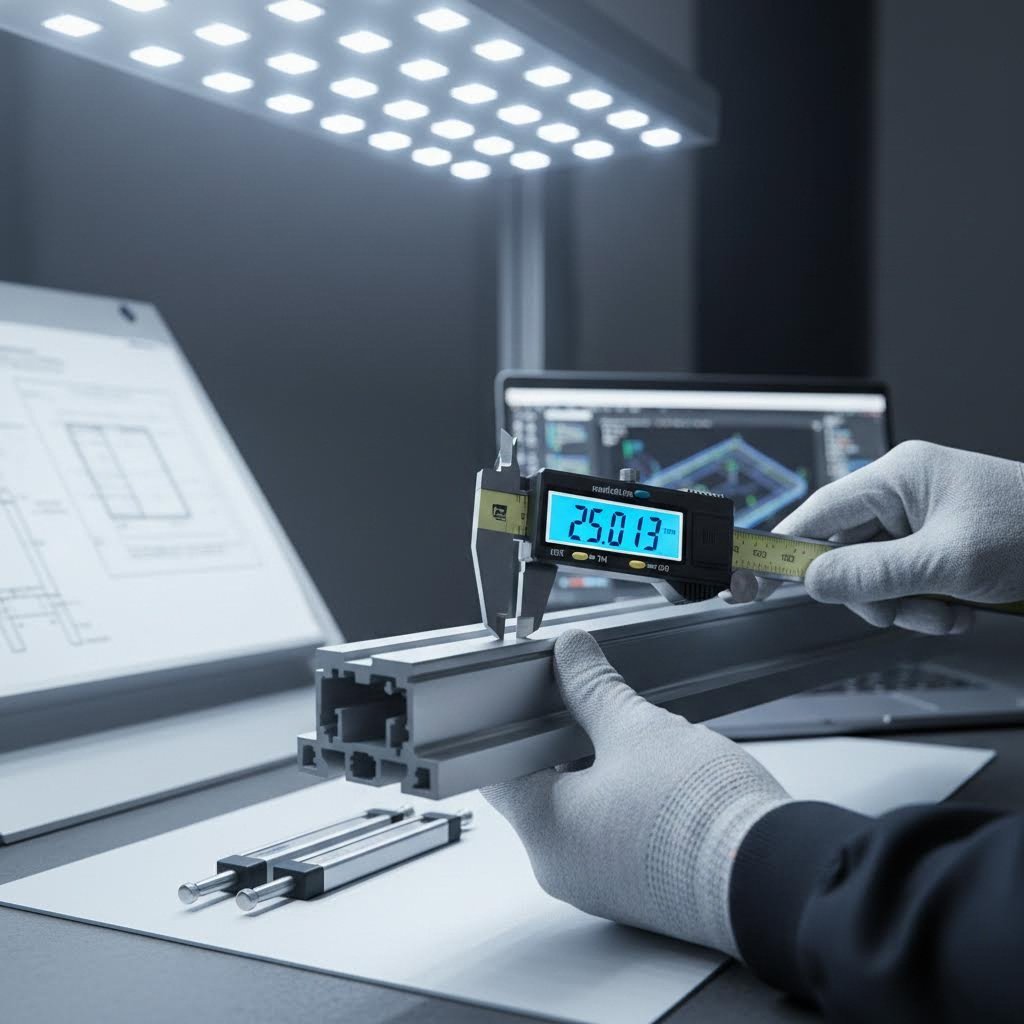
You've defined your alloy requirements, designed your profile, and identified the finishing treatments you need. Now comes perhaps the most consequential decision: choosing which aluminum extrusion company will actually manufacture your components. This choice affects everything from product quality and delivery reliability to long-term cost efficiency and technical support availability.
Unlike commodity purchases where lowest price wins, selecting aluminum extrusion suppliers requires evaluating capabilities that directly impact your project's success. The wrong partner can mean missed deadlines, quality issues, or costly redesigns. The right one becomes an extension of your engineering team—helping optimize designs, solve problems proactively, and scale with your business needs.
When comparing aluminum extrusion companies, certain capabilities matter far more than glossy marketing materials suggest. Here's a systematic framework for assessment:
Beyond capability checklists, direct conversations reveal crucial details about how a supplier actually operates. These questions help distinguish genuinely capable partners from those who simply say the right things:
Regarding materials and processes:
Regarding production flexibility:
According to industry best practices, some suppliers specialize in small batch or custom orders while others focus on high-volume production. Confirming alignment with your volume needs prevents mismatched expectations later.
Regarding quality and documentation:
Regarding cost structure:
According to die cost analysis, tooling costs range from $300-$800 for simple solid dies to $1,500-$5,000+ for complex multi-cavity dies. Understanding these costs upfront prevents budget surprises and helps evaluate total project economics.
Experience teaches that certain behaviors reliably predict future problems. Watch for these warning signs during your evaluation:
MOQs and pricing structures vary dramatically across aluminum extrusion suppliers. Understanding these factors helps match suppliers to your actual needs:
For custom profiles: New die development represents a fixed cost regardless of order size. According to cost analysis data, die amortization works like this: a $2,000 die producing 40,000 kg adds only $0.05 per kg—but the same die producing just 4,000 kg adds $0.50 per kg. Higher volumes dramatically improve per-piece economics.
For standard profiles: Many suppliers stock common shapes for immediate shipment with lower MOQs. If your design can work with existing standard aluminum extrusions, you avoid tooling costs entirely and typically access smaller initial quantities.
Volume-price relationships: Extrusion pricing typically includes setup charges spread across order quantity. Larger orders reduce per-piece setup allocation. Ask specifically about volume break points—many suppliers offer significant discounts at 1,000 lbs, 5,000 lbs, or 10,000 lbs thresholds.
The evaluation process takes time, but thoroughness here prevents expensive problems later. Once you've identified a capable partner, the next phase involves understanding what to expect as your project moves from specifications through production.
You've selected a capable partner—now what? Understanding the typical project workflow helps you plan realistic timelines, prepare the right documentation, and communicate effectively throughout the engagement. Whether you're ordering custom extrusions or sourcing standard extrusion profiles, knowing what to expect at each phase prevents surprises and keeps your project on track.
How long does an aluminum extrusion project actually take? The answer depends heavily on whether you're working with existing dies or developing new tooling. According to industry data, die complexity stands out as the primary factor affecting lead times—complex profiles with multi-void hollow shapes or tight tolerances can take three to five times longer to develop than straightforward solid profiles.
Here's what a typical project timeline looks like from initial inquiry through production:
For standard profile extrusions available from existing dies, you can often skip the die development phase entirely—reducing lead times to just 2-3 weeks for many orders. According to Star Extruded Shapes, using specialized design software like AutoCAD or SolidWorks enables faster and more precise quoting, streamlined prototyping, and reduced time to market.
What about rush orders? Be realistic here. According to manufacturing analysis, genuine rush jobs needing results within 72 hours face physical constraints that can't be overcome—custom tooling requires time to make and test, heat treatments need at least eight hours in the furnace, and pushing production faster yields diminishing returns. Plan accordingly.
Clear specifications prevent costly miscommunication and revision cycles. Before contacting suppliers, gather the following information to streamline the quotation process:
According to VMT's manufacturing guide, quality control for aluminum extrusions typically includes dimensional inspection to verify measurements align with specifications, surface finish evaluation ensuring smoothness and consistency, and overall condition checks for defects or imperfections. Understanding these inspection points helps you specify what documentation you'll need.
Don't overlook aluminum extrusion tolerances in your specifications. Standard industry tolerances work for most applications, but precision components may require tighter specifications. Be explicit about which dimensions are truly critical—specifying unnecessarily tight tolerances across the board increases costs without adding value.
Effective communication throughout the project lifecycle prevents problems before they become expensive. Here's how to maintain productive dialogue with your extrusion partner:
During quotation and design:
During die development:
During production:
According to manufacturing analysis, secondary operations like anodizing can take 24-72 hours just for bath immersion, sealing, and curing. Smaller orders may wait longer in batch processing—sometimes 30% extra time compared to full furnace loads. Understanding these realities helps you set appropriate expectations internally.
The best supplier relationships evolve into true partnerships where both parties communicate openly about challenges and opportunities. With clear specifications, realistic timeline expectations, and consistent communication, your custom extrusions or profile extrusions project moves smoothly from concept through delivery. But there's one more consideration increasingly influencing procurement decisions: environmental responsibility.
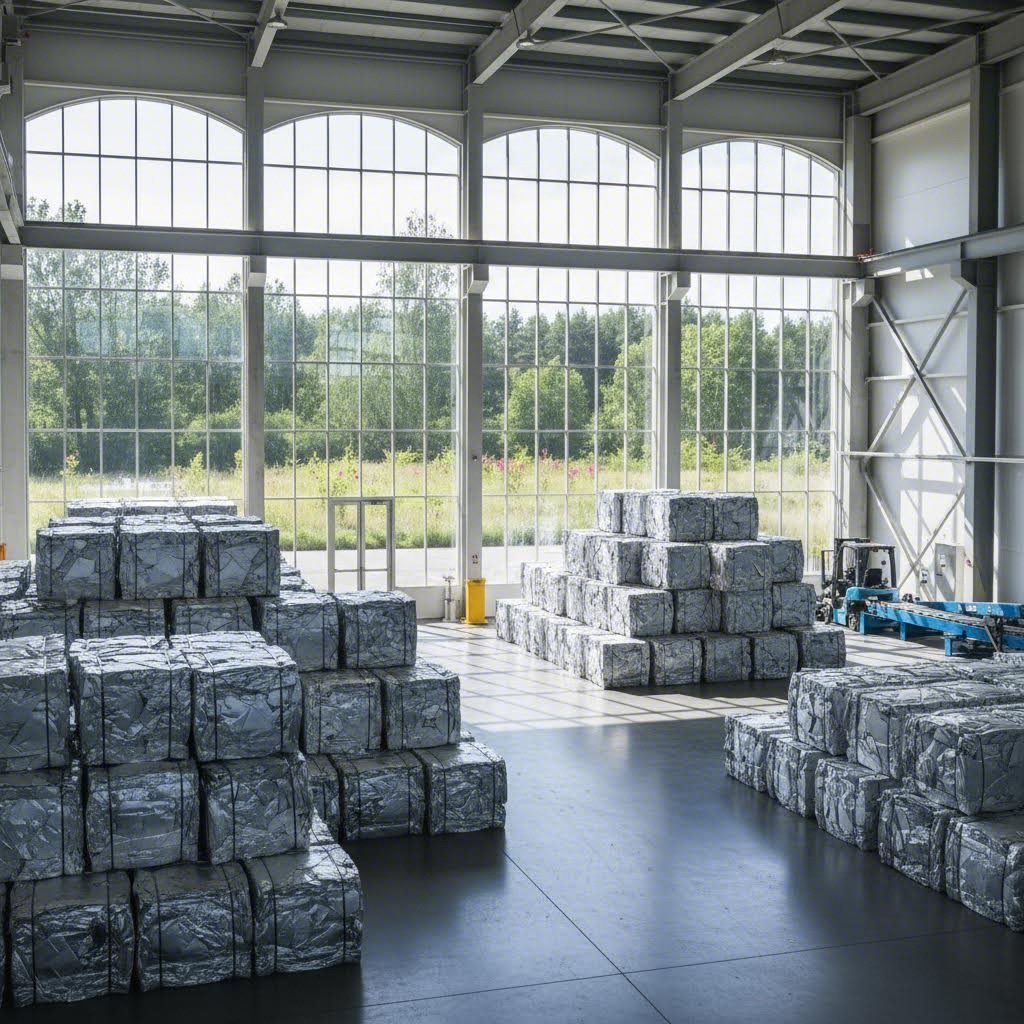
Environmental responsibility is no longer a nice-to-have—it's becoming a decisive factor in procurement decisions. Whether you're specifying aluminum profiles for LEED-certified buildings or sourcing extruded aluminum profiles for products with sustainability claims, understanding your supplier's environmental credentials matters. The good news? Aluminium extrusion offers inherent sustainability advantages that few other manufacturing processes can match.
Here's what makes aluminum remarkable from an environmental perspective: it's infinitely recyclable without any degradation in properties. Unlike plastics that degrade with each recycling cycle, aluminum retains its full structural integrity no matter how many times it's processed.
Approximately 75% of all aluminum ever produced is still in active use today, continuously circulating through the economy rather than sitting in landfills.
According to Novelis research, recycling aluminum saves 95% of the energy required for primary production—making it one of the most energy-efficient materials to recycle. This dramatic energy reduction translates directly to environmental impact: recycling aluminum can reduce greenhouse gas emissions by up to 95% compared to producing primary aluminum from raw materials.
The Aluminum Extruders Council reports that North American extruders consumed 4 billion pounds of scrap aluminum in 2021—representing 55% of their material needs. With 170 extrusion facilities across 40 U.S. states and Canadian provinces, many operating their own remelt facilities, the industry has built robust infrastructure for recycled content utilization.
When assessing an extruded aluminum corporation's environmental commitment, look beyond marketing claims to verifiable credentials:
Environmental Product Declarations have been called "environmental nutrition labels" for materials—and they're increasingly requested for green building certifications and sustainability reporting. The Aluminum Extruders Council maintains industry-average EPDs covering mill finish, painted, anodized, and thermally improved extrusions, certified by UL and based on data from 30 facilities representing nearly 40% of North American production.
What do EPDs tell you? They quantify cradle-to-gate lifecycle environmental impacts, including carbon footprint, water usage, and resource depletion. For aluminium extrusion, the EPDs reveal an important insight: the predominant determination of CO2 equivalent comes from the feedstock—the aluminum billet itself. For standard mill finish extrusions, the extrusion process contributes less than 25% of the total carbon impact.
This means achieving significant reductions in embodied carbon requires adjusting the billet mix—either increasing recycled content or shifting primary content toward aluminum produced from less carbon-intensive energy sources. When evaluating suppliers, ask about their billet composition and whether they can provide low-carbon options for projects with strict sustainability requirements.
As environmental regulations tighten and customers increasingly demand sustainable supply chains, an extruded aluminum corporation's environmental credentials become competitive differentiators. The suppliers investing in sustainability infrastructure today will be best positioned to meet tomorrow's requirements—making environmental evaluation an essential part of your partner selection process.
You've now explored the complete landscape of aluminum extrusion manufacturing—from alloy selection and profile design through surface treatments, industry applications, and supplier evaluation frameworks. Armed with this knowledge, you're ready to transform project requirements into actionable supplier conversations. But where do you begin? Let's distill everything into a practical roadmap for finding your ideal extrusion partner.
Before reaching out to potential suppliers, revisit the core criteria that separate exceptional partners from adequate vendors. Your aluminum extrusion profile requirements—whether standard catalog shapes or custom profile extrusions—deserve a manufacturer capable of delivering consistent quality, technical guidance, and responsive service.
Prioritize these essential qualities when evaluating aluminum extrusion services:
The most valuable suppliers function as extensions of your engineering team—not just order takers. When a profile extrusion company offers comprehensive aluminum extrusion manufacturing from raw billet through finished assembly, you gain simplified logistics, faster turnaround, and single-source accountability.
Consider what complete capabilities look like in practice. Companies like Shengxin Aluminium exemplify this integrated approach, combining over 30 years of industry experience with 35 extrusion presses ranging from 600T to 5500T. Their state-of-the-art CNC machining centers handle precise cutting, drilling, and bending operations, while their surface treatment portfolio—including anodizing in custom colors, powder coating, PVDF, and micro-arc oxidation—covers virtually any finishing requirement. This vertical integration means custom aluminum products move seamlessly from die development through production and finishing without the delays and quality risks of multi-vendor coordination.
Factory-direct pricing from manufacturers with comprehensive capabilities often proves more economical than assembling services from separate extruders, machine shops, and finishing houses. The hidden costs of coordination, shipping between facilities, and potential quality issues at each handoff add up quickly. When evaluating total project cost, factor in these indirect expenses alongside quoted unit prices.
Ready to move forward? Here's your action plan:
The aluminum extrusion industry offers remarkable capabilities for turning your design concepts into precision-manufactured reality. Whether you need architectural trim, industrial components, or specialized custom extruded aluminum solutions, the right partner transforms complex requirements into delivered results. Take time to evaluate thoroughly, communicate clearly, and build a relationship that serves your projects for years to come.
The largest aluminum extrusion companies globally include Hindalco (India) with over 20,000 employees, Arconic (USA) with approximately 13,000 employees, Kaiser (USA) with around 5,000 employees, and Gulf Extrusions (UAE) with over 1,000 employees. In the U.S., notable companies include 80/20, American Aluminum Extrusion Company, Keymark Corporation, Shape Corp, and Taber Extrusions. When selecting a partner, focus on capabilities matching your project needs rather than company size alone—press capacity, quality certifications, and technical support often matter more than employee count.
The U.S. aluminum extrusion market was valued at approximately 13.63 billion USD in 2024 and is projected to grow to 31.04 billion USD by 2035, representing a compound annual growth rate (CAGR) of 7.77%. This growth is driven by increasing demand in construction, automotive (especially electric vehicles), renewable energy, and industrial manufacturing sectors. The market includes approximately 170 extrusion facilities across 40 U.S. states and Canadian provinces.
6063 aluminum (architectural aluminum) offers excellent extrudability, superior surface finish, and is ideal for anodizing—making it perfect for window frames, door frames, and decorative applications. 6061 aluminum (structural aluminum) provides approximately 40% higher tensile strength due to higher magnesium content (0.8-1.2% vs 0.45-0.9%), making it suitable for aerospace structures, marine components, and load-bearing applications. Choose 6063 when aesthetics matter most; select 6061 when maximum strength is required.
Custom aluminum extrusion die costs typically range from $300-$800 for simple solid profiles to $1,500-$5,000+ for complex multi-cavity hollow dies. Die costs are influenced by profile complexity, tolerance requirements, and alloy hardness. The tooling investment becomes more economical at higher volumes—a $2,000 die producing 40,000 kg adds only $0.05 per kg, while the same die producing 4,000 kg adds $0.50 per kg. Many suppliers offer die amortization options to spread costs across multiple orders.
Choose anodizing when corrosion resistance is paramount, you want to maintain aluminum's metallic appearance, the profile has intricate details, or abrasion resistance matters—the anodic oxide layer becomes integral to the aluminum surface. Choose powder coating when you need unlimited color options, environmental compliance (no VOCs), impact resistance, or textured finishes. AAMA 2605-certified powder coatings now offer 20-30 year warranties comparable to traditional PVDF paints. Your extrusion partner can recommend the best option based on your specific application environment.



 Інтернет-сервіс
 0086 136 3563 2360
 sales@sxalu.com
 +86 136 3563 2360
 Українська
 English
 français
 Deutsch
 русский
 español
 português
 العربية
 ไทย
 Việt