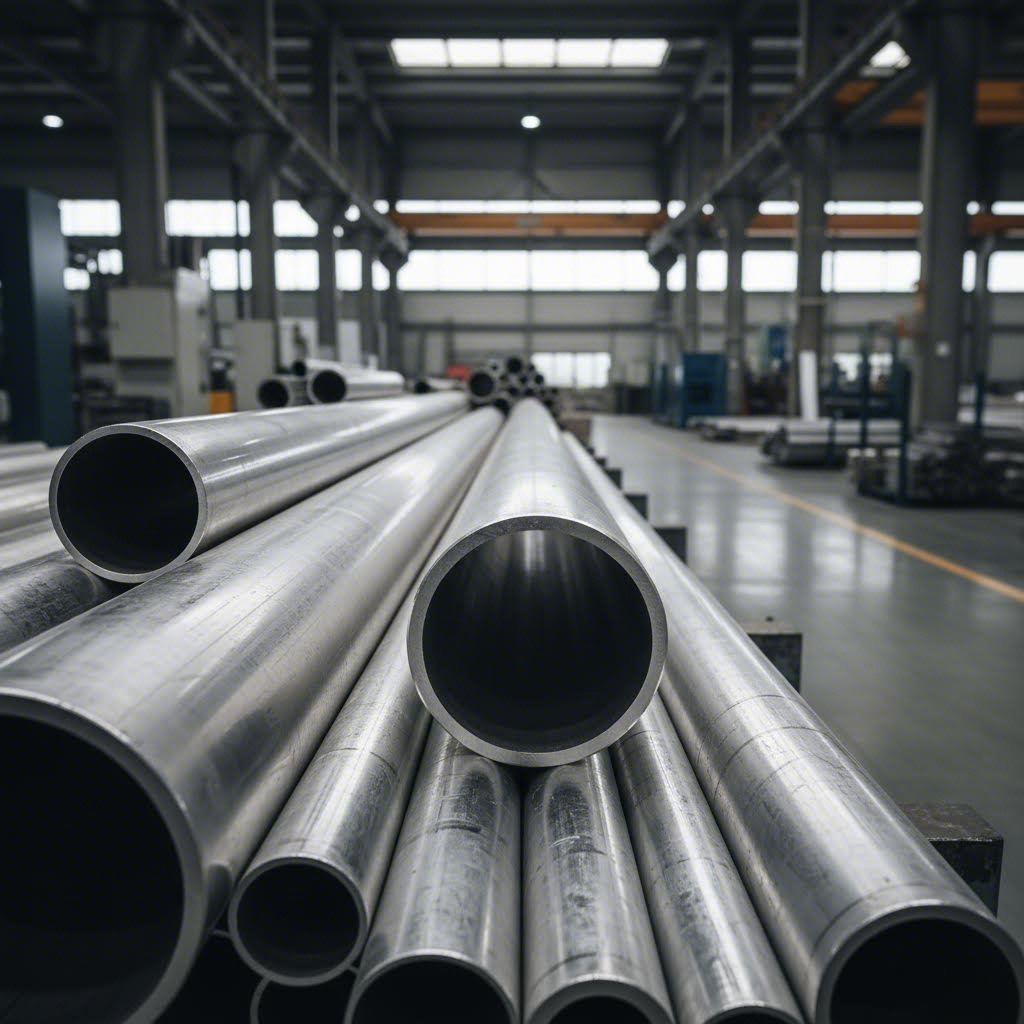
When you're sourcing materials for your next project, understanding exactly what you're buying can make the difference between a successful build and a costly mistake. Aluminum round tube extrusions represent one of the most versatile and widely used metal profiles in manufacturing today, yet many buyers don't fully grasp what sets them apart from other tubing options.
Aluminum round tube extrusions are hollow, circular tube profiles created by forcing heated aluminum alloy through a specially designed die, resulting in seamless, consistent cross-sections with precise dimensional accuracy and uniform wall thickness.
Imagine squeezing toothpaste through a circular opening. That's essentially how extruded aluminum tube production works, but with superheated metal and industrial-scale precision. The extrusion process heats aluminum billets until they become soft and malleable, then pushes this material through a die that shapes it into the desired circular tube profile.
What makes this method stand out? Unlike drawn aluminum tubing, which stretches metal through a die cavity using plastic deformation, extrusion relies on pushing heated material forward. This fundamental difference affects everything from cost to final product characteristics. According to Eagle Aluminum, the extrusion process tends to be more cost-effective than drawing because cold drawing aluminum often requires a larger collection of tools and materials to complete.
The extruded aluminum tube emerges from the die already shaped to specification. As it cools and hardens, it becomes strong and durable while maintaining that consistent circular tube form. This cooling process locks in the structural integrity that makes aluminum round tubing so reliable for demanding applications.
So why should you care about how your aluminium tube is manufactured? Because the production method directly impacts the properties you'll be working with. Here's what the extrusion process delivers:
Aluminum extrusion tube profiles can be produced in lengths typically ranging from 8 to 24 feet, then cut, heat treated, and finished according to your specific requirements. This flexibility means you're not locked into standard sizes when your project demands something different.
Before you specify aluminum round tubing for any application, understanding these manufacturing fundamentals helps you ask the right questions and make informed decisions. You'll know why certain alloys work better for your needs, what tolerances to expect, and how surface treatments can enhance performance.
Throughout this guide, we'll walk you through everything from alloy selection to ordering specifications, giving you the knowledge to confidently source the right extruded aluminum tubing for your project.
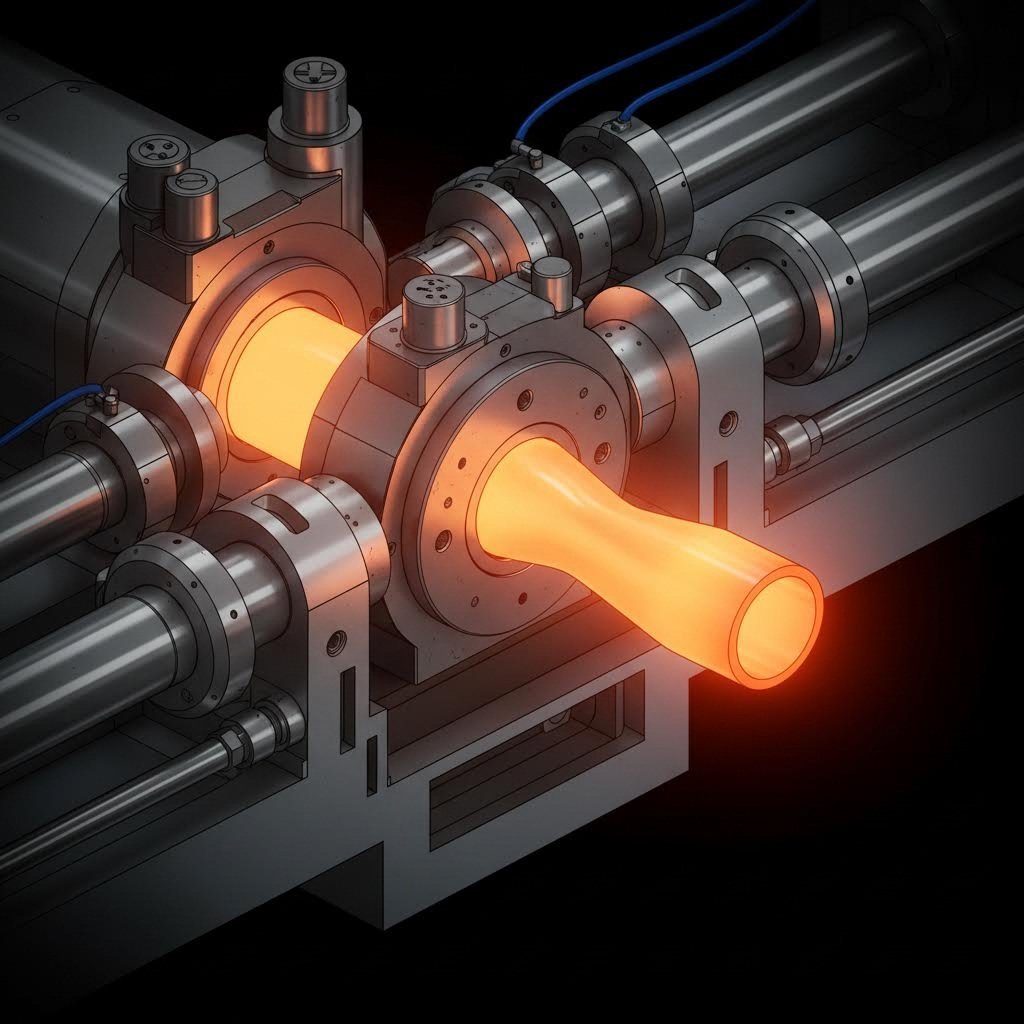
Ever wondered what actually happens inside an aluminum extrusion facility? The process transforms solid metal billets into precisely shaped extruded aluminum tubing through a fascinating combination of heat, pressure, and engineering precision. Understanding this manufacturing journey helps you appreciate why extruded tube products deliver such consistent quality.
The aluminum extrusion process begins with a cylindrical billet, essentially a cast log of aluminum alloy feedstock. According to the Aluminum Extruders Council, these billets are preheated in a furnace to temperatures between 700°F and 930°F (375°C to 500°C), depending on the specific alloy being processed. At these temperatures, the aluminum becomes soft and malleable while remaining solid, never actually reaching its melting point of approximately 1,220°F (660°C).
Here's how the complete extrusion process unfolds:
The heart of extruded tubing aluminum production is the hydraulic press. These powerful machines can exert anywhere from 100 to 15,000 tons of pressure, with the specific capacity determining how large an extrusion can be produced. When you're sourcing extruded aluminum tubes, knowing this helps explain why certain sizes and wall thicknesses are available from some suppliers but not others.
For hollow sections like round tubes, the process gets particularly interesting. The aluminum must flow around a mandrel, which is the internal tooling component that creates the hollow center. The metal separates as it flows around the mandrel supports, then welds back together under the immense pressure needed to push through the annular die opening. This pressure welding creates what's called a porthole or structural tube.
Why does extrusion create such consistent wall thickness? The answer lies in the controlled flow dynamics. As aluminum flows through the precisely engineered gap between the mandrel and outer die, the material distributes evenly around the circumference. This uniformity is difficult to achieve with other manufacturing methods.
When sourcing aluminum round tubes, you'll encounter three main manufacturing categories. Understanding what distinguishes them helps you make smarter purchasing decisions.
| Manufacturing Method | Process Description | Key Characteristics | Best Applications |
|---|---|---|---|
| Extruded Tubes (Porthole) | Heated billet forced through die with mandrel; metal separates and welds together | Cost-effective, good dimensional accuracy, contains longitudinal seam | Structural applications, railings, frames, decorative uses |
| Seamless Extruded Tubes | Mandrel inserted from rear pushes through billet; no material separation occurs | No seam, superior pressure resistance, uniform structure throughout | Hydraulic cylinders, high-pressure systems, aerospace components |
| Cold-Drawn Tubes | Pre-extruded tubes pulled through progressively smaller dies at room temperature | Enhanced precision, superior surface finish, improved mechanical properties | Small diameter applications, thin-walled tubes, precision instruments |
The critical distinction between porthole and seamless extruded tubes lies in structural integrity. According to Wiley Metal, the seam created in porthole extrusion often reveals a different crystal structure when examined microscopically. This grain distortion creates a potentially weaker region along the seam, though the actual impact depends on profile shape and alloy selection.
When should you pay more for seamless? If your application involves internal pressure, significant deformation like bending, or high loads that could exploit seam weaknesses, seamless is worth the investment. For structural framing, railings, and decorative applications where appearance and cost matter more than pressure resistance, standard extruded tubing performs excellently.
Cold-drawn tubes take extruded products a step further. The drawing process at room temperature compresses and stretches the grain structure, significantly enhancing strength and fatigue resistance while achieving tighter dimensional tolerances. This makes cold-drawn options ideal when precision truly matters.
Now that you understand how these tubes are made, you're ready to explore the alloy options that determine their ultimate performance characteristics.
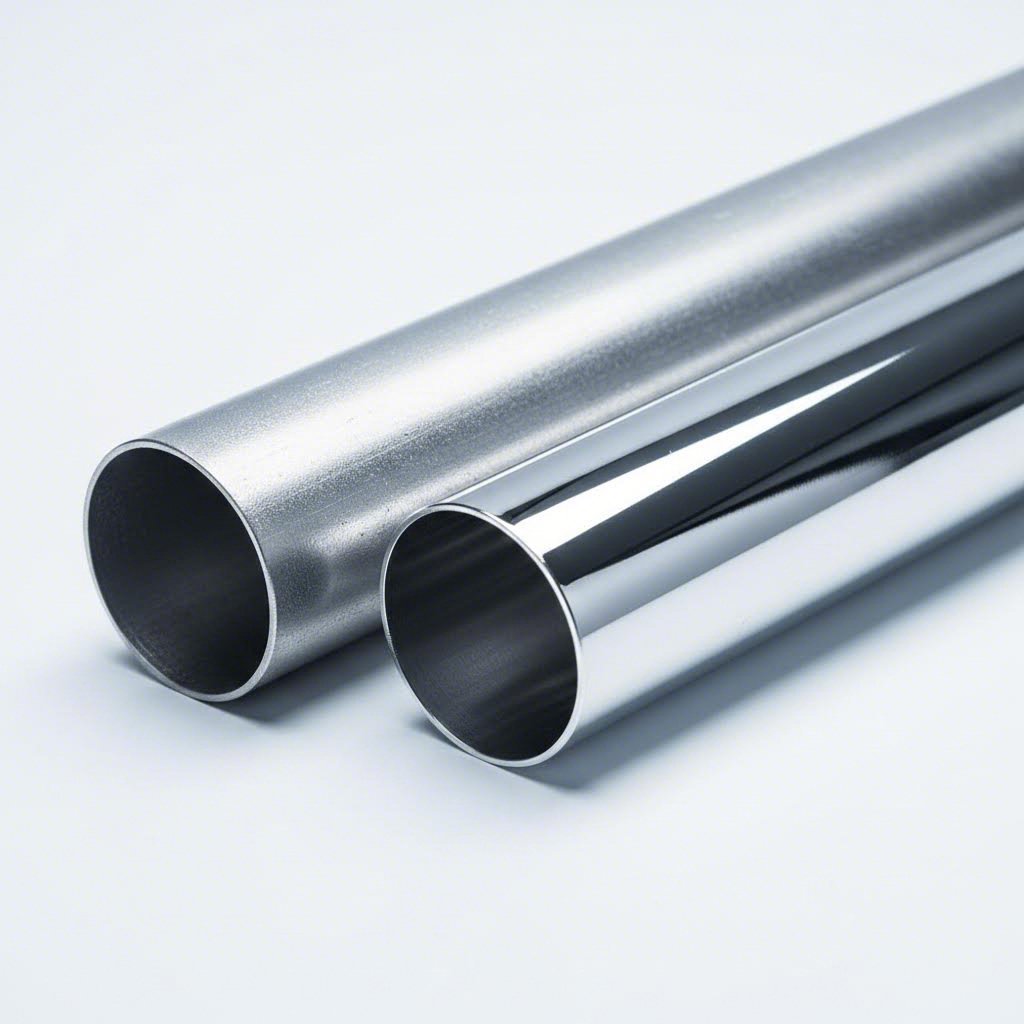
You've learned how aluminum round tubes are manufactured, but here's where the real decision-making begins. The alloy you select fundamentally determines how your tubing will perform, how easy it will be to work with, and whether it will stand up to your application's demands. Two alloys dominate the round tube extrusion market: 6061 and 6063. While they share the same alloy family, their differences matter more than most buyers realize.
Both 6061 and 6063 belong to the 6000 series aluminum alloys, meaning they use silicon and magnesium as their primary alloying elements. However, the specific proportions and additional elements create distinctly different performance profiles.
According to Eagle Aluminum, 6061 aluminum is a precipitation-hardened alloy strengthened during heat treatment. This process spreads particles evenly throughout the metal's grain structure, preventing displacement and effectively increasing strength and durability. Developed in 1935, 6061 aluminum tubing remains one of the most versatile options available, offering excellent workability across casting, extrusion, rolling, and forging processes.
What about 6063? This alloy is widely recognized for its exceptional surface finish and extrudability. While it shares silicon and magnesium as alloying elements with 6061, its uses are more specialized. The surface finish of 6063 is noticeably smoother, making it the preferred choice when visual appeal matters as much as structural performance.
Here's the key distinction: when your application demands raw strength, tube 6061 delivers. When you need beautiful finished surfaces for architectural or decorative applications, 6063 takes the lead.
Numbers tell the story clearly. When comparing 6061 T6 aluminum tube specifications against 6063 T6, the strength gap becomes immediately apparent:
That's a significant difference. The tube 6061 T6 offers roughly 50% higher tensile strength compared to its 6063 counterpart in the same temper. This explains why 6061 alloy tubing dominates applications requiring structural support, heavy-duty framing, and load-bearing components.
So how do you decide between these two popular options? Start by asking yourself what matters most for your specific project. Is it maximum strength? Surface appearance? Ease of finishing? Cost efficiency?
| Property | 6061 Aluminum Tubing | 6063 Aluminum Tubing |
|---|---|---|
| Tensile Strength (T6) | 42,000+ psi (Higher) | 28,000+ psi (Moderate) |
| Yield Strength (T6) | 35,000+ psi (Higher) | 23,000+ psi (Moderate) |
| Weldability | Excellent | Excellent |
| Machinability | Good | Better (smoother cuts) |
| Formability | Good | Better (complex shapes) |
| Corrosion Resistance | High | High |
| Surface Finish Quality | Good | Superior (smoother) |
| Anodizing Response | Good | Excellent |
| Custom Extrusion Suitability | Good | Preferred choice |
| Typical Applications | Scaffolding, truck components, marine parts, bicycle frames, structural supports | Window frames, door frames, architectural trim, furniture, decorative elements |
| Best Use Cases | When strength and structural integrity are primary requirements | When appearance, finishing options, and complex shapes matter most |
Both alloys exhibit excellent weldability and high corrosion resistance, so those factors rarely drive the decision. The differentiators come down to strength requirements versus aesthetic and finishing considerations.
You'll notice the "T6" designation appearing throughout specifications for both 6061 and 6063 tubing. What does this mean, and why does it matter?
The T6 temper indicates the aluminum has been solution heat-treated and then artificially aged. This process maximizes the alloy's strength characteristics, making 6061 T6 tube and 6063 T6 the most common specifications for demanding applications.
When should you consider other tempers? Pre-tempered options like 6061-O (annealed) offer maximum formability for applications requiring significant bending or shaping before final use. However, if your application involves structural loads, 6061 T6 aluminum tubing provides the strength you need right out of the box.
For custom extrusions requiring complex shapes with smooth surfaces, 6063 in T5 or T6 temper delivers both the formability needed during manufacturing and the finished properties your application demands. This makes it the go-to choice for visible architectural elements, premium casework, and decorative trim.
With your alloy selection clarified, the next critical step involves understanding how to specify the exact dimensions and tolerances your project requires.
Now that you understand alloys and their properties, you're facing the next critical question: what size do you actually need? Interpreting aluminum tube dimensions can feel confusing when suppliers use different nomenclature systems. Some specify outside diameter and wall thickness, while others list outside and inside diameters. Getting this wrong means ordering material that won't fit your application.
Let's break down exactly how aluminum tube sizes work so you can confidently specify the right dimensions for your project.
When you encounter aluminum tube dimensions, you'll typically see one of two notation systems:
These two systems describe the same tube differently. Here's the simple math connecting them: ID = OD - (2 x Wall Thickness). So a 2-inch OD tube with 0.125-inch walls has an inside diameter of 1.75 inches. Understanding this relationship helps you convert between specification formats and verify that quoted dimensions actually match your requirements.
Why does this matter? Imagine you're designing a telescoping assembly where one tube must slide inside another. You need the inner tube's OD to be slightly smaller than the outer tube's ID. Misreading specifications could leave you with tubes that either won't fit together or have excessive clearance that creates unwanted wobble.
Aluminum round tube sizes span an impressive range, from small diameter tubing under half an inch to large diameter aluminum pipe exceeding 12 inches. The table below shows common aluminum pipe dimensions based on standard pipe schedules, which provide a useful reference for understanding available size ranges:
| Pipe Size (Inches) | Schedule | OD (Inches) | ID (Inches) | Wall Thickness (Inches) | Weight (Lbs/Ft) |
|---|---|---|---|---|---|
| 1/2 | 5 | 0.840 | 0.710 | 0.065 | 0.186 |
| 1/2 | 40 | 0.840 | 0.622 | 0.109 | 0.294 |
| 1/2 | 80 | 0.840 | 0.546 | 0.147 | 0.376 |
| 1 | 5 | 1.315 | 1.185 | 0.065 | 0.300 |
| 1 | 40 | 1.315 | 1.049 | 0.133 | 0.581 |
| 1 | 80 | 1.315 | 0.957 | 0.179 | 0.751 |
| 2 | 5 | 2.375 | 2.245 | 0.065 | 0.555 |
| 2 | 40 | 2.375 | 2.067 | 0.154 | 1.264 |
| 2 | 80 | 2.375 | 1.939 | 0.218 | 1.737 |
| 4 | 5 | 4.500 | 4.334 | 0.083 | 1.354 |
| 4 | 40 | 4.500 | 4.026 | 0.237 | 3.733 |
| 4 | 80 | 4.500 | 3.826 | 0.337 | 5.183 |
| 6 | 5 | 6.625 | 6.407 | 0.109 | 2.624 |
| 6 | 40 | 6.625 | 6.065 | 0.280 | 6.564 |
| 6 | 80 | 6.625 | 5.761 | 0.432 | 9.884 |
| 8 | 40 | 8.625 | 7.981 | 0.322 | 9.878 |
| 10 | 40 | 10.750 | 10.020 | 0.365 | 14.000 |
| 12 | 40 | 12.750 | 11.938 | 0.406 | 18.520 |
Notice how schedule numbers correlate with wall thickness? Schedule 5 represents thin wall aluminum tubing, while Schedule 80 indicates thick wall aluminum tubing with substantially greater material. The same outside diameter can accommodate multiple wall thickness options, giving you flexibility to balance weight, strength, and cost.
Choosing between thin wall aluminum tubing and thick wall aluminum tubing depends entirely on your application's demands. Here's how to think about this decision:
Thin wall aluminum pipe (generally 0.065" to 0.120" walls) works well when:
Thick wall aluminum tubing (0.200" walls and above) becomes necessary when:
Consider a practical example: thin wall tubing at Schedule 5 in a 2-inch size weighs just 0.555 pounds per foot. The same diameter in Schedule 80 weighs 1.737 pounds per foot—more than three times heavier. For a 20-foot length, that's the difference between 11 pounds and nearly 35 pounds. When you're building portable equipment or weight-sensitive assemblies, these differences add up quickly.
When specifying aluminum round tube extrusions for critical applications, referencing the appropriate industry standard ensures you receive material with verified properties. ASTM B210 governs extruded aluminum tube specifications, covering chemical composition limits, mechanical property requirements, and dimensional tolerances.
According to ASTM B210 documentation, tubes are produced by drawing an extruded tube made from seamless hollow extruded tube using the die and mandrel method. The standard covers all common aluminum tube alloys including 6061 and 6063, with alloy and temper designations complying with ANSI H35.1.
Key specifications defined by ASTM B210 include:
For example, the standard specifies that 6061-T6 tubes with wall thickness between 0.050" and 0.259" must achieve minimum tensile strength of 42,000 psi, yield strength of 35,000 psi, and elongation of 12% in full-section testing. These verified minimums give engineers confidence when designing load-bearing structures.
When requesting quotes, specifying "per ASTM B210" communicates your quality expectations clearly and ensures suppliers understand you require certified material meeting established industry standards.
With dimensions and specifications clarified, the next consideration involves surface finish options that can enhance both appearance and corrosion resistance for your aluminum round tubes.
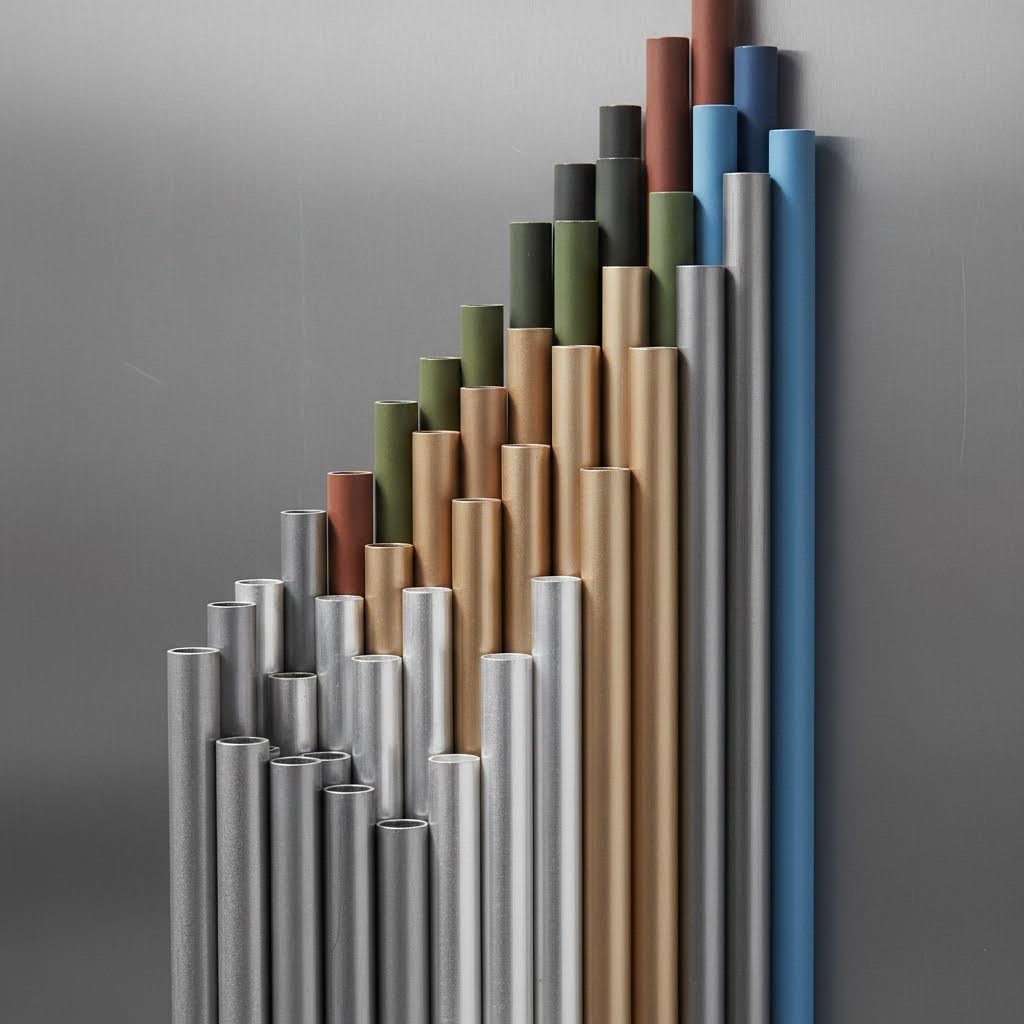
You've selected your alloy and specified your dimensions, but there's one more decision that dramatically affects both performance and appearance: surface finish. Every aluminium round tube starts with a mill finish straight from the extrusion die, but that's rarely where the story ends. The right surface treatment can transform good tubing into outstanding tubing that lasts longer, looks better, and performs reliably in demanding environments.
What exactly is mill finish? According to Gabrian, mill finish reflects the state of aluminum after it leaves the extrusion die. Die and tooling marks, a dull appearance, oxidation, and white "rust" can all be present on the aluminum after extrusion. While mill finish keeps costs low, it's generally only suitable for products where appearance doesn't matter and short service life is acceptable.
For most applications, you'll want to consider enhanced finish options. Here are the primary choices available for round aluminum tube products:
Each aluminum tube round product responds differently to these treatments. Remember that 6063 alloy delivers superior anodizing response compared to 6061, producing smoother, more consistent finishes when appearance matters most.
Here's where understanding your application environment becomes critical. Sounds complex? It doesn't have to be. Ask yourself where your anodized aluminum tubing will live and what conditions it will face.
Unlike paints and coatings, anodizing doesn't apply an external product to the aluminum surface. Instead, an electrochemical process stimulates the naturally-occurring aluminum oxide layer to grow thicker. This integrated protection means the finish won't chip, peel, or flake like applied coatings can under mechanical stress.
When should you specify anodized aluminum tube products over alternatives?
For purely decorative applications where durability matters less than appearance, powder coating offers the widest color selection and excellent visual results. Just keep in mind that powder coatings, while providing great corrosion resistance, aren't as hard as anodized surfaces.
Here's something many buyers overlook: surface treatments change your tube dimensions. According to Anoplate, anodizing is a conversion coating where aluminum from the part being anodized converts to aluminum oxide. Because aluminum oxide takes up more space than aluminum itself, there's growth both inward and outward from the original surface.
For Type III hard anodizing, approximately 50% of the coating thickness builds up outward while 50% penetrates inward. A 0.002-inch coating results in roughly 0.001-inch dimensional change per surface. For Type II anodizing, the ratio shifts to approximately 1/3 buildup and 2/3 penetration.
What does this mean practically? If your aluminum round tubes require tight tolerances for assembly or fit-up, specify your surface treatment requirements during initial ordering. Precision parts may need to be machined slightly undersized to account for anodize buildup, or you may need to discuss tolerance adjustments with your supplier.
With surface finish options clarified, you're ready to explore the diverse applications where extruded aluminum round tubes deliver exceptional value.
You've selected your alloy, specified dimensions, and chosen your surface finish. Now comes the exciting part: putting round aluminum tubing to work. The remarkable strength-to-weight ratio of aluminum makes these tubes preferred across industries where performance matters but weight can't be ignored. Let's explore where aluminum tube products truly shine.
When you need structural integrity without excessive weight, aluminum tubing delivers. According to Metal Supermarkets, aluminum's strength-to-weight ratio makes it ideal for any industry where lightness is a key factor. In practical terms, if two structures were designed to carry the same load—one made from aluminum and one from steel—the aluminum version would be larger in size but weigh less than half of the steel structure.
Here's where industrial applications leverage these advantages:
For these demanding applications, 6061 T6 alloy typically provides the strength needed. The higher tensile and yield strength compared to 6063 ensures structural frames can handle real-world loads with appropriate safety margins.
Walk through any modern building and you'll encounter aluminum round tubes in places you might not immediately notice. Their combination of durability, formability, and aesthetic versatility makes them architectural favorites.
Architectural applications typically favor 6063 alloy for its excellent anodizing response and smooth extruded surface. When these tubes will be visible, the aesthetic advantages justify specifying this alloy over the stronger 6061 option.
Beyond industrial and architectural applications, aluminum tube finds its way into countless consumer products and specialty applications where its unique properties solve real problems.
For consumer products, the choice between oval aluminum tubing and circular tubing often comes down to ergonomics and aesthetics. Oval profiles fit hands more comfortably on handles, while round profiles offer uniform strength in all directions.
One specialized application deserves particular attention: telescoping assemblies. According to Testrite OEM, a manufacturer with over 105 years of experience, telescopic aluminum tubing serves applications ranging from adjustable poles to extending handles and collapsible structures.
Successful telescoping designs require careful attention to several factors:
Round aluminum tubing connectors simplify assembly by eliminating welding for many applications. These connectors—including slip-fit joints, adjustable angle connectors, and fixed couplings—allow rapid construction of frames and structures using standard tube sizes. When specifying connectors, verify compatibility with your chosen tube outside diameter and wall thickness.
For telescoping and connector-based assemblies, working with manufacturers who understand these specialized requirements ensures your tubes arrive ready to integrate into your design without modification.
Understanding where aluminum round tubes excel helps you make confident material selections. Next, we'll cover exactly how to specify and order these products to ensure you receive exactly what your application demands.
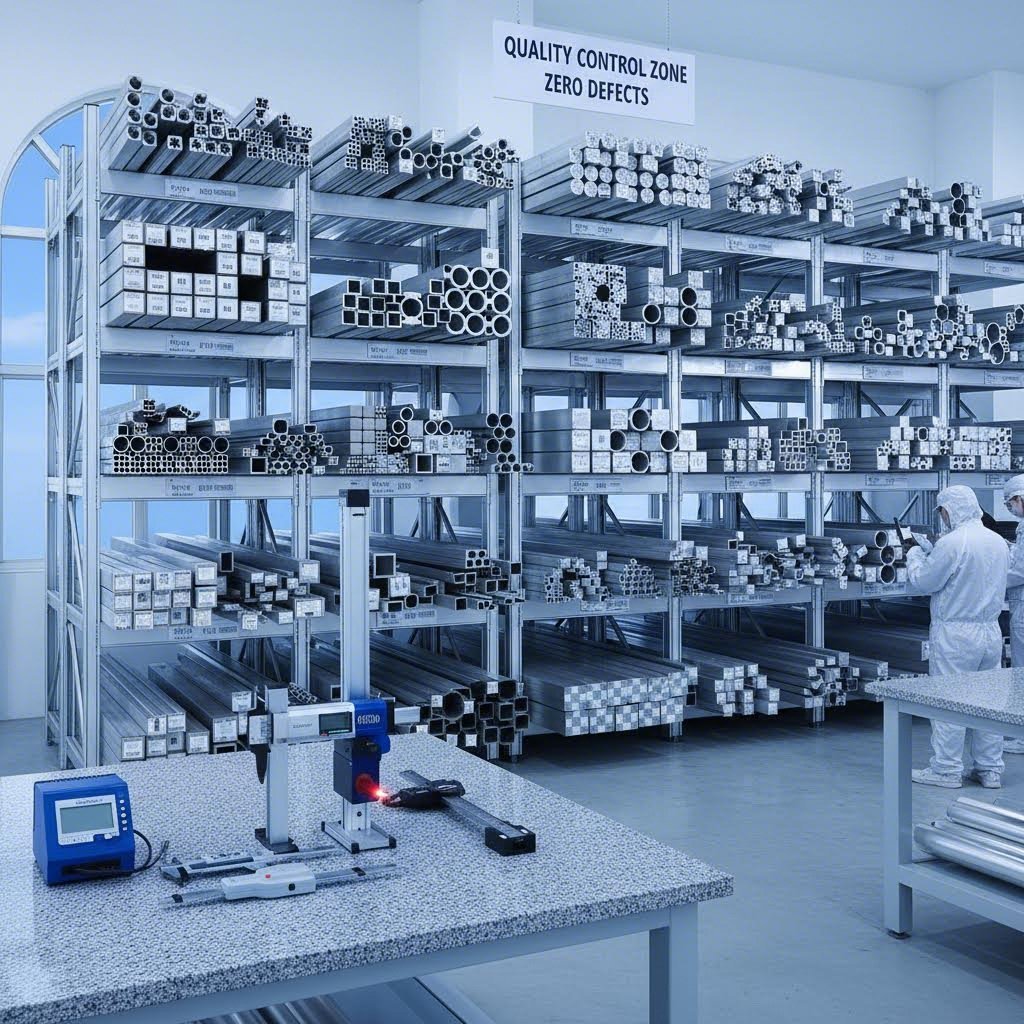
You've done the research, selected your alloy, determined dimensions, and chosen a surface finish. Now comes the moment of truth: actually placing your order. This step trips up more buyers than you might expect. Without clear specifications, you risk receiving material that doesn't quite fit, delays that push back your project timeline, or costs that exceed your budget. Let's walk through exactly how to specify and order aluminum round tube extrusions so you get precisely what you need.
Before you contact any supplier or request quotes for aluminum tube stock, gather all the information you'll need. Missing even one detail can trigger back-and-forth communication that delays your order by days or weeks. Here's your step-by-step specification checklist:
Having these details ready before you reach out demonstrates you're a serious buyer and helps suppliers provide accurate quotes quickly. When you buy aluminum tubing with complete specifications in hand, you minimize the risk of miscommunication.
Here's something that catches many first-time buyers off guard: aluminum tubing for sale doesn't always ship the same day. Lead times vary dramatically based on whether you're ordering standard profiles or custom extrusions.
For standard aluminum tube stock in common sizes and alloys, many suppliers maintain inventory that ships within days. According to The Fabricator, order minimums typically range from 1,000 to 2,000 pounds per shape for extrusion orders. However, stated minimums might be negotiable, especially when an order charge provides an alternative for smaller batches.
What about large diameter aluminum pipe or unusual specifications? These often require production runs rather than pulling from existing inventory. Expect lead times of 4 to 8 weeks for standard profiles that need to be extruded, with additional time for any surface treatments.
At some point, you'll face a critical decision: should you work with standard profiles or invest in custom extrusion? The answer depends on your volume, design requirements, and long-term plans.
Standard profiles make sense when:
Custom extrusion becomes economically viable when:
According to industry sources, the main cost for custom extrusion is the die itself, likely running into thousands of dollars. However, this remains a relatively small investment in the scope of larger projects, and lead times for die development are often less than a month.
When you venture into custom extrusions, understanding the die development process helps you plan realistic timelines. The die is essentially a precision-machined steel tool that shapes the aluminum as it flows through under pressure. Creating this tool requires engineering review of your profile, steel selection, machining, and testing.
Experienced extruders guide you through this process, often identifying subtle design modifications that improve extrudability while reducing costs. For instance, American Douglas Metals notes that accuracy is critical when manufacturing extrusions, and having a company walk you through each step prevents costly mistakes.
The manufacturing capability of your chosen supplier matters significantly. Extrusion presses vary widely in capacity, typically measured in tonnage. Smaller presses (600T to 1500T) handle smaller profiles efficiently, while large diameter aluminum pipe and heavy-wall tubes require larger presses (3000T to 5500T or more) to generate sufficient force.
Working with manufacturers who operate multiple press sizes gives you flexibility. Whether you need small-diameter precision tubing or substantial structural profiles, they can match your requirements to appropriate equipment. For example, Shengxin Aluminium operates 35 advanced extrusion presses ranging from 600T to 5500T, providing the capacity to handle virtually any round tube requirement from prototype quantities through mass production.
When you're ready to move from research to purchase, you have several sourcing options. The right choice depends on your order size, customization needs, and service requirements.
Metal service centers and distributors maintain inventory of standard aluminum tube stock and can cut to length. They're ideal for smaller quantities and quick turnaround on common specifications. However, they typically don't offer custom extrusion services.
Direct manufacturer relationships make sense for larger orders, custom profiles, or ongoing production needs. Manufacturers who offer end-to-end support from die development through finishing and fabrication simplify your supply chain. With over 30 years of experience and comprehensive custom extrusion services, Shengxin Aluminium exemplifies this full-service approach, handling everything from initial design consultation through final delivery.
Online aluminum suppliers provide convenience for standard sizes and smaller quantities. Many offer real-time pricing and quick shipping for aluminum tube for sale in common alloys and dimensions.
Whichever path you choose, verify that your supplier can provide the certifications and documentation your application requires. For structural or aerospace applications, proper traceability and material documentation aren't optional—they're essential.
With your ordering strategy defined, the final piece of the puzzle involves evaluating potential suppliers to ensure you're partnering with a reliable source for your aluminum round tube extrusions.
You've specified your requirements and understand the ordering process. But here's the question that ultimately determines your project's success: who do you trust to deliver? Choosing the right aluminium tube suppliers isn't just about finding the lowest price. It's about identifying a partner who consistently delivers quality material, meets deadlines, and provides the technical support your projects demand. Let's explore exactly what separates exceptional suppliers from the rest.
When you start sourcing aluminum tube extrusion products, you'll quickly discover two fundamentally different supplier types: distributors and manufacturers. Understanding this distinction helps you choose the right partner for your specific needs.
Distributors purchase finished products from manufacturers and resell them. They typically maintain inventory of standard sizes and can ship quickly. According to RPM Industries, working with distributors offers advantages when you need standard aluminum extrusion profiles, since most suppliers have finished products on hand. For parts and components that industries consistently rely on, you can get what you need quickly.
Manufacturers actually produce the extruded aluminum pipe and tube products you're buying. They control the entire production process, from billet selection through extrusion, heat treatment, and finishing. For custom profiles or large volumes, manufacturers offer capabilities distributors simply can't match.
When does each option make sense?
For ongoing production needs, building a direct relationship with a manufacturer often provides better long-term value. According to Yaji Aluminum, top-tier suppliers offer both standard and custom extrusion profiles, with many assisting in die design and prototyping to ensure manufacturability from the design stage.
How do you verify that a potential supplier actually delivers the quality they claim? Look beyond marketing materials and examine concrete evidence of their quality management systems.
Quality certifications provide your first line of verification:
Beyond certifications, investigate in-house testing capabilities. Reliable suppliers perform verification testing including tensile strength measurement, dimensional inspection, hardness verification, and surface finish evaluation. These capabilities ensure aluminium extruded tubes meet specifications before shipping.
Don't hesitate to request sample parts, quality certificates, or audit reports before committing to significant orders. According to industry best practices, conducting an on-site factory audit or virtual walkthrough helps assess machinery, cleanliness, and workflow organization when evaluating potential partners.
Here's where smart buyers gain significant advantages: evaluating suppliers based on comprehensive capabilities rather than just extrusion pricing. Full-service round aluminum extrusion suppliers offer integrated downstream processing that eliminates the need for secondary vendors.
Key value-added services to look for include:
When a single supplier handles extrusion through finishing and fabrication, you benefit from reduced coordination costs, faster turnaround times, and consistent quality. The total cost often beats managing multiple vendors even when individual service prices appear competitive elsewhere.
For example, Shengxin Aluminium operates state-of-the-art CNC machining centers alongside comprehensive surface treatment capabilities including anodizing in custom colors like Champagne and Rose Gold, powder coating, PVDF, and Micro-arc Oxidation. This integrated approach means your extruded aluminum pipe products can arrive ready for installation rather than requiring additional processing.
Cost-conscious buyers often wonder about the pricing difference between manufacturers and distributors. While distributors provide convenience and quick access to standard inventory, they necessarily add margin to cover their operations.
Factory-direct relationships typically offer:
According to industry sources, suppliers with long-standing manufacturer relationships can secure reduced prices on finished extruded products. When working on tight budgets, these savings become significant.
However, factory-direct purchasing makes most sense for larger orders or ongoing production relationships. For occasional small quantities of standard profiles, distributor inventory may still represent your most practical option.
Before finalizing any supplier relationship, systematically evaluate candidates across all relevant dimensions. Here's a structured approach:
| Evaluation Category | Key Questions to Ask | Verification Methods |
|---|---|---|
| Manufacturing Capability | What press sizes are available? Can they produce your required dimensions? | Facility tour, equipment list, capacity documentation |
| Quality Systems | What certifications do they hold? What testing do they perform? | Certificate copies, audit reports, test result samples |
| Value-Added Services | Do they offer machining, finishing, and fabrication in-house? | Capabilities brochure, sample parts demonstrating services |
| Delivery Performance | What are typical lead times? How do they handle delays? | Customer references, on-time delivery metrics |
| Technical Support | Do they provide engineering assistance for design optimization? | Technical team credentials, case study examples |
| Financial Stability | How long have they operated? What's their growth trajectory? | Business history, client list, industry reputation |
Request references from companies with similar needs to yours. As industry experts recommend, reach out to understand the supplier's performance in real-world conditions, including delivery reliability, issue resolution, and long-term consistency.
Taking time to properly evaluate aluminium pipe suppliers protects your supply chain from disruptions and ensures you receive consistent quality on every order. The right partner becomes an extension of your production team, anticipating needs and solving problems before they impact your operations.
With this comprehensive understanding of aluminum round tube extrusions, from alloy selection through supplier evaluation, you're equipped to make confident sourcing decisions that support your project's success.
Extruded aluminum tubing is created by forcing heated aluminum through a die, producing consistent wall thickness and dimensional accuracy at lower costs. Drawn tubing starts as an extruded product but undergoes additional cold-drawing through progressively smaller dies, resulting in tighter tolerances, superior surface finish, and enhanced mechanical properties. Choose extruded tubes for structural applications and drawn tubes when precision is critical.
Aluminum round tube sizes range from small diameters under 0.5 inches to large diameter pipes exceeding 12 inches. Standard dimensions follow pipe schedules (5, 40, 80) with wall thicknesses from 0.065 inches (thin wall) to 0.432 inches (thick wall). Common outside diameters include 0.840", 1.315", 2.375", 4.500", and 6.625". Custom sizes are available through manufacturers like Shengxin Aluminium with multiple press capacities.
Choose 6061-T6 aluminum tubing when strength is paramount—it offers 50% higher tensile strength (42,000+ psi) than 6063-T6. Select 6063 when surface finish and appearance matter most, as it provides superior anodizing response and smoother extruded surfaces. Both alloys offer excellent weldability and corrosion resistance, making them suitable for structural, architectural, and decorative applications.
Define these specifications before ordering: alloy and temper (e.g., 6061-T6), outside diameter (OD), wall thickness, length requirements, quantity, surface finish (mill, anodized, powder coated), tolerance requirements per ASTM B210, and any certification needs. Having complete specifications ready ensures accurate quotes and prevents delays from miscommunication with suppliers.
Surface finish options include mill finish (baseline, unfinished), clear anodizing (corrosion protection with natural appearance), colored anodizing (dyed protection), powder coating (vibrant colors with UV resistance), and PVDF coating (superior chemical and fade resistance). Anodizing grows into the aluminum surface and won't peel, while coatings add dimensional thickness that must be factored into tolerances.



 Інтернет-сервіс
 0086 136 3563 2360
 sales@sxalu.com
 +86 136 3563 2360
 Українська
 English
 français
 Deutsch
 русский
 español
 português
 العربية
 ไทย
ไทย Việt
Việt