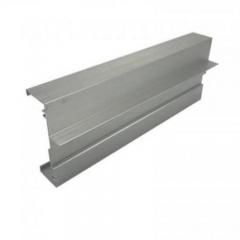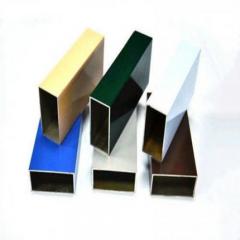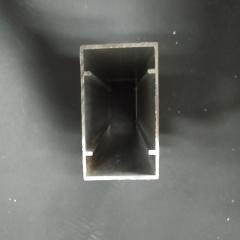
When you're building a framework, reinforcing a structure, or finishing an architectural edge, one aluminum shape appears more frequently than almost any other: the right angle extrusion. But what exactly is this ubiquitous profile, and why has it become indispensable across countless industries?
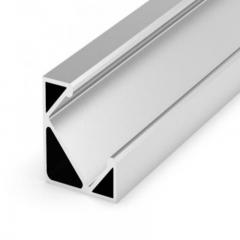
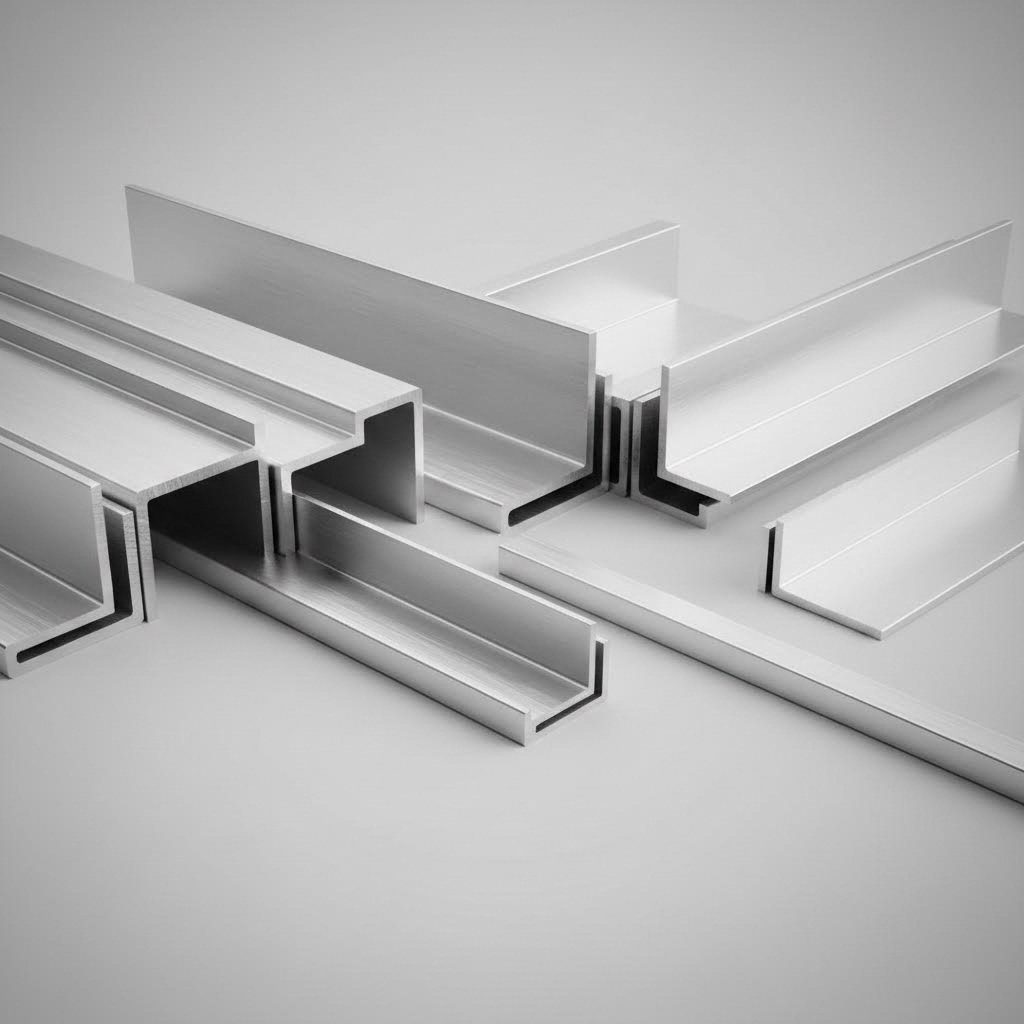
Aluminum right angle extrusion is an L-shaped aluminum profile created by forcing heated aluminum billets through precision dies, resulting in two perpendicular legs that form a 90-degree angle. This versatile aluminum angle serves as a foundational building block for structural framing, edge protection, and decorative trim applications.
You'll find this l shaped aluminum profile everywhere—from the frame supporting your office partition to the protective edging on industrial machinery. Its simple geometry belies remarkable versatility, making the aluminum angle extrusion one of the most specified aluminum shapes in modern construction and manufacturing.
Imagine cutting through an aluminum l angle at any point along its length. What you'd see is that distinctive L-shaped cross-section—two flat surfaces meeting at precisely 90 degrees. This geometry isn't arbitrary; it's engineered to provide maximum structural efficiency with minimal material weight.
The perpendicular legs create natural mounting surfaces that can attach to walls, frames, or other components simultaneously. Unlike flat bars or solid rods, the right angle profile resists bending and twisting forces across multiple planes. This makes it ideal for corner reinforcement, bracket applications, and any situation requiring perpendicular structural support.
How does this differ from other common aluminum shapes? Consider the alternatives:
The aluminum angle stands apart through its simplicity and adaptability. With just two legs and an inside corner, it offers the most straightforward solution for edge finishing, corner bracing, and lightweight structural framing.
Understanding how these profiles come into existence helps you appreciate their consistency and precision. The aluminum extrusion process transforms solid metal into complex shapes through controlled force and heat.
Here's what happens during manufacturing:
This process explains why aluminum angle extrusion delivers such remarkable consistency. Every inch of a profile matches the die's specifications, whether you're ordering 8-foot lengths or 21-foot sections. The result is predictable dimensions you can count on for precise fabrication and assembly.
The extrusion method also contributes to aluminum's cost-effectiveness. As noted by industry sources, aluminum's relatively low melting point—roughly half that of steel—means the process requires significantly less energy than working with ferrous metals. Combined with aluminum's high strength-to-weight ratio, this translates into profiles that deliver structural performance without the weight penalty or manufacturing expense of steel alternatives.
Now that you understand how aluminum angles are manufactured, the next question becomes: which configuration fits your project? The two fundamental categories—equal leg and unequal leg profiles—serve distinctly different purposes, and choosing correctly can mean the difference between a structure that performs flawlessly and one that falls short.
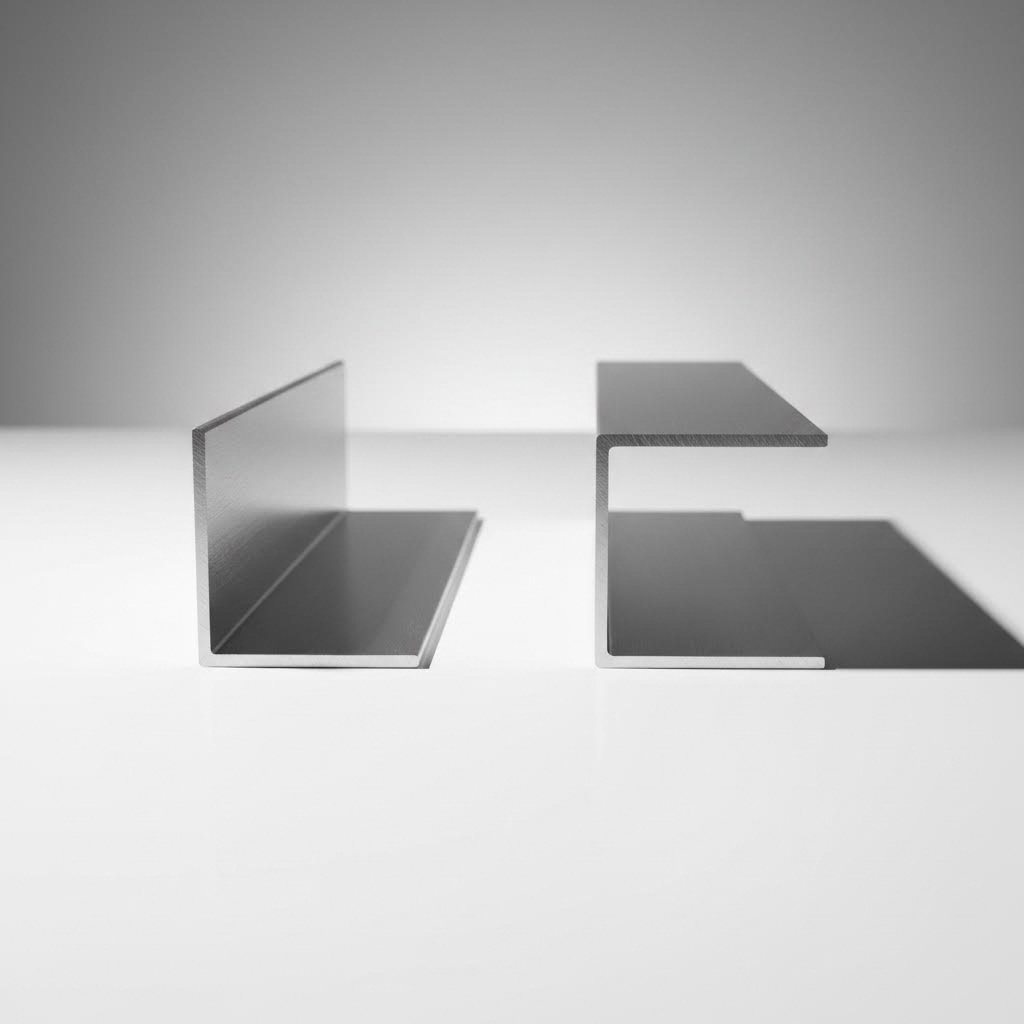
Picture a perfect L-shape where both sides measure exactly the same. That's an equal leg aluminum angle, and it's the most commonly specified configuration for good reason. When both legs share identical dimensions—whether you're working with a compact 1x1 aluminum angle or a robust 4x4 aluminum angle—forces distribute evenly across the profile.
This symmetry makes equal leg angles ideal for applications where loads come from multiple directions or where visual balance matters. Think corner bracing on display cases, frame construction for equipment enclosures, or edge trim on countertops where both visible surfaces need identical proportions.
The most popular aluminum angle sizes in equal leg configurations include:
Sometimes symmetry isn't what you need. Unequal leg aluminum angles feature one longer leg and one shorter leg, creating an asymmetrical profile that opens up specialized possibilities. Sounds unusual? Consider a shelf bracket where you want maximum wall attachment surface but minimal projection into the room. An unequal leg angle—perhaps a 1 2 aluminum angle or a 2 inch aluminum angle with a 1-inch return—delivers exactly that.
These profiles excel in situations where one mounting surface requires more contact area than the other, or where space constraints limit one dimension while another remains unrestricted. Machinery guards, stepped transitions between surfaces, and specialized trim applications often call for unequal leg configurations.
Finding a reliable unequal leg aluminum angle supplier becomes important when standard catalog options don't match your specifications. Many projects require custom dimensions that balance structural requirements with space limitations.
The following table breaks down common configurations and their typical applications to help guide your selection:
| Profile Type | Common Sizes | Wall Thickness Options | Typical Applications |
|---|---|---|---|
| Equal Leg – Small | 1" x 1", 1.5" x 1.5" | 1/16" to 1/8" | Decorative trim, light frames, edge protection |
| Equal Leg – Medium | 2" x 2", 2.5" x 2.5" | 1/8" to 3/16" | Shelving supports, equipment frames, structural corners |
| Equal Leg – Large | 3" x 3", 4" x 4" | 3/16" to 1/4" | Heavy structural framing, industrial supports, load-bearing brackets |
| Unequal Leg | 1" x 2", 1.5" x 3", 2" x 3" | 1/8" to 1/4" | Shelf brackets, stepped transitions, asymmetric mounting |
Beyond leg dimensions, wall thickness dramatically influences how much weight an aluminum angle can support. A 2x2 aluminum angle with 1/8-inch thick walls performs very differently than the same profile with 1/4-inch walls—the thicker version can handle significantly greater loads before deforming.
Here's the practical reality: doubling wall thickness doesn't simply double strength. The relationship between thickness and load capacity follows more complex engineering principles, but as a general guideline, thicker walls provide exponentially greater rigidity and resistance to bending forces.
Corner geometry also matters. Profiles with sharp inside corners concentrate stress at that junction point, while rounded inside corners distribute forces more evenly. For maximum structural applications, angles with generous internal radii often outperform sharp-cornered alternatives despite identical leg dimensions and wall thickness.
When specifying aluminum angles for your project, consider both the dimensional requirements and the performance expectations. The combination of leg configuration, size, wall thickness, and corner geometry determines whether your chosen profile will deliver reliable long-term service—setting the stage for the next critical decision: which aluminum alloy best matches your application demands.
You've selected the right leg configuration and size for your aluminum angle. Now comes a decision that will determine how your profile performs for years to come: which alloy should you specify? For aluminum l extrusion profiles, two options dominate the market—6061 and 6063. Each brings distinct advantages, and understanding these differences helps you match material properties to project demands.
Both alloys belong to the 6000 series, meaning they share silicon and magnesium as primary alloying elements. However, the proportions differ significantly. According to Wellste's technical documentation, 6061 contains approximately 30-50% more magnesium and silicon than 6063. This compositional difference cascades into meaningful variations in strength, workability, and finishing characteristics.
When your extruded aluminum angle needs to carry significant loads or withstand demanding mechanical stresses, 6061 aluminum becomes the clear choice. This alloy earned its reputation as the "structural workhorse" of the aluminum world through decades of proven performance in heavy-duty applications.
What do the numbers actually mean for your project? In the T6 temper condition, 6061 aluminum angle delivers:
In practical terms, a 6061 angle supporting a shelf or structural frame resists bending and permanent deformation under heavier loads than its 6063 counterpart. As noted by Speedy Metals, 6061 in the T6 condition offers strength "approximately equal to that of structural steel" while weighing roughly one-third as much.
This 6061 aluminum angle also machines exceptionally well. With a machinability rating of 90% compared to the benchmark 2011 alloy, it accepts drilling, cutting, and milling operations with clean edges and minimal burring. If your fabrication process involves extensive machining, 6061 extrusion simplifies the work.
Typical applications for 6061 angle profiles include scaffolding systems, truck trailer construction, transmission towers, marine components, and any situation where structural integrity takes priority over surface aesthetics.
Now imagine you're selecting an extruded angle for a window frame, decorative trim, or furniture component where appearance matters as much as function. This is where 6063 aluminum shines—literally.
6063 earns its designation as the "architectural alloy" through superior finishing characteristics that 6061 simply cannot match. The surface comes off the extrusion press smoother and more uniform, accepting anodizing and powder coating treatments with exceptional consistency. As Eagle Aluminum explains, this makes 6063 "the preferred material in custom product solutions, making possible the creation of complex shapes with smooth surfaces."
The trade-off? Lower mechanical strength. In T6 temper, 6063 delivers:
These values run roughly 20-30% lower than 6061, but for many applications, that difference is irrelevant. A decorative corner trim or cabinet frame doesn't experience the stresses that would require 6061's additional strength.
What 6063 offers instead is better formability—easier bending, stamping, and shaping without cracking. Its higher elongation at break (15% versus 12% for 6061) means it stretches more before failing. And critically for visible applications, its surface adhesion properties produce superior anodized finishes with consistent color matching.
The following table consolidates the key differences to support your selection process:
| Property | 6061-T6 Aluminum | 6063-T6 Aluminum | What This Means |
|---|---|---|---|
| Tensile Strength | 310 MPa | 241 MPa | 6061 handles heavier loads before failure |
| Yield Strength | 276 MPa | 214 MPa | 6061 resists permanent deformation better |
| Hardness (Brinell) | 95 | 73 | 6061 is more scratch and wear resistant |
| Elongation at Break | 12% | 15% | 6063 bends more before cracking |
| Thermal Conductivity | 170 W/m-K | 200 W/m-K | 6063 dissipates heat more efficiently |
| Machinability Rating | 90% | 80% | 6061 machines to cleaner finishes |
| Weldability | Good | Better | 6063 suits TIG and MIG welding applications |
| Anodizing Quality | Good | Excellent | 6063 produces superior decorative finishes |
| Corrosion Resistance | Excellent | Very Good | 6061 slightly outperforms in harsh environments |
| Relative Cost | Higher | Lower | 6063's wider availability reduces pricing |
So which alloy should you specify for your aluminum right angle extrusion? The answer depends on your priorities:
Choose 6061 when:
Choose 6063 when:
One final consideration: 6063's wider availability often means shorter lead times and lower minimum order quantities. For standard architectural profiles, you may find 6063 stock readily available while 6061 requires custom production runs.
With your alloy selection clarified, the next step involves understanding where these aluminum angles actually get used—and why specific industries have come to rely on them for applications ranging from structural framing to precision edge protection.
You've selected your alloy and determined the right leg configuration. Now comes the practical question: where do these profiles actually perform best? Rather than listing specifications, let's explore how different industries leverage angle aluminum to solve real-world challenges—from heavy structural framing to delicate architectural trim.
When engineers need lightweight structural components that won't corrode or add unnecessary weight, aluminum angle bar becomes the go-to solution. The 90 degree angle aluminum profile creates natural corner connections and bracing points that distribute loads efficiently across frameworks.
Construction and industrial applications include:
Why choose aluminum over traditional steel in these applications? As noted by Industrial Metal Supply, aluminum provides "a high-strength, lightweight alternative to steel" along with "a level of corrosion resistance not found in carbon steel." For structures exposed to moisture, chemicals, or coastal environments, this corrosion advantage translates directly into reduced maintenance costs and extended service life.
Consider a marine application like boat trailer framing. Steel angles would require constant repainting or galvanizing to prevent rust from saltwater exposure. Angled aluminum profiles, by contrast, develop a natural oxide layer that protects against corrosion without ongoing treatment—making them the preferred choice for anything near water.
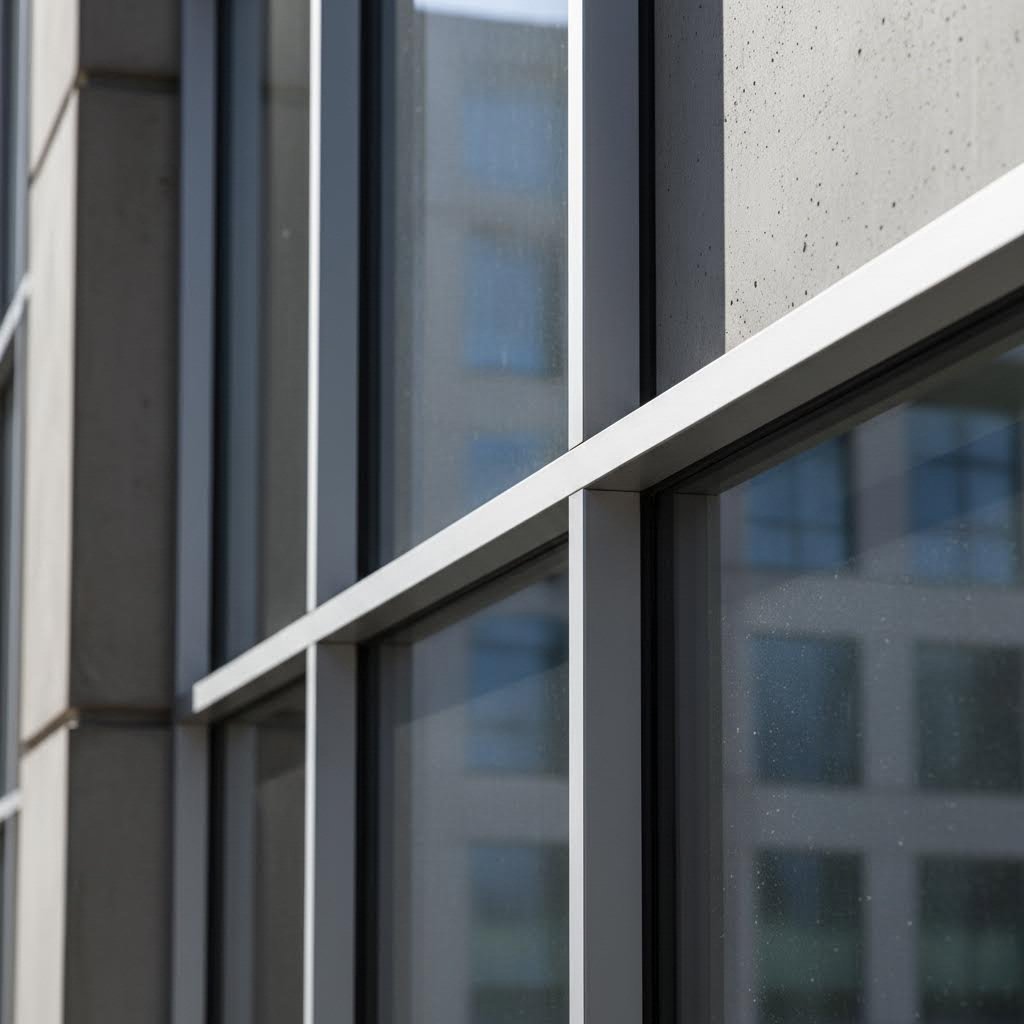
Step inside any modern building, and you'll encounter architectural aluminum angle profiles performing dual roles: protecting vulnerable edges while enhancing visual appeal. This is where the 6063 alloy discussed earlier truly excels.
According to TPOS, aluminum trim profiles are "widely used across modern architecture, furniture, and decorative construction due to their combination of strength, precision, and visual appeal." The company notes these profiles are manufactured from 6063-T5 or 6061-T6 aluminum alloy, offering "high resistance to bending and deformation" suitable for both commercial and residential applications.
Architectural applications span numerous categories:
What makes aluminum particularly valuable in these visible applications? The material accepts powder coating, anodizing, and brushed finishes that maintain their appearance for years. Unlike painted steel that chips and rusts, or plastic trim that yellows and cracks, properly finished aluminum profiles retain their original aesthetics with minimal maintenance.
Beyond construction and architecture, aluminum angle profiles serve critical functions across specialized sectors where their unique properties solve specific challenges.
Automotive and Transportation:
Furniture Manufacturing:
Marine and Coastal:
Each of these applications benefits from aluminum's fundamental advantages: approximately one-third the weight of steel with comparable structural capability, natural corrosion resistance that eliminates the need for protective coatings in most environments, and excellent recyclability that supports sustainable manufacturing practices.
The versatility of aluminum right angle extrusion profiles explains their widespread adoption across industries. However, specifying the right profile is only half the equation—fabricating it correctly determines whether your project achieves its full potential. Understanding proper cutting, drilling, and welding techniques ensures your aluminum angles deliver the performance they're designed to provide.
You've sourced the perfect aluminum angle profile—correct alloy, proper dimensions, ideal wall thickness. Now comes the moment of truth: fabricating it without compromising the very properties that made it the right choice. Whether you're cutting a 3 aluminum angle to length, drilling mounting holes, or welding multiple sections together, the techniques you use determine whether your finished assembly performs as designed or falls short of expectations.
Working with aluminum differs significantly from steel fabrication. The material's lower melting point, higher thermal conductivity, and softer composition demand adjusted approaches at every step. Get these details right, and aluminum rewards you with clean cuts, precise holes, and strong joints. Miss them, and you'll face warped profiles, clogged drill bits, and porous welds.
How to cut angle aluminum cleanly depends largely on the tools you choose and the techniques you apply. According to Speciality Metals, "improper cutting methods can lead to rough edges, material warping, and unnecessary waste, affecting the quality of your final piece." The good news? With proper preparation, even DIY fabricators can achieve professional results.
Here's a step-by-step approach for cutting aluminum angles:
Each cutting tool offers distinct advantages depending on your project scope:
Drilling aluminum angle with holes requires similar attention to technique. As noted by Anchor Lubricants, "aluminum is softer than steel but more resistant than wood, making it prone to scratching and clogging drill bits if not handled properly."
For clean, precise holes in angle iron aluminum profiles:
Welding aluminum right angle extrusion profiles presents challenges that don't exist with steel. The material's high thermal conductivity pulls heat away from the weld zone rapidly, while its tenacious oxide layer—with a melting point nearly three times higher than the base metal—must be removed for proper fusion.
According to Amardeep Steel Centre, successful aluminum welding requires "managing surface oxide; high thermal conductivity (heat control); hydrogen absorption (porosity risk); subtle melting cues (burn-through risk)." Each factor demands specific preparation and technique adjustments.
Two primary welding processes dominate aluminum fabrication:
TIG (GTAW) Welding:
MIG (GMAW) Welding:
Filler material selection depends on your base alloy. For 6061 aluminum angles, ER4043 (silicon-based) filler provides good flow characteristics and crack resistance. For applications requiring higher strength or better color match after anodizing, ER5356 (magnesium-based) filler often performs better. When welding 6063 profiles, either filler typically works well, though ER4043's superior flow makes it popular for architectural applications.
Critical preparation steps before welding any aluminum angle:
Can you bend an aluminum angle after purchase? The answer depends on the alloy, temper, and bend radius you need. While 6063-T5 profiles tolerate moderate bending before cracking, 6061-T6 angles are significantly less forgiving due to their higher hardness and lower elongation.
Field bending works reasonably well for:
Specify pre-bent angles from your supplier when:
Attempting aggressive bends on heat-treated aluminum angles typically results in cracking at the bend point—damage that compromises structural integrity and appearance. The cost of ordering pre-formed profiles almost always beats the waste and rework of failed field bending attempts.
With your fabrication approach planned, the next consideration becomes ensuring your specifications align with industry standards—understanding the tolerance classes and dimensional standards that govern aluminum extrusion quality.
You've selected your alloy, determined the leg configuration, and planned your fabrication approach. But here's a question that trips up many buyers: when your drawing calls for a 2" x 2" x 1/8 aluminum angle, how close to those dimensions will the actual profile be? The answer lies in understanding industry specifications and tolerance standards—knowledge that separates smooth assembly from frustrating fit-up problems.
Specifications might seem like bureaucratic paperwork, but they serve a practical purpose: ensuring the aluminium angle you order matches what arrives at your door. Whether you're sourcing a 1 4 aluminum angle for trim work or heavy structural profiles for industrial framing, these standards define the acceptable range of dimensional variation.
When suppliers reference ASTM B221 or similar designations, they're pointing to standardized requirements established by ASTM International (formerly the American Society for Testing and Materials). These specifications cover everything from chemical composition to mechanical properties to dimensional tolerances.
For aluminum right angle extrusion profiles, ASTM B221 serves as the primary governing standard. According to the Aluminum Association's tolerance documentation, this specification addresses "extruded wire, rod, bar, profiles and tube" and establishes the baseline expectations for dimensional accuracy.
What does this mean practically? When you order aluminium angle sizes to ASTM B221, you're guaranteed that:
Beyond ASTM, you may encounter AMS (Aerospace Material Specifications) callouts on drawings for critical applications. AMS specifications typically impose tighter requirements than standard ASTM, reflecting the demanding tolerances aerospace and defense applications require. For most commercial and industrial uses, however, ASTM B221 provides adequate control.
Here's where specifications directly impact your assembly success. Aluminum extrusion tolerances come in two primary classes: Standard and Precision. The difference between them can determine whether parts slide together effortlessly or require extensive fitting.
Standard Tolerances represent the normal variation inherent in the extrusion process. These tolerances accommodate the realities of die wear, thermal expansion, and material flow characteristics. For most applications—structural framing, general fabrication, non-critical assemblies—standard tolerances work perfectly well.
Precision Tolerances tighten the acceptable variation significantly, typically reducing the allowable deviation by 30-50% compared to standard values. Achieving precision tolerances requires more careful process control, newer dies, and often additional inspection steps. The trade-off? Higher cost and potentially longer lead times.
According to the Aluminum Extrusion Council's manual, "The specified, acceptable range of deviation from a given dimension is known as a tolerance. Tolerances are measurable, so they can be specified and mutually agreed upon by manufacturers and purchasers."
Consider a practical example: you're designing an enclosure where aluminum l channel sizes must interface with mating panels. If your design assumes perfect nominal dimensions with zero clearance, standard tolerance variations could make assembly impossible. Building in appropriate clearances based on published tolerances prevents this frustration.
The following table provides a reference framework for popular aluminum angle sizes with their standard dimensional tolerances. These values derive from industry standards and represent typical expectations for commercial extrusions:
| Nominal Size (Leg x Leg) | Common Wall Thickness | Cross-Section Tolerance (Standard) | Cross-Section Tolerance (Precision) | Typical Applications |
|---|---|---|---|---|
| 1" x 1" | 1/16" to 1/8" | ±0.012" | ±0.008" | Light trim, edge protection, hobby projects |
| 1.5" x 1.5" | 1/8" to 3/16" | ±0.014" | ±0.009" | Shelving supports, display frames |
| 2" x 2" | 1/8" to 1/4" | ±0.016" | ±0.011" | Equipment frames, structural corners |
| 2.5" x 2.5" | 3/16" to 1/4" | ±0.018" | ±0.012" | Industrial framing, machinery guards |
| 3" x 3" | 3/16" to 5/16" | ±0.020" | ±0.013" | Heavy structural applications |
| 4" x 4" | 1/4" to 3/8" | ±0.024" | ±0.016" | Load-bearing frames, industrial supports |
Wall thickness tolerances follow a different pattern. For profiles with 1 8 inch thickness walls, the standard tolerance typically runs around ±0.010" to ±0.015", depending on the overall profile geometry. Thicker walls generally hold tighter percentage tolerances, while very thin walls (under 0.062") may require wider allowances.
When reviewing supplier documentation or creating purchase specifications, you'll encounter standardized formats that communicate requirements efficiently. A typical callout might read:
6061-T6 Aluminum Angle, 2" x 2" x 0.125", ASTM B221, Standard Tolerance
Breaking this down:
For applications requiring tighter control, the callout might specify "Precision Tolerance" or reference specific tolerance values that supersede standard limits. Some critical applications call out individual tolerances for specific dimensions—perhaps standard tolerance on leg length but precision tolerance on wall thickness.
The key takeaway? Don't assume nominal dimensions equal delivered dimensions. Every aluminum angle profile varies within its tolerance band, and successful designs account for this reality. When clearances matter, add appropriate allowances. When fit is critical, consider specifying precision tolerances or including inspection requirements in your purchase order.
With specifications and tolerances understood, you can confidently communicate requirements to suppliers. The next consideration involves surface treatments that extend both performance and visual appeal—options that can transform a functional profile into a finished architectural element.
Your aluminum angle profile arrives from the supplier with a characteristic silvery-gray appearance—the natural mill finish that results from the extrusion process. But is that raw surface adequate for your application? The answer depends entirely on where the profile will be used, how it needs to look, and how long you expect it to perform without maintenance.
Surface treatments transform functional aluminum angles into finished components ready for demanding environments. Whether you're installing aluminium angle bar trim on a coastal building facade or creating aluminum angle black accents for modern interior design, the finish you select determines both aesthetics and longevity.
Anodizing stands apart from other finishing methods because it doesn't coat the aluminum—it transforms its surface. During this electrochemical process, the aluminum angle becomes the anode in an electrolytic bath, causing oxygen ions to bond with aluminum atoms. The result? According to Tirapid's technical documentation, the treated surface becomes "up to 10× more corrosion-resistant than untreated aluminum."
An anodized aluminum angle offers several distinct advantages over untreated profiles:
Anodizing comes in different classes depending on your performance requirements. Class I anodizing (0.7 mils or thicker) is recommended for outdoor architectural uses, including 45 degree aluminium angle trim exposed to weather. Class II (0.4 mils or more) suits interior applications where environmental exposure is limited.
Color options extend far beyond the classic clear and black finishes. Electrolytic coloring using metal salts produces exceptionally UV-stable bronze, champagne, and charcoal tones ideal for aluminium angle trim on building exteriors. Organic dye coloring enables vibrant reds, blues, greens, and custom brand-matched shades—though these perform best in controlled indoor environments.
Not every application demands anodizing's premium performance characteristics. Understanding when simpler finishes suffice—and when powder coating offers the better value proposition—helps optimize your project budget.
Mill Finish: The as-extruded surface works perfectly well for concealed structural applications, temporary installations, or situations where the aluminum will receive additional treatment later. Mill finish aluminum angles cost less than finished alternatives and ship faster since no secondary processing is required. However, the raw surface shows handling marks, may develop uneven oxidation over time, and offers no enhanced protection beyond aluminum's natural corrosion resistance.
Powder Coating: This dry application process deposits electrostatically charged powder particles onto grounded aluminum, then cures them in an oven to form a tough, uniform layer. As noted by Gabrian International, powder coating "offers relatively good protection at a lower cost than anodizing" while enabling "vibrant colors or unique textures that will last, even when exposed to the elements."
Powder coating excels when you need:
The trade-off? Powder coatings sit on top of the aluminum rather than integrating with it. Under extreme abrasion or impact, they can chip—unlike anodized surfaces where the protective layer is part of the metal itself.
Selecting the right surface treatment comes down to balancing performance requirements, aesthetic goals, and budget constraints:
| Finish Type | Best Applications | Durability | Relative Cost |
|---|---|---|---|
| Mill Finish | Hidden structural components, temporary use, pre-fabrication stock | Moderate | Lowest |
| Clear Anodized | Modern architectural trim, industrial equipment, marine applications | Excellent | Medium |
| Color Anodized | Premium architectural details, branded elements, high-visibility components | Excellent | Medium-High |
| Powder Coated | Outdoor furniture, building facades, color-critical applications | Very Good | Medium |
| PVDF Coating | High-exposure architectural cladding, coastal installations | Superior | Highest |
For outdoor aluminum angles installations, prioritize finishes tested to AAMA 2604 or 2605 standards—these certifications confirm the coating will maintain appearance and protection through years of weather exposure. Indoor applications offer more flexibility, allowing decorative considerations to take precedence over extreme durability requirements.
With finish options clarified, the final steps involve sourcing your specified profiles from suppliers capable of delivering consistent quality—and understanding how to evaluate potential vendors before placing your order.
You've specified your alloy, determined the right dimensions, selected your finish, and confirmed tolerances. Now comes the purchasing decision that transforms specifications on paper into profiles in your hands. Finding a dependable aluminum angle supplier—one that delivers consistent quality on schedule—requires evaluating more than just price per foot.
Whether you're sourcing aluminum angle stock for a single project or establishing a long-term supply relationship, the criteria you use to evaluate vendors directly impacts your project outcomes. Let's walk through the practical steps that bridge specification knowledge and successful procurement.
Before contacting any aluminum angle for sale listings, you need accurate quantity estimates. Ordering too little creates project delays; ordering too much ties up capital and storage space. Here's how to calculate your requirements effectively:
Start with your cut list. Document every piece you need, including:
Add cutting allowances. Each saw cut consumes approximately 1/8" to 1/4" of material depending on blade thickness. For profiles requiring precision ends, add extra length for facing operations.
Factor in waste and contingency. Industry practice typically adds 5-10% to calculated requirements. This buffer covers cutting mistakes, material defects discovered during fabrication, and design changes that emerge during assembly.
Consider standard lengths. Most angle aluminum for sale comes in stock lengths of 12, 20, or 21 feet. Optimize your cut list against these standard lengths to minimize waste. Sometimes ordering slightly longer pieces and accepting scrap beats paying premium prices for custom-cut lengths.
Plan for lead times. Standard aluminum angle stock typically ships within days. Custom alloys, non-standard dimensions, or precision tolerances may require 4-8 weeks. Specialty finishes add additional processing time. According to Ya Ji Aluminum's supplier guidance, evaluating "raw material sourcing, inventory control, and logistics planning" helps you anticipate realistic delivery windows.
Not all suppliers deliver equal value. A vendor offering the lowest price per pound may cost you more in the long run if quality issues cause rework or delivery delays halt production. Here's what separates reliable partners from problematic vendors:
How do you verify a supplier's claims before placing a significant order? These practical steps reduce sourcing risk:
Request samples. Reputable suppliers provide material samples that let you verify surface finish quality, dimensional accuracy, and alloy characteristics firsthand. According to Sanlak's purchasing guidance, "Feel free to ask for documentation that shows the product has been lab tested to confirm it meets specifications."
Check references. Ask for contacts at companies with similar requirements. A supplier confident in their quality welcomes reference checks; hesitation suggests potential concerns.
Review production capacity. Can they scale with your needs? A supplier struggling to meet your initial order will create bottlenecks as your requirements grow. Look for facilities with multiple production lines and demonstrated volume capability.
Assess communication responsiveness. How quickly do they return calls and emails during the quoting phase? Pre-sale responsiveness typically predicts post-sale support quality.
Verify financial stability. Established suppliers with decades of experience and ongoing capital investment—like manufacturers operating 35+ extrusion presses with continuous equipment upgrades—demonstrate the stability that protects your supply chain from disruption.
Certain warning signs suggest a supplier may not deliver the quality or service your project demands:
Investing time in supplier evaluation upfront prevents costly problems downstream. A reliable aluminum angle supplier becomes a strategic partner—supporting your projects with consistent quality, technical expertise, and dependable delivery that keeps your operations running smoothly.
With sourcing strategies established, the final step brings together everything covered in this guide: a decision framework that synthesizes alloy selection, dimensional specifications, finish requirements, and supplier evaluation into a clear action plan for your aluminum angle project.
You've absorbed considerable information about aluminum right angle extrusion profiles—alloy characteristics, dimensional options, fabrication techniques, specifications, finishes, and sourcing strategies. Now comes the moment to synthesize this knowledge into confident action. Whether you're specifying an aluminum angle 2 x 2 for structural framing or selecting l shaped aluminum extrusion profiles for architectural trim, a systematic approach ensures you get exactly what your project demands.
Every successful aluminum extruded angle selection starts with clear project requirements. Before browsing catalogs or requesting quotes, answer these fundamental questions:
As noted in Khetan Group's selection guidance, understanding your project requirements "will guide you in choosing the right type of aluminum profile that meets your project's demands." This upfront clarity prevents costly specification changes mid-project.
Use this prioritized checklist to work through your specification systematically. Each step builds on the previous, creating a complete profile specification ready for supplier quotes:
Sometimes your project demands more than catalog offerings provide. Architectural window frames requiring complex geometries, industrial profiles needing integrated mounting features, or specialized applications with unique performance requirements may call for custom extrusion development.
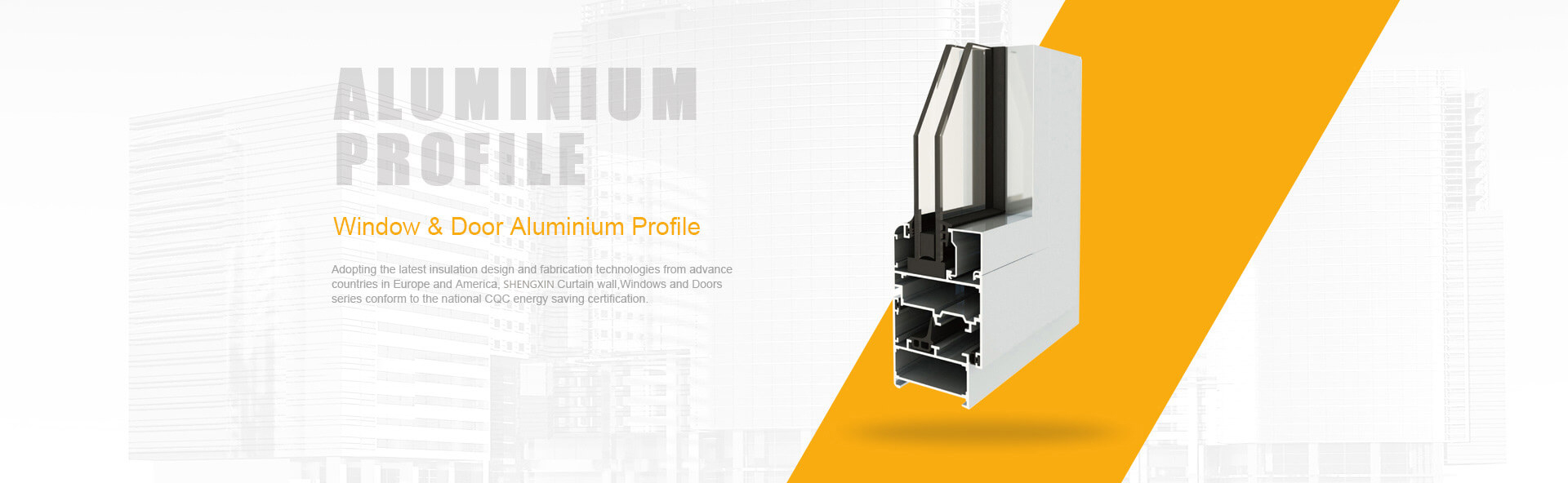
For these projects, partnering with experienced manufacturers capable of end-to-end support—from die development through mass production—streamlines the path from concept to finished components. Shengxin Aluminium, with over 30 years of industry experience and 35 extrusion presses, offers technical team support throughout the custom profile development process. Their surface treatment capabilities—including anodizing in custom colors like champagne and rose gold, powder coating, and PVDF—ensure finished profiles meet both performance and aesthetic requirements.
According to Richardson Metals' custom extrusion guidance, successful projects require that you "work closely with the manufacturer on the tooling design" and collaborate on finishing options "based on your aesthetic and durability requirements." This partnership approach prevents costly revisions and ensures first-run profiles meet specifications.
Specifying aluminum angle profiles doesn't require engineering credentials—it requires understanding the key variables and making informed choices. You now know that alloy selection balances strength against formability and finishing characteristics. You understand how leg configuration and wall thickness influence structural performance. You recognize that surface treatments extend both durability and visual appeal. And you have practical criteria for evaluating suppliers before placing orders.
Armed with this knowledge, you can specify aluminum extruded angle profiles that deliver reliable long-term performance. Whether you're building structural frameworks, finishing architectural edges, or creating custom assemblies, the right aluminum angle—properly specified and sourced—becomes a building block you can count on for years of dependable service.
6061 aluminum offers higher tensile strength (310 MPa vs 241 MPa) and superior machinability, making it ideal for structural applications like scaffolding and trailer construction. 6063 aluminum provides better formability and exceptional anodizing quality, making it the preferred choice for architectural applications such as window frames and decorative trim where surface appearance matters.
Standard equal leg aluminum angles range from 1x1 inch for light-duty trim to 4x4 inch for heavy structural framing. Popular sizes include 1.5x1.5, 2x2, and 3x3 inches with wall thicknesses from 1/16 inch to 3/8 inch. Unequal leg options like 1x2 inch and 2x3 inch are available for asymmetric mounting applications.
Equal leg angles work best for symmetrical load distribution, corner bracing, and applications where both visible surfaces need identical proportions. Unequal leg angles are ideal when one mounting surface requires more contact area than the other, such as shelf brackets or stepped transitions between surfaces.
Common finishes include mill finish (raw aluminum), clear and colored anodizing for enhanced corrosion resistance and aesthetics, powder coating for vibrant colors and textures, and PVDF coating for high-exposure architectural applications. Anodized finishes can be up to 10 times more corrosion-resistant than untreated aluminum.
Standard ASTM B221 tolerances for a 2x2 inch aluminum angle are typically ±0.016 inch for cross-section dimensions. Precision tolerances reduce this by 30-50% to approximately ±0.011 inch. Wall thickness tolerances for 1/8 inch walls typically run ±0.010 to ±0.015 inch depending on profile geometry.



 Інтернет-сервіс
 0086 136 3563 2360
 sales@sxalu.com
 +86 136 3563 2360
 Українська
 English
 français
 Deutsch
 русский
 español
 português
 العربية
 ไทย
ไทย Việt
Việt