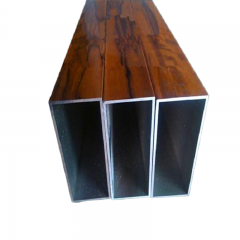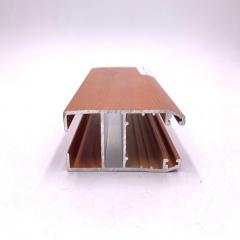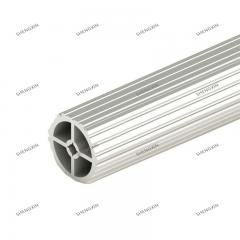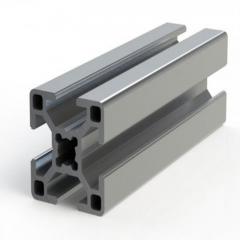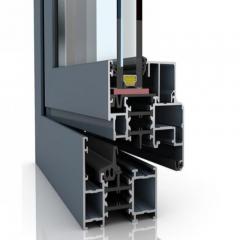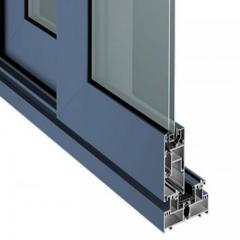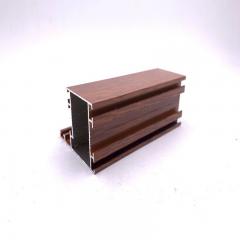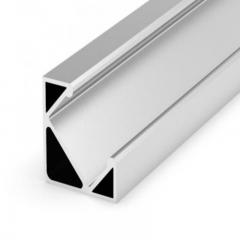
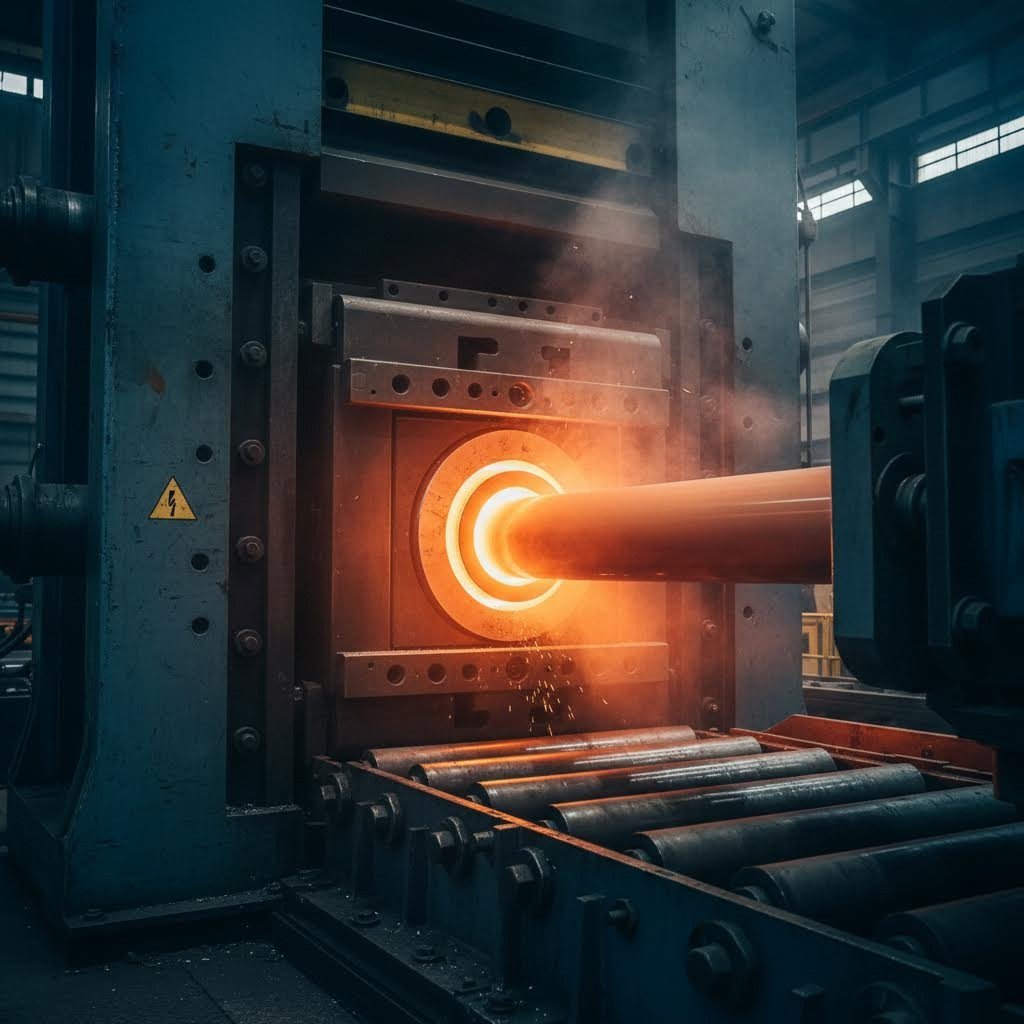
Ever wondered how manufacturers create those perfectly uniform, seamless aluminum pipes you see in everything from pneumatic systems to architectural frameworks? The answer lies in a fascinating process called aluminum pipe extrusion—a manufacturing method that transforms solid metal into precision hollow profiles with remarkable consistency.
Aluminum pipe extrusion is a metal-forming process where a heated aluminum billet is forced through a specially designed die to create hollow cylindrical profiles with consistent wall thickness and seamless construction.
Imagine squeezing toothpaste through a tube—that's essentially what happens during aluminum extrusion, except the "toothpaste" is softened aluminum heated to temperatures between 700°F and 930°F (375°C to 500°C), and the "tube opening" is a precision-engineered steel die that shapes the emerging metal into your desired profile.
The magic of extruded aluminum pipe begins with a cylindrical aluminum billet—your raw starting material. This billet gets loaded into a powerful hydraulic press capable of exerting anywhere from 100 to 15,000 tons of pressure. When the ram starts pushing, something remarkable happens: the softened (but still solid) aluminum has nowhere to go except through the die opening, emerging on the other side as a fully formed hollow profile.
For creating hollow shapes like pipes, manufacturers use specialized dies—typically porthole or bridge dies—that incorporate internal mandrels. These clever designs force the aluminum to flow around obstacles within the die, then rejoin seamlessly to form the hollow interior. The result? An aluminum extrusion tube with uniform wall thickness that would be nearly impossible to achieve through other methods.
What sets aluminum tube extrusion apart from competing manufacturing methods? Let's break down the key differences:
Extruded vs. Drawn Aluminum: While both processes can produce tubing, they work in fundamentally different ways. Drawn aluminum tubing involves pulling metal through a die cavity, stretching it through plastic deformation. Extruded aluminum pipe, by contrast, pushes heated metal through the die—a process that's generally more cost-effective and better suited for complex cross-sectional shapes.
Extruded vs. Welded Pipe: Welded pipes are formed from flat sheets rolled into tubes and joined along a seam. Extruded aluminum tube emerges as a single, continuous piece—no seams, no potential weak points. This seamless construction means better structural integrity and reduced risk of leaks or failures over time.
Extruded vs. Cast Pipe: Casting involves pouring molten aluminum into molds. While effective for certain applications, it can't match the dimensional precision and consistent wall thickness that extrusion delivers.
Why does this matter for your projects? Extruded aluminum profiles offer what the Aluminum Extruders Council describes as "complex shapes realized in one-piece sections without mechanical joining methods." The resulting profile is typically stronger than assembled alternatives and less likely to leak or loosen over time—critical considerations when specifying materials for demanding applications.
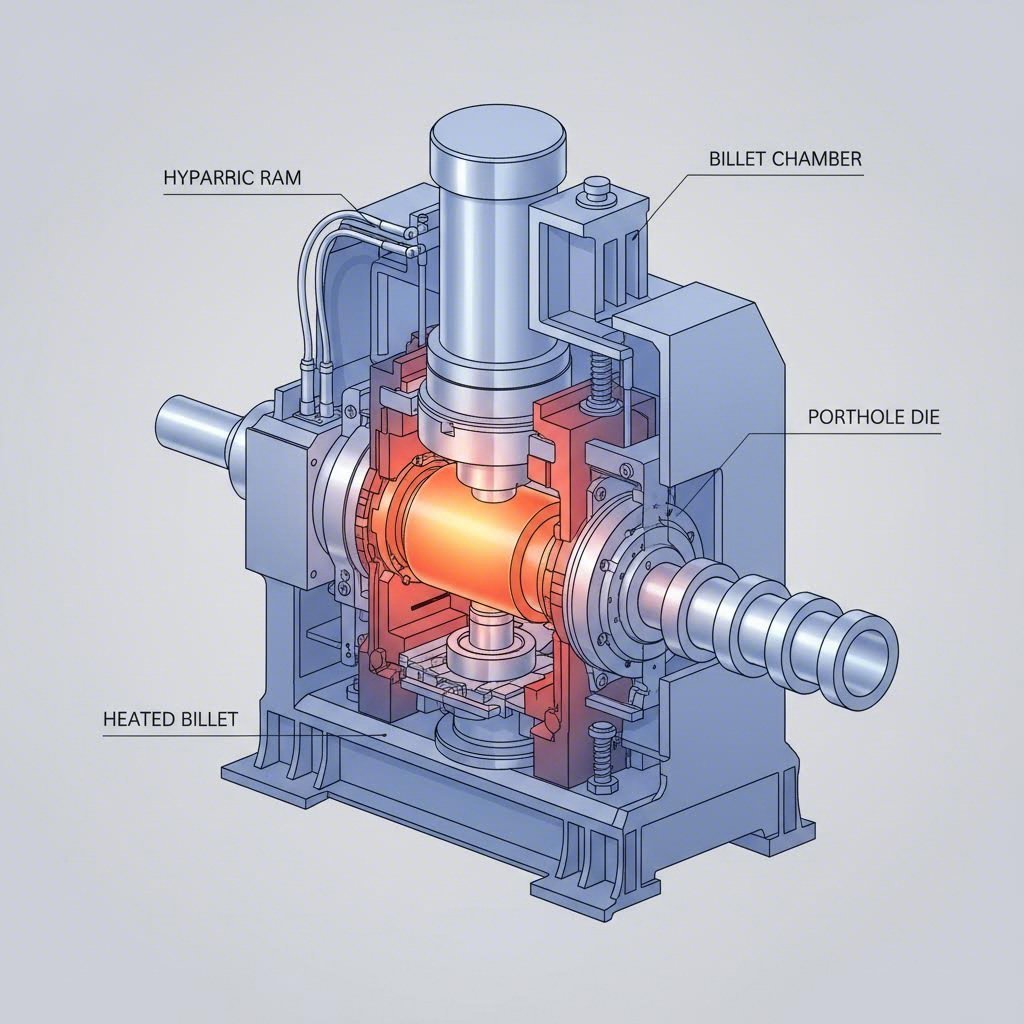
Now that you understand what aluminum pipe extrusion is, let's walk through exactly how manufacturers transform a solid aluminum cylinder into precision hollow tubing. Understanding these steps helps you evaluate suppliers, troubleshoot quality issues, and specify the right parameters for your applications.
The tube extrusion process follows a carefully orchestrated sequence where each step directly influences final product quality. Here's what happens from start to finish:
Temperature is arguably the most critical variable in the entire tubing extrusion process. As Bonnell Aluminum notes, "Temperature is most critical because it gives aluminum its desired characteristics such as hardness and finish."
Here's why temperature control matters so much: At excessively high billet temperatures, the aluminum becomes too fluid. It seeks the path of least resistance, filling larger die voids while resisting entry into constricted areas. The result? Thin-walled sections that fall below dimensional tolerances, surface tearing at edges, and inconsistent wall thickness throughout your extruded tube.
The target exit temperature varies by alloy. For common alloys like 6063 and 6463, manufacturers aim for a minimum exit temperature of 930°F. Higher-strength alloys like 6005A and 6061 require minimum exit temperatures of 950°F to achieve proper solution heat treatment during press quenching.
Understanding Extrusion Ratio: This parameter directly affects both quality and capability. The extrusion ratio equals the billet cross-sectional area divided by the finished profile's cross-sectional area. Think of it as a measure of how much "work" the aluminum undergoes during extrusion.
| Extrusion Ratio Range | Alloy Type | Quality Implications |
|---|---|---|
| Below 10:1 | All alloys | Insufficient mechanical working; coarse grain structure; mechanical properties may not meet specifications |
| 10:1 to 35:1 | Hard alloys (2xxx, 7xxx) | Optimal range; good balance of properties and manufacturability |
| 10:1 to 100:1 | Soft alloys (6xxx) | Acceptable range; higher ratios require more pressure but produce finer grain structure |
| Above limits | All alloys | Excessive pressure requirements; potential die failure; surface quality issues |
Press Tonnage and Pipe Diameter Capability: The size of the extrusion press determines what pipe diameters and wall thicknesses you can produce. Press capacity is measured in tons of force the hydraulic system can generate—ranging from around 600 tons for smaller presses to 5,500 tons or more for heavy industrial equipment.
Larger diameter pipes with thicker walls require more tonnage because you're pushing more aluminum through a bigger die opening. A 600-ton press might handle small-diameter extruded tubing for electronics applications, while producing large structural pipes for architectural framing might require 3,000+ tons of force. When evaluating suppliers, their press range tells you whether they can physically produce your required specifications.
The relationship between these variables—temperature, pressure, extrusion ratio, and alloy—is interconnected. Lower temperatures generally produce better surface quality and tighter tolerances, but require higher pressures. Sometimes the pressure limitations of available equipment make certain combinations impossible to aluminum extrude successfully. This is why understanding the manufacturing process helps you specify achievable requirements and select capable suppliers.
You've mastered how aluminum pipe extrusion works and the manufacturing parameters that affect quality. But here's a question that often trips up engineers and procurement professionals alike: which aluminum alloy should you actually specify? The answer isn't one-size-fits-all—it depends entirely on what you're building and the performance demands it will face.
With over 640 registered alloys according to the Aluminum Association, selection paralysis is real. The good news? For most aluminum extrusion profiles, your decision typically comes down to three workhorses: 6063, 6061, and 7075. Let's decode when each one makes sense.
The 6xxx series dominates aluminum pipe extrusion for good reason. These alloys contain magnesium and silicon as primary alloying elements, making them heat-treatable, corrosion-resistant, and—critically—easy to extrude. Easier extrudability means more design flexibility, better surface finishes, and reduced die wear during production.
But "easy to extrude" doesn't mean identical performance. The specific ratios of silicon and magnesium create meaningful differences:
Choosing between these alloys requires balancing multiple factors. The table below compares key properties to guide your specification decisions:
| Property | 6063-T6 | 6061-T6 | 7075-T6 |
|---|---|---|---|
| Tensile Strength (MPa) | 240 | 310 | 570 |
| Yield Strength (MPa) | 215 | 275 | 505 |
| Extrudability | Excellent | Good | Difficult |
| Surface Finish Quality | Excellent | Good | Fair |
| Corrosion Resistance | Excellent | Good | Moderate |
| Weldability | Good | Good | Poor |
| Anodizing Response | Excellent | Good | Fair |
| Typical Applications | Architectural, decorative | Structural, industrial | Aerospace, high-stress |
| Relative Cost | Lower | Moderate | Higher |
Notice how 7075's impressive strength numbers come with trade-offs in every other category? That's why overprioritizing strength is a common specification mistake. If your extruded aluminum profiles don't actually need aerospace-grade performance, you're paying more for reduced workability and corrosion protection.
Selecting an alloy is only half the equation. The temper designation—that letter-number combination after the alloy name—tells you how the aluminum was heat-treated after extrusion. For aluminium extrusions, T5 and T6 are the tempers you'll encounter most often.
What's the difference? It comes down to heat treatment steps:
According to industry testing data, the mechanical property differences are substantial. A 6063-T6 profile delivers roughly 30% higher tensile strength than the same alloy in T5 temper. However, T5 offers approximately 50% greater elongation before fracture—meaning it can stretch and bend more without cracking.
| Characteristic | T5 Temper | T6 Temper |
|---|---|---|
| Heat Treatment Steps | Aging only | Solution treatment + aging |
| Relative Strength | Medium | High |
| Hardness | Medium | High |
| Ductility/Formability | Better | Reduced |
| Processing Cost | Lower | Higher |
| Best For | Architectural, bendable parts | Structural, load-bearing |
The practical takeaway? Specify T6 when maximum strength matters and the profile won't require post-extrusion forming. Choose T5 when you need to bend, shape, or machine the profile after production—or when cost optimization is a priority and medium strength suffices.
Understanding these alloy and temper relationships helps you avoid two common pitfalls: over-specifying expensive materials for simple applications, or under-specifying and ending up with profiles that can't handle real-world demands. With alloy selection clarified, the next critical specification element is dimensional standards—knowing what sizes are available and what tolerances to expect.
You've selected your alloy and temper—but can you actually get the pipe dimensions you need? Understanding aluminum tube dimensions and industry tolerance standards is where specifications meet reality. Get this wrong, and you'll face costly rework, assembly problems, or rejected parts.
Here's what many engineers discover too late: the tolerances achievable for an aluminum round tube depend heavily on its diameter, wall thickness, and whether you're working with extruded or drawn tubing. Let's break down what you can realistically specify—and what questions to ask suppliers before placing orders.
Aluminum round tubing follows standardized sizing conventions, though "standard" varies by manufacturing method and application. For extruded pipe and tube, the Aluminum Association tolerance standards provide the baseline specifications most manufacturers follow.
What do these tolerances actually look like? For round aluminum tube sizes, two key measurements matter: mean diameter deviation and diameter deviation at any point. Mean diameter is the average of two measurements taken at right angles—it tells you if the tube is sized correctly overall. Diameter at any point catches out-of-roundness issues that could affect fit or function.
| Specified Diameter (in.) | Mean Diameter Tolerance (±in.) | Diameter at Any Point Tolerance (±in.) |
|---|---|---|
| 0.500 - 0.999 | 0.010 | 0.020 |
| 1.000 - 1.999 | 0.012 | 0.025 |
| 2.000 - 3.999 | 0.015 | 0.030 |
| 4.000 - 5.999 | 0.025 | 0.050 |
| 6.000 - 7.999 | 0.035 | 0.075 |
| 8.000 - 9.999 | 0.045 | 0.100 |
| 10.000 - 11.999 | 0.055 | 0.125 |
| 12.000 - 13.999 | 0.065 | 0.150 |
Notice the pattern? As diameter increases, so do the allowable tolerances. A 2-inch round aluminum tube holds tighter tolerances than an 8-inch pipe—simply because controlling dimensions becomes harder as profiles get larger. For applications requiring tighter control than standard tolerances allow, drawn tubing typically achieves better precision than extruded alternatives.
When specifying aluminum round tube sizes, remember that tolerances are expressed as plus-and-minus values. A 2.000-inch tube with ±0.015 mean diameter tolerance could measure anywhere from 1.985 to 2.015 inches and still meet specification. If your design can't accommodate this range, you'll need to specify precision tolerances—which typically cost more and may limit your supplier options.
Wall thickness deserves special attention because it directly impacts both structural performance and weight. Thicker walls mean stronger pipes but also heavier ones—a critical trade-off in aerospace, automotive, and portable equipment applications.
For extruded round aluminum tubing, wall thickness tolerances depend on both the wall specification and the tube's outside diameter. Here's what the industry standards specify:
| Specified Wall Thickness (in.) | OD Under 1.250 in. (±in.) | OD 1.250-2.999 in. (±in.) | OD 3.000-4.999 in. (±in.) | OD 5.000+ in. (±in.) |
|---|---|---|---|---|
| Under 0.047 | 0.006 | — | — | — |
| 0.047 - 0.061 | 0.007 | 0.008 | 0.008 | 0.010 |
| 0.062 - 0.124 | 0.009 | 0.009 | 0.010 | 0.015 |
| 0.125 - 0.249 | 0.009 | 0.009 | 0.013 | 0.020 |
| 0.250 - 0.374 | 0.011 | 0.011 | 0.016 | 0.025 |
| 0.375 - 0.499 | — | 0.015 | 0.021 | 0.035 |
| 0.500 - 0.749 | — | 0.020 | 0.028 | 0.045 |
Beyond mean wall thickness, eccentricity—the variation in wall thickness around the tube's circumference—matters for many applications. Industry standards typically allow wall thickness deviation at any point of ±10% from the mean wall thickness, with minimums of 0.010 inches and maximums of 0.060 inches depending on tube size.
Thick wall aluminum tubing applications—such as high-pressure hydraulic lines, structural columns, and heavy-duty framing—require careful specification. As wall thickness increases relative to diameter, the tube becomes stiffer and more resistant to crushing or buckling. However, producing thick wall aluminum pipe presents manufacturing challenges: the extrusion ratio changes, die design becomes more complex, and internal surface quality can suffer.
For structural applications, engineers often reference schedule numbers borrowed from steel pipe conventions. While aluminum doesn't follow identical schedules, the concept translates: higher schedule numbers indicate thicker walls relative to diameter. A Schedule 40 aluminum pipe, for instance, has a thicker wall than Schedule 10 of the same diameter.
What if you need large diameter aluminum pipe beyond standard catalog sizes? Standard extrusion presses handle diameters up to about 12-14 inches, but specialized manufacturers with high-tonnage equipment can push significantly larger. According to industry suppliers, large-diameter extruded aluminum tubes manufactured on 10,000-ton presses can reach diameters of 1,600mm (approximately 63 inches) in alloys like 6061, 6063, and 6082.
For truly massive diameters, forged aluminum tubes offer an alternative. Large-diameter forged tubes using medium to high-strength alloys (6061, 6082, 7075) can be customized to specific diameters, wall thicknesses, and lengths—often with no tooling costs for custom specifications.
When specifying custom dimensions for procurement, include these elements in your request:
One final note on tolerance verification: the data presented here reflects industry-standard specifications, but actual capabilities vary by manufacturer and equipment. Always confirm that your supplier can meet your specific requirements—and request documentation showing their process capability for critical dimensions. Tolerance data should be verified against current industry standards before finalizing specifications.
With dimensional requirements defined, the next consideration is surface finish—which treatments are available, and how do they affect your pipe's performance in real-world environments?
You've got your alloy selected and dimensions specified—but here's a question that often determines whether your aluminum pipe thrives or fails in the field: what surface finish should you specify? The right treatment isn't just about aesthetics. It's your first line of defense against corrosion, wear, and environmental degradation.
Even though extruded aluminium naturally forms a protective oxide layer, that thin barrier won't hold up in demanding environments. Coastal locations with salt air, industrial areas with chemical exposure, or regions with freeze-thaw cycles all require more robust protection. Let's explore your options and match them to real-world performance requirements.
Each finish type offers distinct advantages depending on your application. Here's what you need to know about the major categories:
Matching finish selection to environmental demands is where specification decisions really matter. The table below connects finish types to their performance characteristics:
| Finish Type | Corrosion Resistance | Abrasion Resistance | UV Stability | Best Applications |
|---|---|---|---|---|
| Mill Finish | Low | Low | Poor | Interior structural, temporary use |
| Anodized Class I | Excellent | Excellent | Good | Exterior architectural, storefronts, extruded aluminium track |
| Anodized Class II | Good | Good | Moderate | Interior architectural, decorative |
| Powder Coating | Good | Good | Moderate-Good | Furniture, interior fixtures, moderate exterior |
| PVDF Coating | Excellent | Moderate | Excellent | Curtainwall, metal roofing, harsh exterior |
| Micro-Arc Oxidation | Excellent | Superior | Good | High-wear industrial, sliding components |
Here's a practical decision framework: For storefronts and high-traffic areas where people touch surfaces regularly, anodizing's superior abrasion resistance outperforms paint. For curtainwall and roofing where color consistency and weather resistance matter most, PVDF coatings deliver proven long-term performance. For industrial applications requiring extreme durability, consider micro-arc oxidation or Class I anodizing.
One critical point often overlooked: anodized finishes can be renewed through cleaning. When an anodized surface appears to have failed, mild abrasive cleaning often restores its appearance for another 20 years. Once organic coatings fail, however, your only options are recoating or replacement—a significant cost difference over the building's lifetime.
Environmental considerations also factor into finish selection. Anodizing produces no VOC emissions and its byproducts can often benefit municipal wastewater treatment. Powder coatings emit no air pollution during curing. If you're pursuing LEED certification or other green building goals, these characteristics may influence your specification.
With surface treatment options understood, the next question becomes practical: how do these finished pipes perform across different industry applications, and what specifications should you prioritize for your specific use case?
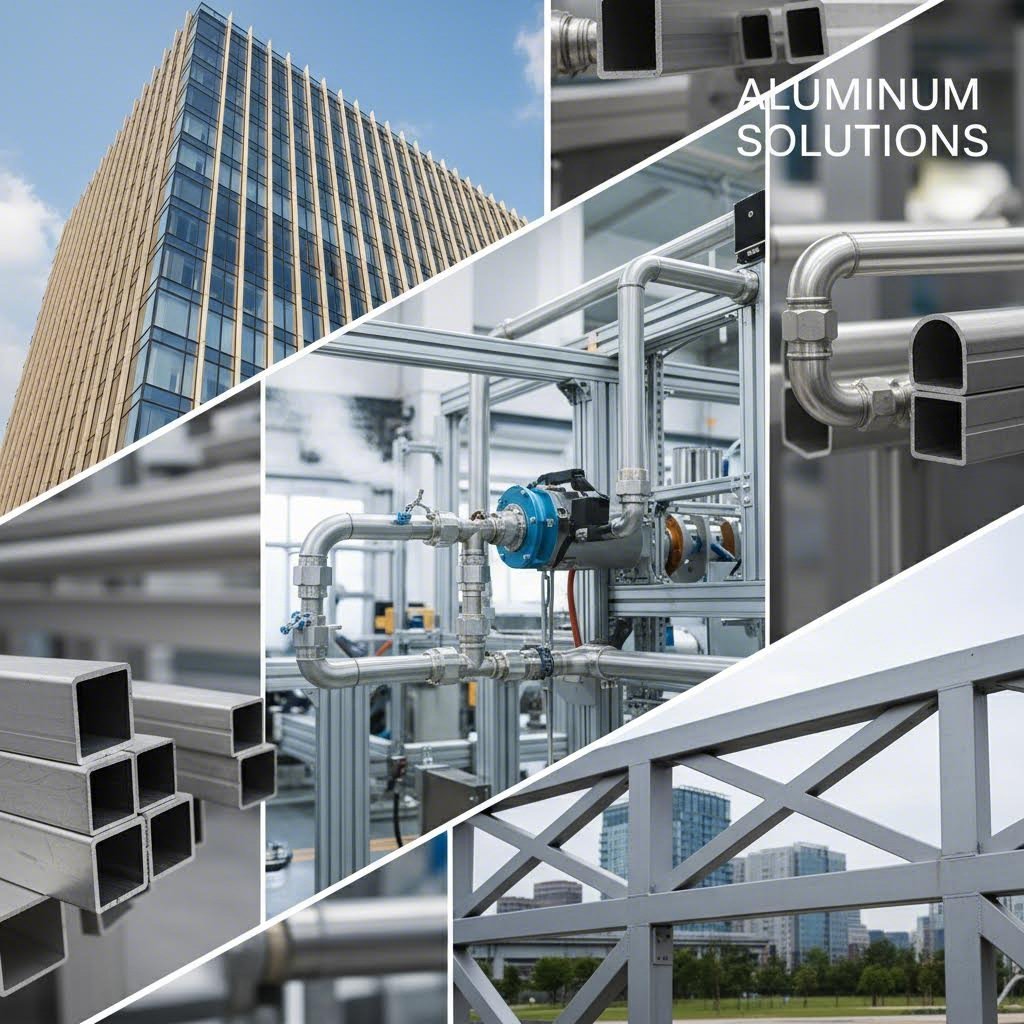
You've learned about alloys, tolerances, and surface finishes—but how does all this technical knowledge translate into real-world decisions? When an architect specifies aluminum sliding door track for a coastal high-rise, or an engineer selects tubing for a pneumatic conveying system, they're not just picking parts from a catalog. They're matching material science to application demands.
Aluminum extrusions have found their way into virtually every industry imaginable. According to industry research, extruded aluminum tubes now serve applications ranging from aircraft fuselage frames to surgical tables—each with distinct specification requirements. Let's explore how different sectors approach pipe selection and what considerations should drive your decisions.
Each industry brings unique performance demands that influence every specification choice—from alloy selection to surface treatment. Here's what matters most across major application sectors:
Sounds like a lot to remember? Here's a simplified framework for evaluating pipe specifications against your specific use case. Ask yourself these questions:
What loads will the pipe carry? Structural applications bearing significant weight or stress call for 6061-T6 or stronger alloys. Decorative or low-stress applications can use 6063 and save money without sacrificing performance.
What environment will it face? Coastal salt air, industrial chemicals, UV exposure, and freeze-thaw cycles all accelerate degradation. Match your surface treatment intensity to environmental severity—mill finish for controlled interiors, Class I anodizing or PVDF for harsh exteriors.
How visible is the application? Architectural storefronts demand flawless surface quality and consistent color. Industrial framing hidden behind panels can tolerate minor surface variations and save on finishing costs.
What secondary processing is required? If you'll bend, weld, or machine the tubes after delivery, temper selection matters. T5 offers better formability; T6 maximizes strength but resists bending. Drawn tubes typically outperform extruded for bending applications requiring tight radii.
What are the assembly requirements? Will the pipe interface with T-slot accessories, snap into extruded aluminum track systems, or require precision fits with other components? These details determine whether standard tolerances suffice or you need precision specifications.
The beauty of aluminum pipe extrusion lies in its adaptability. The same fundamental process that produces decorative furniture components also creates safety-critical aerospace structures. What changes is the specification—alloy, temper, tolerances, and finish tailored to application demands.
With application requirements clarified, there's one more critical consideration before placing orders: how do you verify that what you receive actually meets your specifications? Understanding quality control standards and common defects helps you evaluate suppliers and catch problems before they become expensive failures.
You've specified the perfect alloy, nailed down your tolerances, and selected the right surface finish. But here's the reality check: specifications on paper mean nothing if the pipes arriving at your facility don't actually meet them. How do you verify quality—and what should you look for when evaluating suppliers?
Quality control in aluminum pipe extrusion isn't a single checkpoint at the end of the line. It's a comprehensive system spanning raw material verification through final inspection. According to Profile Precision Extrusions, suppliers meeting AS9100_D registration standards take a proactive approach to identifying defects and minimizing risks throughout production. Understanding these verification methods helps you ask the right questions and recognize capable suppliers.
A robust quality system covers four essential areas. Each catches different types of problems before they reach your production floor:
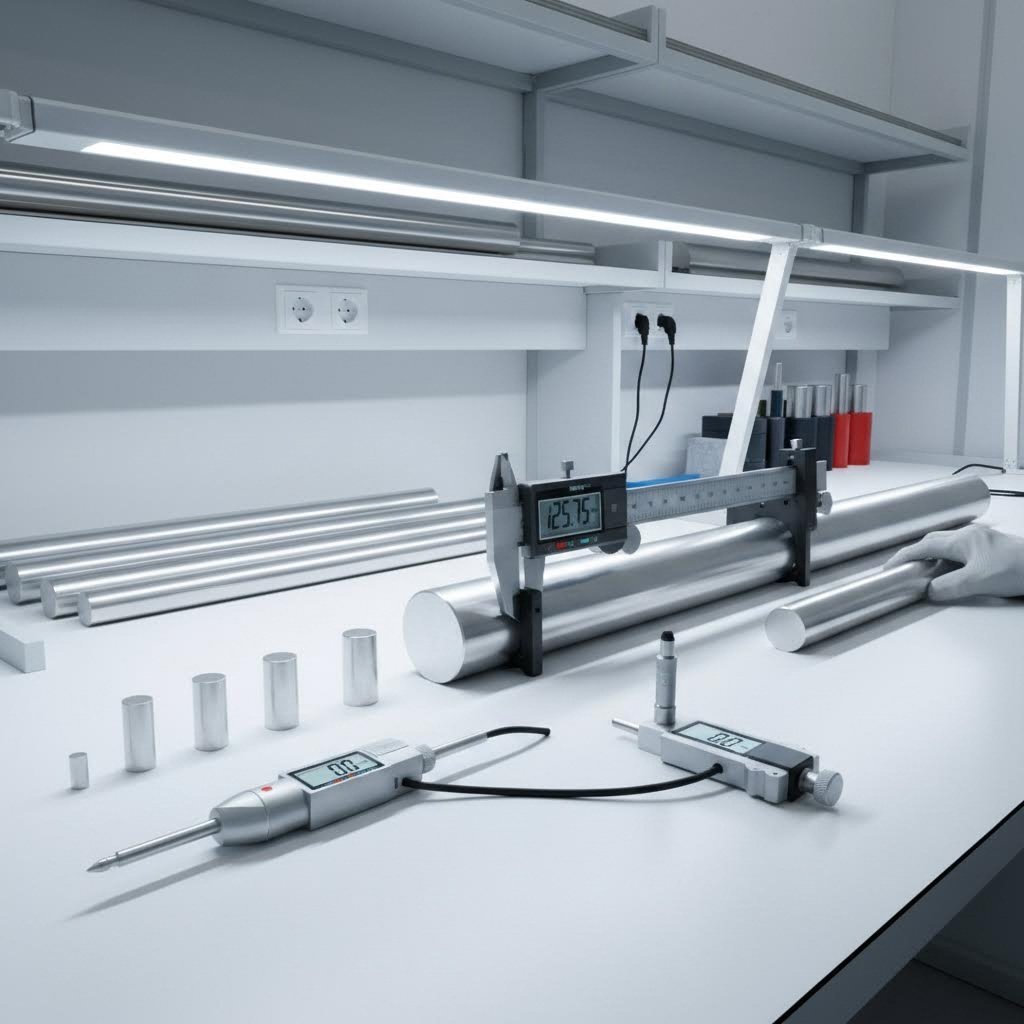
Dimensional Inspection: This confirms that every measurement falls within specified tolerances. Quality-focused manufacturers use multiple verification tools depending on precision requirements:
Surface Quality Assessment: Visual inspection catches imperfections that dimensional tools miss—scratches, die lines, blistering, and oxidation spots. For extruded aluminum shapes destined for anodizing, surface quality before treatment determines final appearance. Inspectors check for handling damage, extrusion defects, and contamination throughout production.
Mechanical Testing: After extrusion and aging, samples undergo destructive testing to verify the aluminum meets strength specifications. Standard tests include yield strength, tensile strength, and elongation percentage. These results confirm that heat treatment achieved the target temper properties—critical for load-bearing applications.
Metallurgical Evaluation: For demanding applications, grain structure analysis and hardness testing verify internal material quality. Inconsistent grain structure can cause blotchy anodizing, while improper heat treatment produces variable hardness across the profile.
What standards should you expect suppliers to meet? For standard aluminum extrusions, Aluminum Association tolerances provide the baseline. Aerospace applications require AS9100 certification and AMS material specifications. For aluminum extrusion channel and hardware destined for architectural use, AAMA standards govern both dimensional and finish quality.
Even with excellent quality systems, defects occasionally occur. Understanding what causes them helps you evaluate supplier capability and troubleshoot problems when they arise. Here are the most common issues in extruded aluminum sizes and their root causes:
Notice the common thread? Most defects trace back to process parameter control—temperature, pressure, speed, and cooling. According to Aluphant's defect analysis, suppliers who invest in real-time monitoring catch deviations before they affect finished products. This capability separates quality-focused manufacturers from those who rely solely on end-of-line inspection.
When evaluating extruded aluminum hardware suppliers, ask about their defect prevention systems—not just their inspection procedures. Do they perform die-flow simulation before cutting new dies? How do they monitor billet temperature and extrusion speed in real time? What triggers a process adjustment versus a quality hold? These questions reveal whether a supplier prevents defects or merely catches them.
One final consideration: traceability. Quality suppliers issue material certifications with every order stating actual chemical composition, production specifications, and lot numbers traceable back to raw material production. This documentation proves invaluable if problems emerge months or years after installation—and demonstrates the supplier's commitment to accountability.
With quality verification understood, you're ready for the final piece of the puzzle: how to evaluate and select the right extrusion partner for your specific requirements.
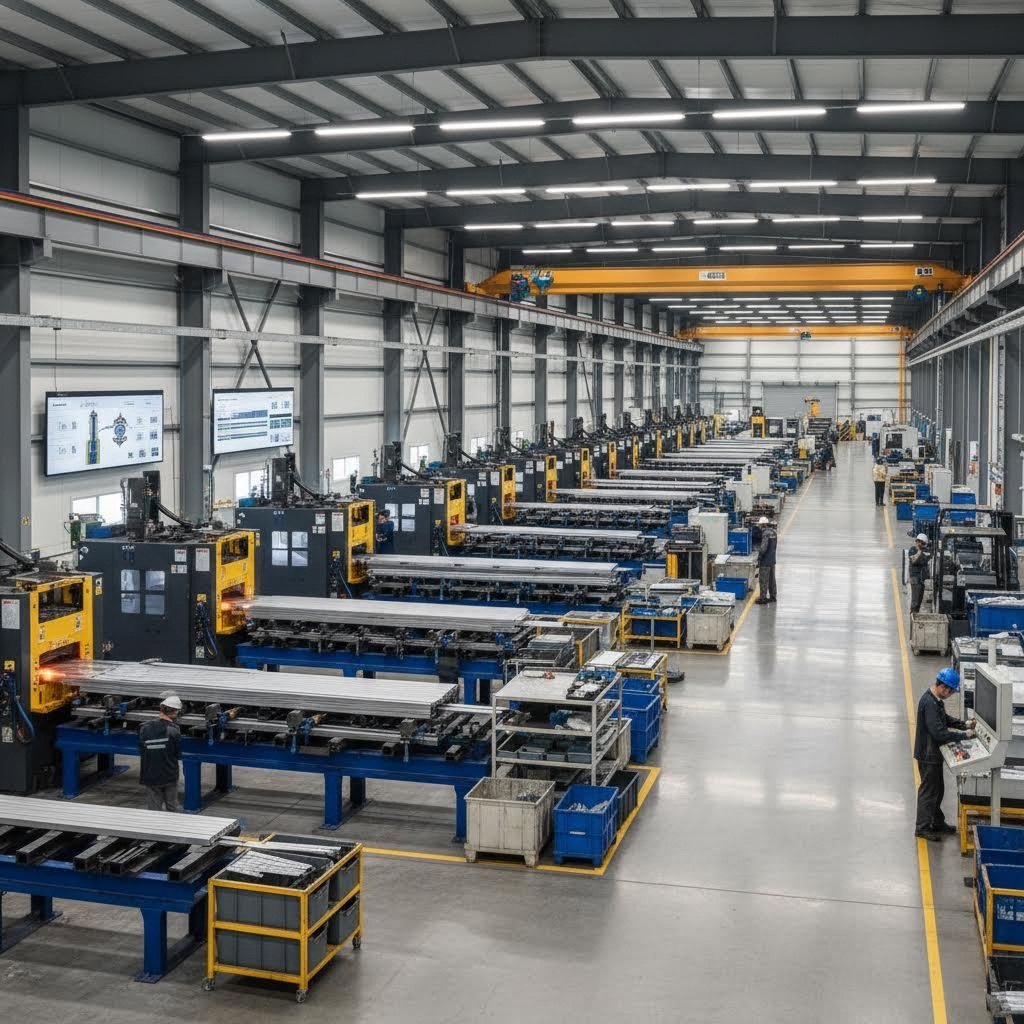
You've mastered the technical specifications—alloys, tolerances, finishes, and quality standards. Now comes the decision that ties everything together: which supplier can actually deliver what you need? Choosing where to buy aluminum extrusion isn't just about finding aluminum extrusions for sale at the right price. It's about finding a technical partner capable of transforming your specifications into consistent, high-quality products.
The difference between a good supplier and a great one often reveals itself months after the first order—when you need a design modification, encounter a quality issue, or need to scale production quickly. Let's explore what separates capable aluminum extrusion supply partners from those who simply fill orders.
Before requesting quotes, understand what manufacturing capabilities your project actually requires. A supplier's equipment determines what they can physically produce—and whether they can grow with your needs.
Press Capacity Range: As covered earlier, press tonnage directly limits achievable pipe diameters and wall thicknesses. According to industry guidance, common capacities range from 500 tons for smaller profiles up to over 15,000 tons for larger or more complex shapes. When evaluating suppliers, look for a range of press sizes—this indicates flexibility to handle both small precision work and large structural profiles.
For example, Shengxin Aluminium operates 35 extrusion presses ranging from 600T to 5500T. This breadth means they can produce everything from small-diameter extruded aluminum tubing for electronics to large structural aluminum profile extrusion for architectural applications—all under one roof.
Die Development Capabilities: Custom profiles require custom dies. Suppliers with in-house die design and manufacturing respond faster to new projects and can optimize dies based on production feedback. Ask whether they use die-flow simulation software to predict and prevent defects before cutting steel—this capability significantly reduces first-article rejection rates.
Production Volume Flexibility: Can the supplier handle both prototype quantities and full-scale production runs? According to Ya Ji Aluminum, suppliers with multiple extrusion lines and automated systems typically outperform smaller operations in meeting delivery windows during demand spikes.
When searching for extruded aluminum for sale that meets your specifications, dig deeper than catalog listings. Use these evaluation criteria to separate capable partners from order-takers:
Why does integrated capability matter so much? Consider what happens when you split your aluminum extrusion frame project across multiple vendors: the extruder ships raw profiles to a machinist, who sends finished parts to an anodizer, who finally delivers to your facility. Each handoff introduces delay, handling damage risk, and coordination overhead.
Compare that to working with a single supplier offering end-to-end support from die development through mass production. Your specifications stay consistent throughout. Quality issues get resolved faster because one team owns the entire process. And your procurement team manages one relationship instead of three or four.
This integrated approach becomes especially valuable for complex projects requiring tight tolerances on machined features that interface with anodized surfaces. When the same facility controls both processes, they can optimize the sequence and catch problems before shipping.
Before committing to a supplier relationship, verify these essential capabilities:
For those ready to explore custom aluminum pipe extrusion solutions, Shengxin Aluminium's deep processing services demonstrate what comprehensive capability looks like in practice: over 30 years of experience, extensive press capacity for projects of any scale, integrated CNC machining and surface treatment, plus technical team support from initial design through volume production.
With supplier evaluation criteria established, you're equipped to make informed procurement decisions. The final step is pulling all these considerations together into a practical specification checklist that ensures nothing gets overlooked when you're ready to move forward with your project.
You've traveled the complete journey—from understanding how heated billets transform into precision aluminium pipe through die mechanics, to evaluating alloys, tolerances, finishes, and supplier capabilities. Now it's time to consolidate everything into actionable steps that ensure your next aluminum pipe extrusion project succeeds from first quote to final delivery.
The difference between a smooth procurement process and costly delays often comes down to specification completeness. When you approach suppliers with clear, technically sound requirements, you receive accurate quotes faster, reduce first-article rejections, and build relationships with partners who understand you're serious about quality.
Before requesting quotes for aluminum tubes for sale or custom aluminium extrusion projects, verify you've addressed each of these critical elements:
Throughout this guide, we've emphasized the engineering logic behind specification choices—the why that transforms you from someone placing orders into a knowledgeable partner who speaks suppliers' language. When you understand that billet temperature affects surface quality, that extrusion ratio influences mechanical properties, and that die design determines achievable tolerances, you can have meaningful technical conversations that improve outcomes.
Ready to buy aluminum tube or explore custom solutions? The path forward starts with finding a supplier whose capabilities match your requirements. Look for partners offering comprehensive support—from die development through mass production—rather than transactional vendors who simply fill orders.
For those seeking a starting point, Shengxin Aluminium's technical team provides end-to-end consultation backed by over 30 years of experience and factory-direct pricing. Their integrated capabilities—35 extrusion presses, CNC machining centers, and full surface treatment facilities—exemplify the comprehensive partnership approach that simplifies complex projects.
Whatever direction you choose, remember that successful aluminum tubing for sale procurement isn't about finding the lowest price—it's about matching specifications to application requirements and partnering with suppliers capable of delivering consistent quality. Armed with the knowledge from this guide, you're equipped to make those decisions with confidence.
Aluminum pipe extrusion is a metal-forming process where heated aluminum billets (typically 800-925°F) are forced through specially designed dies using hydraulic presses ranging from 600T to 5500T. For hollow profiles like pipes, manufacturers use porthole or bridge dies with internal mandrels that force aluminum to flow around obstacles, then rejoin seamlessly to form the hollow interior. This creates seamless tubes with consistent wall thickness impossible to achieve through other methods like welding or casting.
Extruded aluminum tubing is created by pushing heated metal through a die, making it more cost-effective and better suited for complex cross-sectional shapes. Drawn aluminum tubing involves pulling metal through a die cavity via plastic deformation, typically achieving tighter dimensional tolerances. Extruded tubes excel for standard applications requiring good surface finish and structural integrity, while drawn tubes are preferred for precision bending applications and when micron-level accuracy is critical.
Choose 6063 for architectural applications requiring excellent surface finish and anodizing response—it's the most commonly extruded alloy worldwide, ideal for window frames, curtain walls, and decorative components. Select 6061 when structural strength takes priority over aesthetics, as it offers higher tensile strength (310 MPa vs 240 MPa) for industrial framing, structural components, and load-bearing applications. For aerospace applications requiring maximum strength-to-weight ratios, consider 7075 alloy despite its higher cost and reduced workability.
Common surface treatments include mill finish (economical, minimal protection), anodizing (Class I for exterior, Class II for interior use), powder coating (custom colors, good abrasion resistance), PVDF coating (maximum weather and UV resistance for curtainwalls), and micro-arc oxidation (superior wear resistance for high-traffic applications). Surface selection should match environmental exposure—coastal salt air and industrial chemicals require Class I anodizing or PVDF, while protected interiors can use mill finish or Class II anodizing.
Evaluate suppliers based on press capacity range (determines achievable diameters and wall thicknesses), in-house die development capabilities, secondary processing options (CNC machining, cutting, drilling, bending), surface treatment facilities, quality certifications (ISO 9001, IATF 16949, AS9100), and material traceability documentation. Look for integrated suppliers offering end-to-end support from die design through mass production, like Shengxin Aluminium with 35 extrusion presses and comprehensive finishing capabilities, to reduce coordination overhead and maintain consistent quality.



 Інтернет-сервіс
 0086 136 3563 2360
 sales@sxalu.com
 +86 136 3563 2360
 Українська
 English
 français
 Deutsch
 русский
 español
 português
 العربية
 ไทย
 Việt