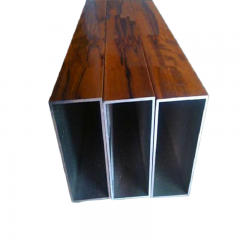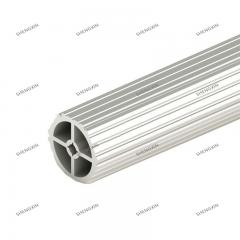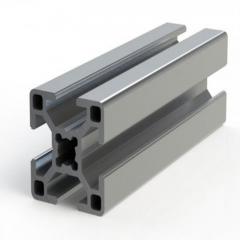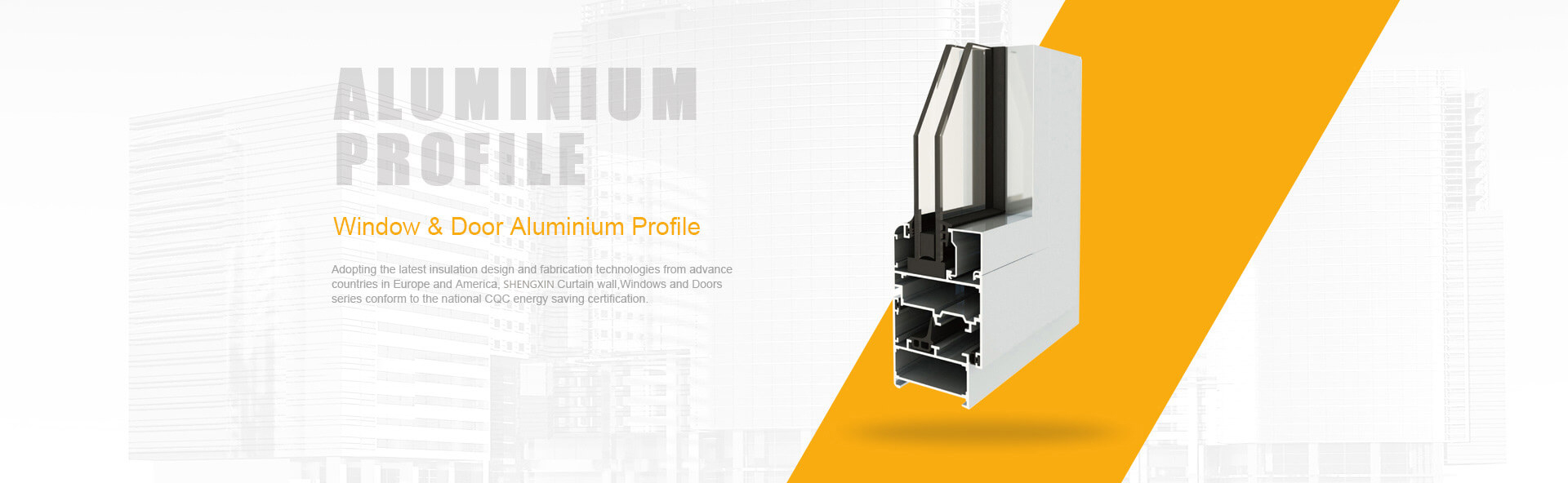
When you're searching for a reliable edge-gripping solution in construction or architectural projects, you'll likely encounter the aluminum F channel extrusion. But what exactly is it, and why does this particular profile stand out among the many channel shapes available?
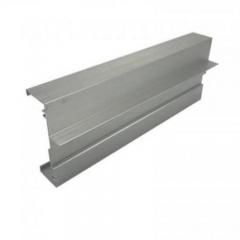
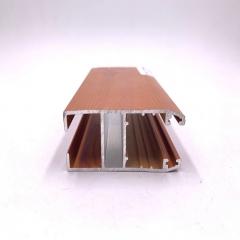
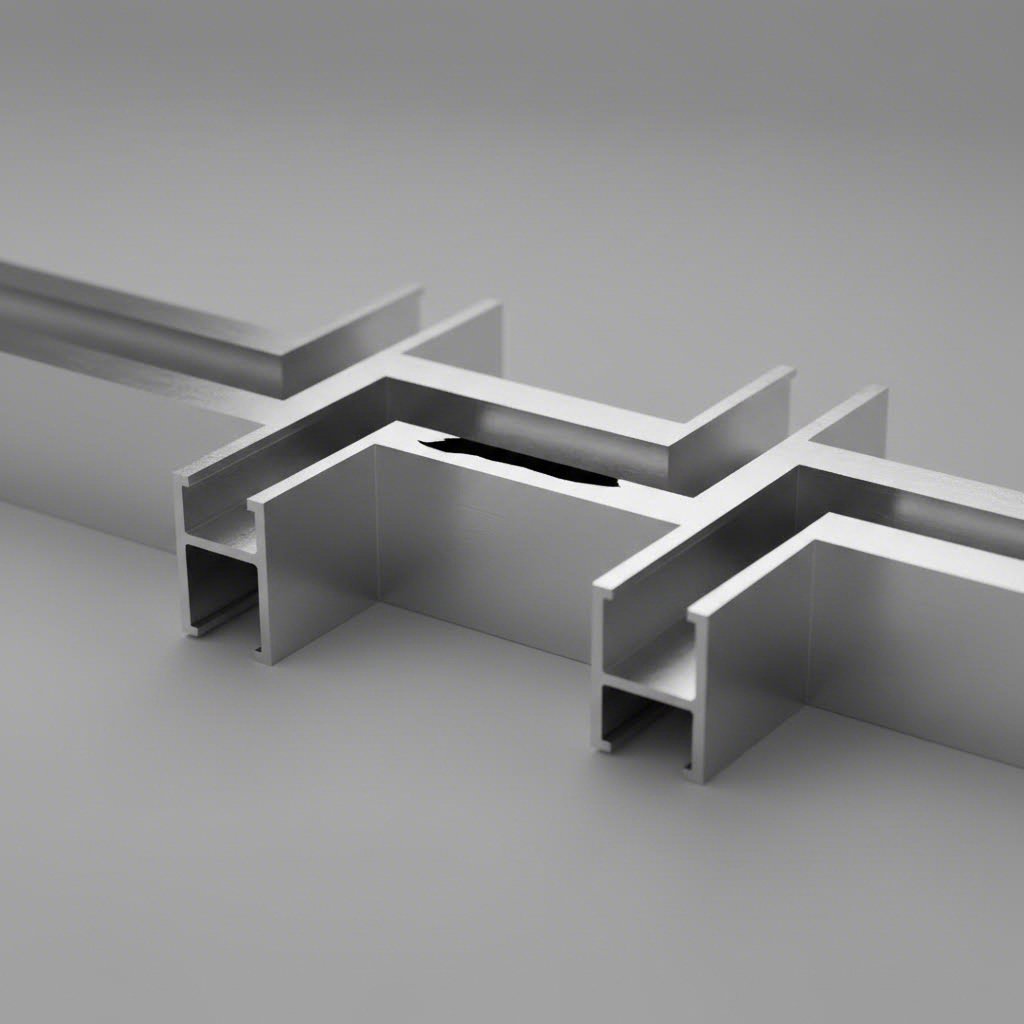
An aluminum F channel is an extruded metal profile featuring a distinctive cross-section that resembles the letter "F" when viewed from the side. It consists of three key components: a vertical leg, a horizontal base, and a second vertical leg—creating an opening at the top with a solid bottom that provides effective support and a secure mounting surface.
This unique configuration sets the aluminum f channel apart from simpler profiles like U channels or C channels. The groove within the channel securely holds panels—whether wood, glass, or composite materials—while the extended side can embed into floors or walls to provide additional structural support.
Imagine looking at the letter "F" rotated 90 degrees. That's essentially what you see when examining this profile's cross-section. The f channel features two parallel wings connected by a central section, and this geometry isn't just aesthetic—it's functional. According to industry specifications, the tensile strength of quality F channels reaches approximately 280 MPa, allowing them to withstand impacts and daily wear in demanding applications.
The wall thickness typically ranges from 1.2 mm to 2.0 mm depending on the intended use, and this directly affects the channel's strength. Thicker walls provide better resistance to compression and bending, making them suitable for heavier-duty applications.
So what is f channel used for in practice? The applications span multiple industries:
Unlike simpler f chanel designs, the extended web configuration offers greater flexibility for panel edge protection, transitions, and partition framing. The lightweight yet durable nature of aluminum—combined with its natural corrosion resistance—makes these channels particularly valuable for both indoor and outdoor installations.
Throughout this comprehensive guide, you'll discover everything from the manufacturing process and alloy selection to installation best practices and supplier evaluation criteria. Whether you're an architect specifying materials, a contractor planning an installation, or a procurement professional sourcing components, the sections ahead will equip you with the technical knowledge needed to make informed decisions about aluminum F channel extrusions.
Ever wondered how a solid aluminum cylinder transforms into that precise F-shaped profile you see in construction projects? The manufacturing journey involves a fascinating combination of heat, pressure, and engineering precision. Understanding this process helps you appreciate why quality varies between suppliers—and what to look for when sourcing your extruded aluminum channel components.
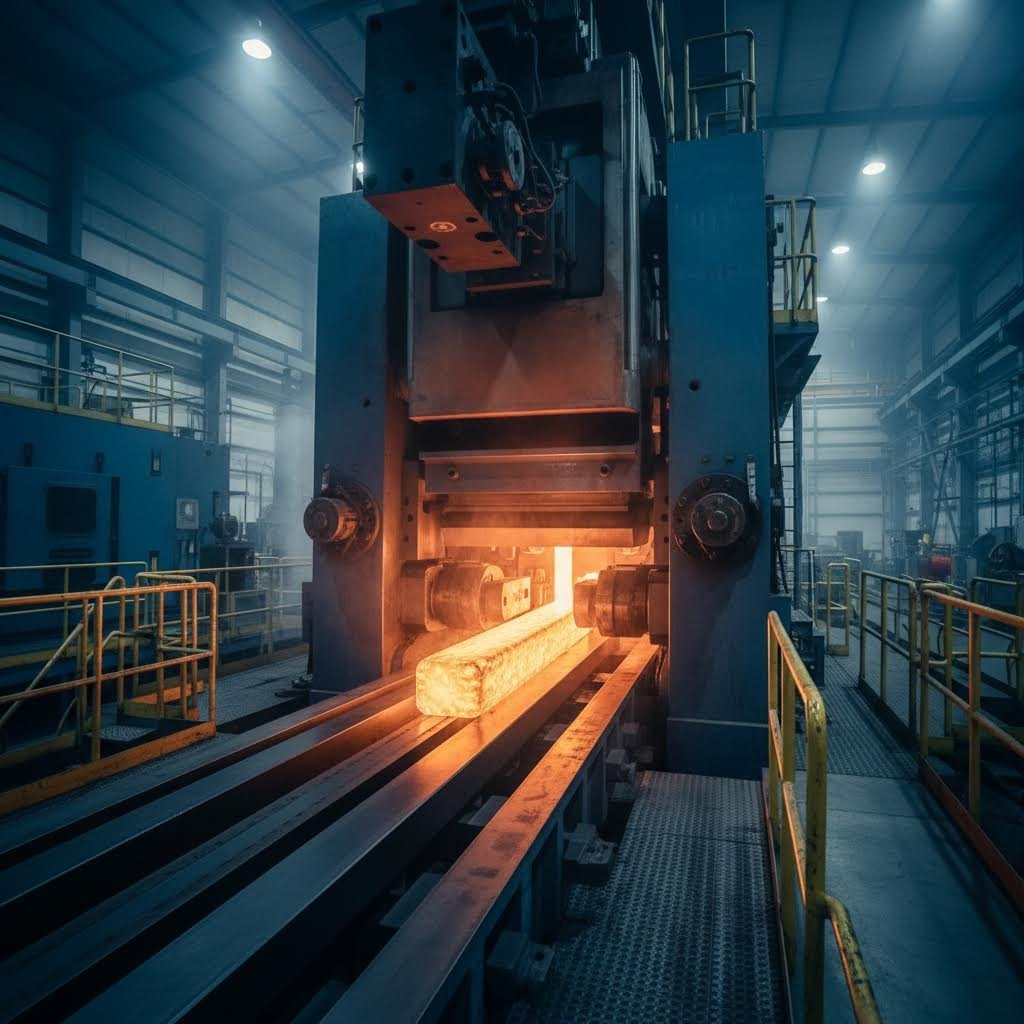
The aluminum extrusion process begins with a billet—a solid cylindrical log of aluminum alloy cut to specific lengths. Think of it like a sophisticated version of pushing Play-Doh through a shape mold, except you're working with temperatures reaching 800-925°F and pressures that could crush 50 pickup trucks.
Here's what happens during the key manufacturing stages:
Temperature control throughout this process is critical. For common 6063 alloy F channels, the target exit temperature at the die must reach at least 930°F to develop optimal mechanical properties. Too hot, and the metal becomes overly fluid, causing dimensional inconsistencies; too cold, and the extrusion may crack or fail to fill intricate die features.
The extrusion die is where the magic happens. This hardened steel disk contains a precisely machined opening that determines your F channel's exact cross-sectional shape. For F profiles specifically, die design presents unique challenges because of the asymmetrical geometry and varying wall thicknesses.
F channel dies typically fall into the solid die category, consisting of three main components:
Die designers must carefully calculate bearing lengths—the distance aluminum travels within the die opening. Since F channels have sections of varying thickness, the bearing length must be longer in thicker areas to slow the aluminum flow, ensuring all parts of the profile exit at the same speed. Without this balance, you'd see warping, twisting, or dimensional inaccuracies in the finished extruded aluminium channel.
Press tonnage directly affects what's possible with your F channel specifications. Smaller presses in the 1,000-3,000 ton range handle simpler profiles and smaller circumscribing circles. For complex F channel designs with tight tolerances or larger dimensions, manufacturers may require presses exceeding 5,000 tons. The circumscribing circle—the smallest circle that completely encloses the profile's cross-section—determines which press size is needed for production.
After extrusion, the extruded channel undergoes artificial aging in heat-treatment ovens. This controlled thermal process—typically achieving T5 or T6 temper designations—hardens the aluminum by accelerating molecular realignment, giving your F channel its final strength characteristics.
With the manufacturing fundamentals covered, how do you know when an F channel is the right choice versus other profile types? The next section breaks down the key differences between F, J, U, and C channels to help you select the optimal shape for your specific application.
Staring at a catalog full of aluminum channel shapes and feeling overwhelmed? You're not alone. With F channels, J channels, U channels, and C channels all looking somewhat similar at first glance, picking the wrong profile can derail your entire project. The good news? Once you understand the functional differences between these aluminium channel types, the right choice becomes obvious.
The confusion between j channel and f channel is understandable—both serve as edge trim and both grip materials. However, their profiles are engineered for distinctly different purposes.
When you examine an F channel from the side, you'll notice it resembles the letter "F" with two parallel flanges extending from a vertical leg. This creates a channel opening at the top while maintaining a solid mounting surface below. The extended lower flange provides the critical difference: it creates a receiving slot specifically designed to hold soffit panels or similar materials in place.
A J channel, by contrast, features a simpler "J" shape with just one curved pocket on one side and a flat nailing flange on the other. As one industry source explains, "Its main job is to hide the cut ends of siding panels around windows, doors, and along the roofline." The J channel's single pocket catches and conceals material edges but doesn't offer the same dual-grip capability as f molding profiles.
Here's a practical way to remember the distinction: if you need to secure soffit panels where they meet the house, reach for the F channel—its extra flange acts as a built-in retainer. If you're trimming around windows, doors, or creating a finished edge where siding terminates against a wall, the J channel is your go-to solution.
Beyond the f channel j channel comparison, understanding how U and C profiles fit into the picture completes your aluminum channel shapes knowledge. Each profile excels in specific scenarios, and selecting incorrectly means compromised performance or wasted materials.
U Channels feature a symmetrical horseshoe shape with two parallel legs of equal length connected by a base. This balanced design makes them ideal for:
C Channels (sometimes called C-shaped or lip channels) have one leg longer than the other, creating a flatter, asymmetrical profile. Their lower profile makes them particularly suited for:
| Channel Type | Profile Shape | Typical Applications | Mounting Method | Material Grip Style |
|---|---|---|---|---|
| F Channel | F-shaped with two flanges and vertical leg | Soffit installation, fascia mounting, panel edge retention, f molding applications | Nails or screws through back flange into wall or fascia board | Dual-grip: top channel receives material, lower flange secures it |
| J Channel | J-shaped with single curved pocket | Siding termination around windows/doors, roofline trim, edge concealment | Nails through flat nailing flange | Single pocket catches and hides cut edges |
| U Channel | Symmetrical horseshoe with equal legs | Window/door support, sliding tracks, glass panel framing, edge enclosure | Screws or adhesive depending on application | Equal grip on both sides—material slides into channel |
| C Channel | Asymmetrical with one longer leg | Fixture mounting, mirror frames, industrial equipment support | Fasteners through longer leg for low-profile attachment | One-sided primary grip with secondary support from shorter leg |
When deciding between these aluminum channel shapes, ask yourself these key questions:
One common mistake worth avoiding: using J channel where F channel is required for soffit installations. As one contractor recounted, "I spent an hour trying to figure out why the soffit panels wouldn't lock in securely. I had grabbed J-channel instead of F-channel. The missing lower flange on the J-channel meant there was nothing for the soffit to grab onto."
Material selection also influences which channel type performs best. Aluminum channels offer superior rigidity and durability compared to vinyl alternatives, making them the preferred choice for demanding applications or when a metallic aesthetic is desired. For exterior installations exposed to weather, aluminum's natural corrosion resistance provides long-term reliability that justifies the higher initial investment.
Now that you understand which profile shape suits your application, the next critical decision involves selecting the right aluminum alloy. Different alloy compositions dramatically affect strength, formability, and corrosion resistance—factors that directly impact your project's long-term performance.
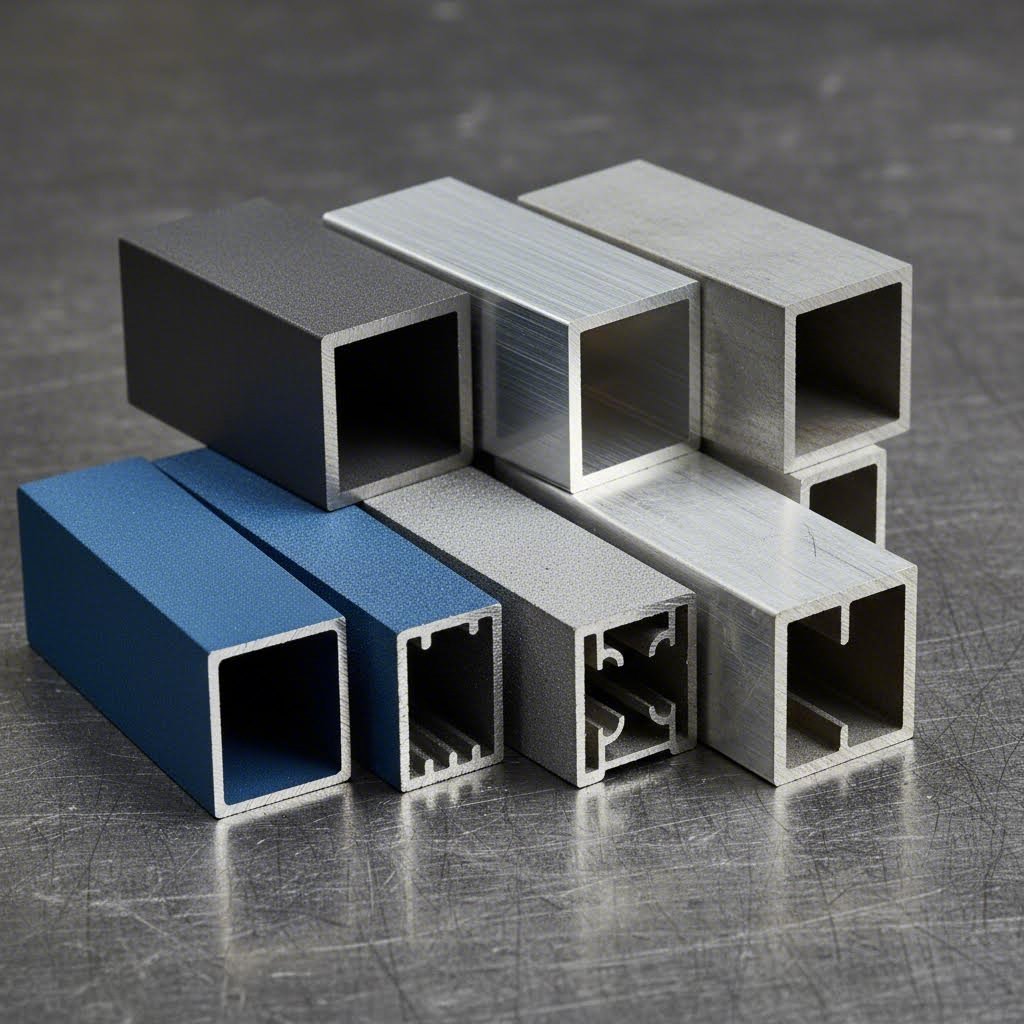
You've selected the right profile shape for your project—but here's where many buyers stumble. The alloy you choose for your aluminum channel extrusion affects everything from how well it resists coastal salt spray to whether it can handle structural loads. Get this decision wrong, and you're looking at premature failure, costly replacements, or over-engineered specifications that inflate your budget unnecessarily.
The 6000 series aluminum alloys dominate F channel production because they strike an ideal balance between extrudability, strength, and corrosion resistance. But within this family, subtle differences in chemical composition create meaningful performance variations. Let's decode what matters for your specific application.
Walk into any discussion about aluminum extruded channel materials, and you'll hear these two alloys mentioned constantly. Both belong to the 6000 series—meaning they're primarily alloyed with magnesium and silicon—but their formulations target different priorities.
6063 Aluminum—often called "architectural aluminum"—is the most popular aluminum alloy for extrusions. Why? It's been optimized specifically for the extrusion process. The chemical composition requires magnesium content between 0.45-0.9% and silicon content between 0.2-0.6%. These lower alloying element percentages compared to 6061 create several advantages:
When should you reach for 6063? Consider it your default choice for aluminum channel extrusions in soffit installations, decorative trim, and any application where weather exposure is expected. Its slightly lower tensile strength rarely matters for typical F channel edge-gripping applications.
6061 Aluminum—known as "structural aluminum"—trades some extrudability for increased strength. Its magnesium content runs higher at 0.8-1.2%, with silicon between 0.4-0.8%. This composition delivers:
As one industry source notes, 6061 "does not rank first in any of the charts of physical properties. But this alloy is exceptionally versatile and easy to fabricate in most metal-forming techniques." Choose 6061 when your channel extruded aluminum must handle structural stress or when you need seamless integration with aluminum hat channels in heavy-duty framing systems.
Sounds complex? It's actually straightforward once you understand what's happening at the molecular level. The alloy number tells you what's in the aluminum—the temper designation tells you what's been done to it.
When aluminum exits the extrusion press and is rapidly quenched, the alloying elements remain dissolved in the aluminum matrix. This is essentially T3 or T4 temper—relatively soft and workable. But here's where it gets interesting: heat treatment between 325-400°F causes those alloying elements to form ordered arrays called GP zones, significantly strengthening the material.
T5 Temper: The aluminum is artificially aged after being cooled from the extrusion process. Since most extruders quench profiles directly as they exit the press (rather than reheating separately), T5 is the most common and economical temper for F channel applications. Three common aging cycles achieve equivalent results:
T6 Temper: The aluminum undergoes solution heat treatment (heated to approximately 980°F, then quenched) before artificial aging. This extra step produces the highest strength but adds cost and processing time. For most channel extruded aluminum applications, T6 is reserved for demanding structural requirements.
What does this mean practically? A 6063-T5 F channel works perfectly for soffit installations and architectural trim. But if you're designing a framing system using aluminum hat channels that must support significant loads, stepping up to 6061-T6 provides the additional strength margin you need.
| Alloy Grade | Tensile Strength (T6 Temper) | Corrosion Resistance | Extrudability | Best Applications |
|---|---|---|---|---|
| 6063 | ~30,000 psi (207 MPa) | Excellent—ideal for coastal and wet environments | Outstanding—complex profiles achievable with superior surface finish | Architectural trim, soffit F channels, anodized decorative applications, window frames |
| 6061 | ~45,000 psi (310 MPa) | Good—performs well with proper surface treatment | Good—some profile limitations on complex shapes | Structural F channels, load-bearing frames, marine applications, aerospace components |
| 6005 | ~38,000 psi (262 MPa) | Very Good—bridges gap between 6063 and 6061 | Very Good—better than 6061, slightly below 6063 | Transportation, railcar construction, applications needing balanced strength/extrudability |
Notice how 6005 occupies the middle ground? This alloy is gaining popularity for aluminum channel extrusions where 6063's strength falls short but 6061's reduced extrudability creates manufacturing challenges. It's particularly common in transportation applications where weight savings and corrosion resistance both matter.
When you're evaluating suppliers or comparing quotes, certification standards provide the quality assurance backbone that separates reliable manufacturers from questionable sources.
ASTM B221/B221M is the cornerstone specification for aluminum extrusions in North American markets. According to industry documentation, this standard "serves as a crucial framework governing the production and quality assurance of aluminum and aluminum-alloy extruded products." It covers:
For international projects, ISO 9001 certification confirms that a manufacturer maintains consistent quality management systems. Meanwhile, ISO 14001 addresses environmental management—increasingly important for projects with sustainability requirements.
What should you actually ask for when sourcing aluminum extruded channels? Request mill test reports (MTRs) that document the specific heat of material, chemical composition analysis, and mechanical property test results. These reports provide traceable verification that your F channels meet the specifications you've ordered—not just promises, but documented proof.
With alloy and temper decisions clarified, the next factor that dramatically affects your F channel's long-term performance is surface treatment. The right finish can extend service life by decades while the wrong choice leads to premature degradation—especially in challenging environments.
You've selected the perfect alloy and temper for your f-channel application—but here's a truth many buyers overlook: the surface finish you choose can mean the difference between a 5-year lifespan and a 30-year lifespan. In demanding exterior environments, an untreated aluminum F channel will gradually succumb to oxidation, staining, and aesthetic degradation. The right surface treatment transforms your investment into a durable, low-maintenance component that performs beautifully for decades.
What are your options? Each finishing method offers distinct advantages depending on your application, environment, and budget. Let's break down the four primary surface treatments available for f channel trim and explore when each makes the most sense.
Unlike paints that sit on top of aluminum, anodizing actually becomes part of the metal. As industry experts explain, "Anodizing is a simple electrochemical process developed 100 years ago that forms a protective coating of aluminum oxide on the surface of the aluminum. The lifetime of the finish is proportional to the thickness of the anodic coating applied."
This integrated oxide layer delivers properties that organic coatings simply cannot match:
Coating thickness matters enormously for longevity. Aluminum Association Class I anodizing specifies 0.7 mils minimum thickness—twice that of Class II at 0.4 mils. For exterior f channel trim applications, always specify Class I. Why? As the source notes, "The life of an anodic coating is proportional to its coating thickness, and a Class I coating is twice as thick as a Class II coating. This means that in most situations, Class I coatings will last twice as long."
One critical consideration: anodizing's Achilles heel is chemical resistance. In urban environments with acidic pollutants, the oxide layer can eventually degrade. However, unlike failed paint that requires complete recoating, anodized surfaces can often be restored through proper cleaning techniques.
When vibrant colors and design flexibility top your priority list, organic coatings enter the conversation. But not all coatings perform equally—especially in exterior applications where your f channel trim faces UV exposure, temperature swings, and weather extremes.
Powder Coating has become increasingly popular for aluminum extrusions. The process involves spraying dry paint powder onto prepared aluminum using an electrostatic gun, then baking the parts to melt and cure the coating into a uniform finish. Key advantages include:
However, powder coatings have limitations. They're not as hard and durable as anodized aluminum, and achieving consistent color in small batches can be expensive since each powder batch requires dedicated grinding equipment. For exterior applications demanding decades of performance, standard polyester powders may fall short.
PVDF Coatings represent the gold standard for exterior architectural aluminum. Originally introduced in 1965, these 70% polyvinylidene fluoride formulations have decisively withstood the test of time on buildings worldwide. What makes PVDF exceptional?
The industry benchmark for PVDF performance is AAMA 2605—the most stringent specification for spray-coated architectural aluminum. This standard requires actual ten-year exposure testing in South Florida's demanding climate. When evaluating coatings for f channel trim in challenging environments, requesting Florida exposure test results provides valuable insight into real-world performance.
Two major manufacturers produce PVDF resins: Arkema (Kynar 500®) and Solvay (Hylar 5000®). Both deliver comparable weathering performance per industry standards. Leading coating manufacturers like PPG, Sherwin-Williams, Valspar, and Akzo Nobel formulate these resins into finished products with varying proprietary additives.
Your finish choice directly impacts both initial investment and long-term costs. Here's how to think about the economics:
Mill finish costs the least upfront but offers no protection. For concealed f-channel applications where neither appearance nor longevity matters, it's acceptable. For anything else, the false economy becomes apparent within a few years as corrosion develops.
Anodizing provides excellent value for metallic appearances. Color options include clear, bronze tones, and various dyed colors—though the palette is more limited than organic coatings. The renewable nature of anodized finishes means potential restoration rather than replacement, reducing lifecycle costs significantly.
Powder coating offers the widest immediate color selection at moderate cost. For interior applications or sheltered exterior installations, polyester powders deliver good performance. Budget additional funds for potential recoating every 10-15 years in demanding environments.
PVDF coating commands a premium price but delivers the longest color retention and weather resistance. For exterior f channel trim on commercial buildings—especially in coastal, industrial, or high-UV environments—PVDF's higher initial cost typically yields the lowest total cost of ownership over a 20-30 year building lifecycle.
When specifying surface treatments, communicate your environment and performance expectations clearly to your finisher. As one industry expert advises, "The conclusion I hope the reader draws from this article is to communicate your needs with your finisher or your finisher's suppliers." The right guidance ensures your aluminum F channel extrusion delivers the performance you need for the intended service life.
With surface treatment decisions clarified, understanding how these finished profiles perform across specific industries helps you apply this knowledge to your exact project requirements. The next section explores primary applications where F channels excel—from residential soffit installations to demanding industrial panel systems.
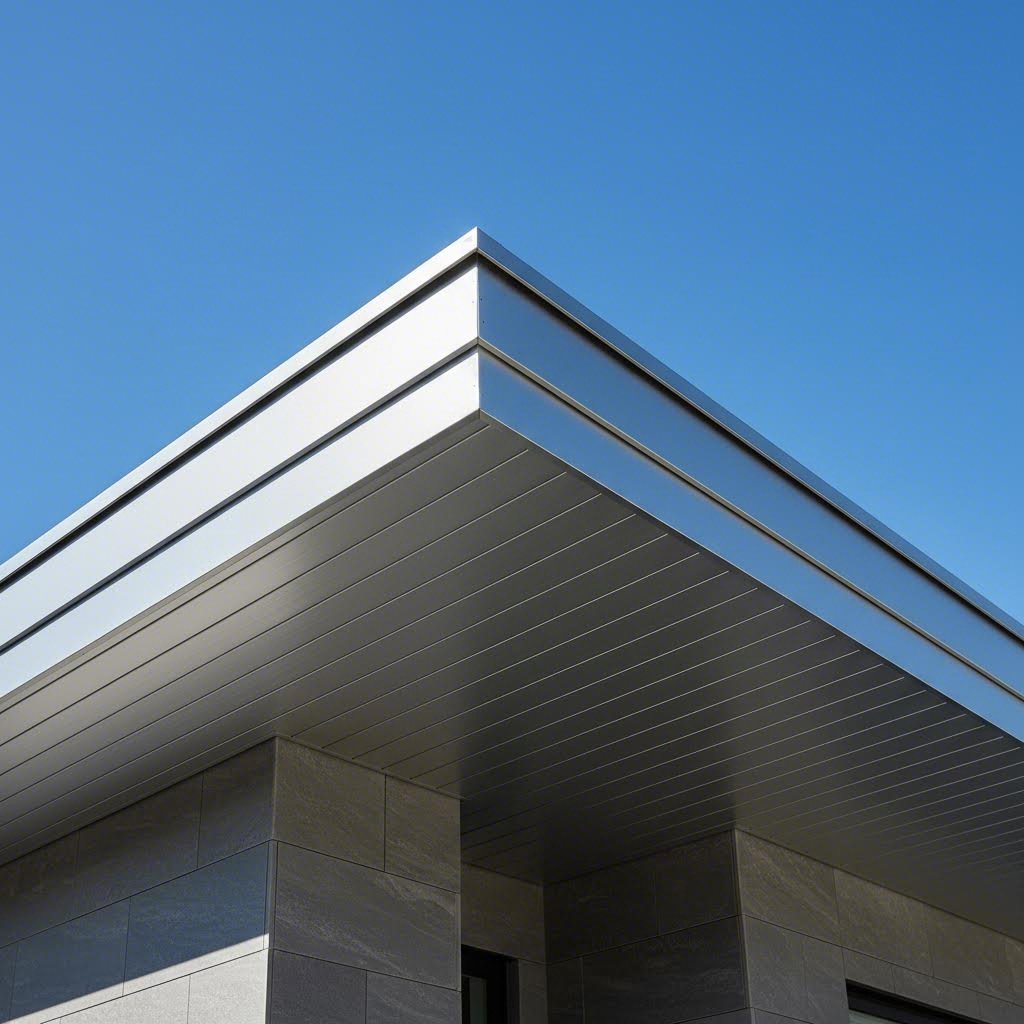
Now that you understand the materials and finishes available, where does the aluminum F channel extrusion actually shine in real-world applications? The distinctive F-shaped profile—with its dual-flange edge-gripping capability—makes it uniquely suited for tasks that other channel types simply cannot handle as effectively. From residential rooflines to industrial manufacturing facilities, this versatile profile solves specific challenges across diverse industries.
What makes the F channel's geometry so valuable? Think about what happens when you need to secure a panel edge while simultaneously providing a clean finished appearance. The upper channel receives your material, while the lower flange creates a mechanical lock that prevents movement or dislodging. This dual-action grip distinguishes f channel soffit applications from installations using simpler J or U profiles.
Ask any siding contractor about their most-used trim component, and aluminum soffit channel ranks near the top. The soffit f channel serves as the critical interface where horizontal soffit panels meet vertical surfaces—typically where the underside of roof overhangs connects to exterior walls or fascia boards.
Why does this application demand specifically an F profile rather than alternatives? Consider the installation sequence:
Practical considerations for soffit installations extend beyond simply selecting the right profile. Thermal expansion matters—aluminum expands approximately 0.0000129 inches per inch per degree Fahrenheit. On a 12-foot soffit run experiencing 100°F temperature swings seasonally, that's nearly 3/16 inch of movement. Quality f channel soffit systems account for this by providing adequate clearance within the channel groove rather than tight-fitting dimensions that bind during hot weather.
Ventilation represents another critical factor. Many soffit installations require airflow to the attic space for moisture control and temperature regulation. Perforated soffit panels work with standard F channels, but ensure your channel depth accommodates the panel thickness plus any venting accessories. Some manufacturers offer F channels with integrated ventilation slots—an elegant solution when continuous venting is required along the entire soffit run.
Beyond residential construction, the F channel's profile geometry solves elegant finishing challenges across commercial and architectural applications. As industry experts note, "F Channels have two main purposes—aluminum sign frame extrusions or as corner moulding."
In signage applications, aluminum panel extrusions create professional mounting systems for both interior and exterior displays:
Corner moulding applications showcase another strength of the F profile—creating seamless transitions where different materials or surfaces meet. Cabinet makers and architectural millworkers frequently specify F channels (sometimes called f mould in the trade) for:
The aluminum's natural corrosion resistance proves particularly valuable in signage exposed to weather. Unlike steel alternatives requiring protective coatings that eventually fail, properly finished aluminum F channels maintain structural integrity and appearance through decades of UV exposure, rain, and temperature cycling.
Moving from architectural aesthetics to functional performance, industrial applications leverage the F channel's edge-gripping capability for demanding panel mounting scenarios. Here, the focus shifts from appearance to reliability under challenging conditions.
Solar panel framing represents a rapidly growing application sector. Photovoltaic installations require secure panel retention across rooftops and ground-mounted arrays that may span decades of service. F channel profiles provide:
Glass panel retention in curtain wall systems, interior partitions, and balustrades relies heavily on aluminum channel technology. The f mould profile's ability to grip glass edges while maintaining visual discretion makes it invaluable for:
Composite panel cladding on commercial buildings frequently incorporates F channels as the interface between structural supports and finished panel faces. The channel's ability to accommodate panel thickness variations and provide concealed fastening creates clean facades without visible attachment points.
Industrial environments also utilize aluminum panel extrusions in equipment enclosures, control panel housings, and machine guarding. The ability to slide panels in and out for maintenance access—without removing fasteners—saves significant labor time compared to screw-attached alternatives.
Across all these applications, one common thread emerges: the F channel's geometry is purpose-built for capturing and retaining panel edges. Unlike U channels that require material to slide in from the end, or J channels offering only single-sided retention, the F profile delivers:
When evaluating whether an F channel suits your specific application, consider these practical questions:
Understanding these application fundamentals positions you to make informed decisions—but successful installations require more than just selecting the right profile. The next section delivers step-by-step installation guidance covering mounting methods, cutting techniques, and best practices that ensure your aluminum F channel extrusion performs flawlessly for years to come.
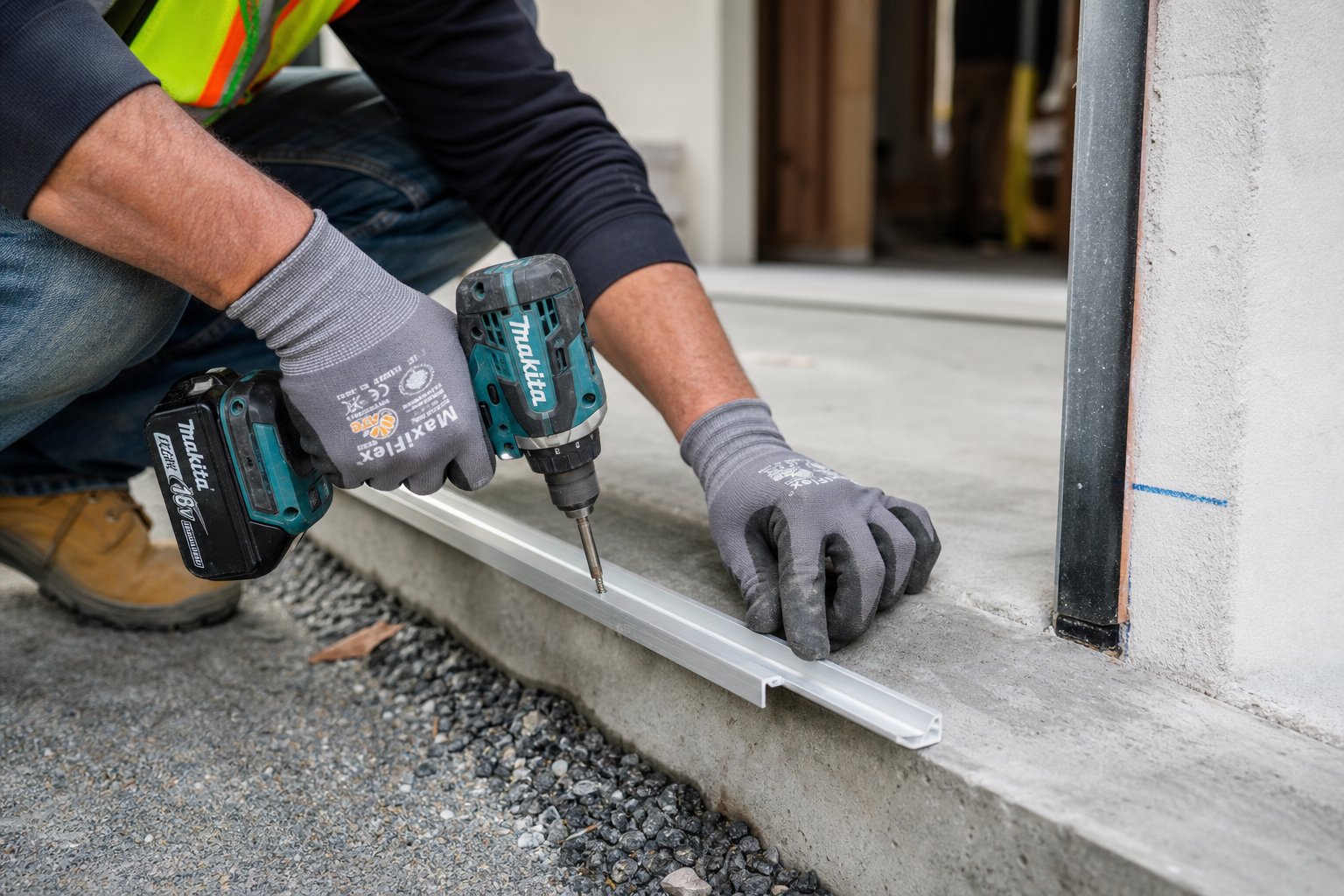
You've selected the perfect aluminum F channel extrusion for your project—the right alloy, ideal finish, and appropriate dimensions. But here's where many installations go sideways: improper mounting techniques, wrong fastener choices, or ignoring thermal expansion can transform a quality product into a failed installation within a single season. The good news? Following proven installation methods ensures your f-channel for soffit or panel mounting performs flawlessly for decades.
Whether you're a seasoned contractor or tackling your first F channel installation, this section delivers the step-by-step guidance you need. We'll cover everything from tool preparation through final weatherproofing—including the common mistakes that trip up even experienced installers.
Before climbing that ladder, gather everything you'll need. Running back and forth for forgotten items wastes time and disrupts your workflow. Here's your comprehensive preparation list:
One critical note on fasteners: aluminum and dissimilar metals don't mix well. When moisture is present, galvanic corrosion occurs between aluminum and galvanized or plain steel fasteners, creating white powder deposits and eventually weakening both the fastener and channel. Always specify aluminum nails or stainless steel screws for f channels installations.
The installation sequence for aluminum channel for glass retention differs from soffit applications, but core principles remain consistent. Follow this step-by-step process for typical f-channel for soffit installations:
For installations where the F channel mounts at the fascia board rather than the wall, the process varies slightly. The channel fastens through its back flange directly into the wood fascia, with the upper groove positioned to receive soffit panels sliding in from below. Ensure fascia boards are minimum 3/4-inch thick solid wood for adequate fastener holding strength.
Clean cuts make professional installations—ragged edges look sloppy and can actually interfere with proper panel seating. Aluminum cuts easily, but technique matters.
Power saw cutting delivers the cleanest results for straight cuts:
Aviation snips work well for trimming and notching:
After cutting, always deburr edges using a file or deburring tool. Sharp aluminum edges can slice skin, and burrs interfere with proper panel insertion into the channel groove.
Modifying J-channel into F-channel: If you have J-channel on hand but need F-channel functionality, a field modification is possible. As installation guides describe, "Simply cut slots in the nail flange area where it would be nailed to the wall. After cutting the nail flange, bend the flange back and nail it to the wall." While not as elegant as purpose-built F channels, this technique works for isolated situations.
Straight, level installations not only look professional—they function better. Misaligned f channels create binding points where panels resist insertion or allow gaps that admit water and pests.
For long runs exceeding 20 feet:
Weatherproofing considerations:
Learning from others' errors saves you time, money, and frustration. These are the pitfalls that cause the most callbacks and failures:
When troubleshooting existing installations showing waviness or buckling, the cause is almost always inadequate expansion allowance—either gaps too small or fasteners driven too tightly. The fix requires removing fasteners, repositioning channels with proper gaps, and re-fastening with correct technique.
With proper installation techniques mastered, one final decision remains: should you order standard F channel profiles or invest in custom extrusions tailored to your exact specifications? The next section explores when each option makes sense—and how to evaluate the trade-offs between cost, lead time, and dimensional precision.
You've mastered the installation techniques—but before placing that order, one strategic decision can significantly impact your project's budget, timeline, and ultimate success. Should you specify off-the-shelf extruded aluminum f channel profiles, or invest in custom-designed extrusions tailored to your exact requirements? The answer isn't always straightforward, and making the wrong choice means either overpaying for unnecessary customization or compromising on fit and function.
Understanding when each option makes sense requires evaluating several interconnected factors. Let's build a practical decision-making framework that helps you navigate this choice confidently—whether you're ordering 100 feet of trim or specifying components for a multi-building project.
Standard f channel aluminum extrusion profiles exist because manufacturers have identified the most commonly requested dimensions and configurations. These pre-designed shapes offer compelling advantages for many applications:
When does a standard f-channel aluminum extrusion make the most sense? Consider the standard route when your application falls within common dimensional ranges—for example, soffit installations using typical panel thicknesses, or architectural trim matching standard drywall or siding dimensions. If you need a 1 1 4 aluminum u channel or similar common sizing, standard profiles almost certainly exist.
The key question to ask: does an existing profile accommodate my material thickness, mounting requirements, and aesthetic goals without modification? If yes, standard profiles deliver the fastest, most economical solution.
Custom aluminium extrusion profiles unlock possibilities that standard shapes simply cannot address. As industry experts explain, "Custom aluminium extrusions are designed to meet specific project requirements. This process begins with creating a unique custom die tailored to the desired shaped opening or cross-sectional geometry."
When should you consider the custom route for your f channel aluminum extrusion needs?
The custom extrusion process involves several stages that affect both cost and timeline. According to manufacturing specialists, "Tooling Lead Time refers to the length of time it takes to construct the shape. On average it takes between 2 and 4 weeks to create a die for extrusion. The overall size, geometry and shape of the extrusion process may require more time depending on the intricacy of the die."
Die complexity directly influences cost. Simple solid dies for F channel profiles cost less than hollow or semi-hollow configurations. However, aluminum extrusion tooling costs remain significantly lower than alternatives like die-casting or steel roll forming—making custom extrusions surprisingly accessible even for moderate-volume projects.
Making an informed choice requires weighing multiple variables simultaneously. This comparison framework helps you evaluate the trade-offs:
| Decision Factor | Standard F Channel Profiles | Custom F Channel Extrusions |
|---|---|---|
| Initial Tooling Cost | None—existing dies available | $500-$5,000+ depending on complexity |
| Lead Time (First Order) | Days to 1-2 weeks | 4-8 weeks including die development and trials |
| Lead Time (Repeat Orders) | Days to 1-2 weeks | Similar to standard once die exists |
| Minimum Order Quantity | Often 100-500 lbs or less | Typically 500-2,000 lbs minimum |
| Dimensional Flexibility | Limited to catalog options | Unlimited within extrusion process capabilities |
| Unit Cost at Low Volume | Lower—no tooling amortization | Higher—die cost spread across fewer pieces |
| Unit Cost at High Volume | Competitive | Often lower—optimized design reduces material waste |
| Best For | Common applications, small quantities, urgent timelines | Unique requirements, ongoing production, competitive differentiation |
Whether you choose standard or custom extruded aluminum f channel profiles, dimensional tolerances determine how precisely your channels will fit their intended application. This often-overlooked specification deserves careful attention.
Standard aluminum extrusion tolerances follow industry guidelines—typically ANSI H35.2M in North America. For a typical F channel:
Why do tolerances matter? Imagine installing aluminum u channel extrusions designed to accept 1/4" glass panels. If your channel groove measures 0.260" due to tolerance stack-up, the glass fits loosely and rattles. Conversely, a groove at 0.240" makes panel insertion difficult or impossible. Specifying appropriate tolerances—and verifying your supplier can achieve them—prevents costly field problems.
Custom extrusions offer the opportunity to specify tighter tolerances where critical, though this increases cost. Work with your manufacturer to identify which dimensions truly require precision and where standard tolerances suffice.
Navigating the standard versus custom decision becomes clearer when you consider your total project requirements—not just the immediate order. Here's a practical approach:
For one-time projects with standard requirements: Source standard aluminum extruded channels from distributors with adequate inventory. Verify dimensional compatibility with your materials before ordering full quantities. Request samples if possible.
For ongoing production or large projects: Even if standard profiles work initially, evaluate whether custom extrusions offer long-term advantages. A custom die that optimizes material usage or eliminates secondary operations often pays for itself within the first production run.
For unique requirements: Partner with a manufacturer offering comprehensive capabilities. Experienced manufacturers with diverse press capabilities—ranging from smaller tonnage for simple profiles to larger presses for complex shapes—can accommodate both standard and custom requirements under one roof.
Consider manufacturers like Shengxin Aluminium, whose 35 extrusion presses ranging from 600T to 5500T capacity paired with CNC machining centers exemplify the comprehensive production capability needed for both standard profiles and complex custom f-channel aluminum extrusion projects. This range allows matching the optimal press size to your specific profile requirements—smaller presses for economical production of simpler shapes, larger presses when your design demands more complex geometries or larger circumscribing circles.
When evaluating any manufacturer for custom work, verify their die design expertise. As industry guidance notes, "When the product designer, die designer, extruder and buyer recognize the requirements of each other and work together, the best combination of product performance, quality and cost is achieved." A manufacturer willing to collaborate on die optimization—rather than simply quoting your submitted drawing—often delivers superior results.
Minimum order quantities deserve special attention for custom profiles. Manufacturing economics dictate that MOQs exist for valid reasons: "When small quantities are required, the die preparation, additional work and time are taken off the press. All these overheads add up." The profile's shape, size, and weight affect which press can produce it, which in turn influences the minimum practical order quantity.
Quality verification during trials is essential for custom orders. Multiple die iterations may be necessary to achieve specified tolerances. Build this expectation into your timeline—rushing die approval often results in accepting profiles that don't quite meet requirements, creating problems downstream.
With the custom versus standard decision framework established, one final consideration remains: how do you identify and evaluate suppliers capable of delivering quality aluminum F channel extrusions consistently? The concluding section provides actionable criteria for selecting a manufacturing partner who meets your technical requirements while delivering reliable service.
You've done the hard work—understanding alloy specifications, surface treatments, installation techniques, and the custom versus standard decision. But here's where your project's success ultimately hinges: partnering with a supplier who can actually deliver what they promise. The aluminum extrusion industry includes manufacturers ranging from small regional operations to global enterprises, and quality varies dramatically. Knowing what to look for separates disappointing experiences from successful long-term partnerships.
Whether you're sourcing extruded aluminum channels for a single project or establishing an ongoing supply relationship, these evaluation criteria help you identify manufacturers capable of meeting your technical requirements while delivering consistent quality and reliable service.
When vetting potential suppliers for your aluminum extruded channels, work through this comprehensive checklist. Each factor contributes to the overall reliability and value you'll receive:
As industry guidance emphasizes, thorough supplier research pays dividends: "Be sure to conduct thorough research on each supplier and thoroughly communicate your requirements with them, request samples if needed to ensure that your needs align with theirs."
Beyond certifications and capabilities, understanding how to interpret manufacturer specifications protects you from quality surprises. Spec sheets and quotations contain critical information—if you know what to look for.
Reading manufacturer spec sheets effectively:
Comparing quotations accurately:
When evaluating competing quotes for aluminum j channel extrusion or F channel profiles, ensure you're comparing equivalent offerings. Lower prices sometimes reflect:
Request mill test reports (MTRs) or certificates of conformance with orders. These documents provide traceable verification that delivered materials match specifications—essential for quality-critical applications and helpful for resolving any disputes.
The most capable aluminum extrusion partners offer comprehensive services spanning the entire product lifecycle—from initial concept through volume production. This integrated approach delivers several advantages:
Die development collaboration: Experienced manufacturers contribute die design expertise that improves extrudability, reduces cost, and enhances performance. Their process knowledge often identifies opportunities the product designer might miss.
Prototyping and trial runs: Before committing to full production quantities, quality suppliers offer sample runs for fit and function verification. This step catches issues when corrections are inexpensive rather than after thousands of pieces are produced.
Deep processing services: Manufacturers offering CNC machining, precision cutting, drilling, bending, and assembly can deliver finished components rather than raw extrusions requiring secondary operations. This consolidation reduces handling, simplifies logistics, and often lowers total cost.
Consistent production scaling: A supplier capable of handling both prototype quantities and high-volume production eliminates the risks and delays of transitioning between suppliers as your needs grow.
When evaluating comprehensive manufacturing partners, Shengxin Aluminium exemplifies the capabilities that distinguish full-service suppliers. With over 30 years of industry experience, 35 extrusion presses ranging from 600T to 5500T capacity, and state-of-the-art CNC machining centers, they provide end-to-end support from die development through mass production. Their extensive surface treatment options—including anodizing in custom colors, powder coating, PVDF, and micro-arc oxidation—address virtually any finishing requirement. Factory-direct pricing eliminates intermediary markups, making quality extruded aluminum channels more accessible for projects of all sizes.
Of course, Shengxin represents one strong option among quality global suppliers. The key is applying these evaluation criteria consistently to identify partners whose capabilities, quality systems, and service approach align with your specific project requirements.
Final considerations for your sourcing decision:
The right supplier relationship transforms aluminum F channel extrusion from a commodity purchase into a competitive advantage—delivering consistent quality, responsive service, and technical partnership that supports your project's success from specification through installation.
Aluminum F channel extrusion serves multiple applications including soffit and fascia installations, architectural trim, signage mounting, solar panel framing, and glass panel retention. The distinctive F-shaped profile features dual flanges that securely grip panel edges while providing a clean finished appearance. Its corrosion resistance makes it ideal for both indoor and outdoor use in construction, electronics cable trays, and industrial panel mounting systems.
Standard aluminum F channel profiles are designed to fit common material thicknesses including 1/8, 1/4, 3/8, 1/2, and 3/4 inch materials. Wall thickness typically ranges from 1.2mm to 2.0mm depending on the application requirements. For projects requiring non-standard dimensions, manufacturers like Shengxin Aluminium offer custom extrusion services with 35 presses ranging from 600T to 5500T capacity to accommodate virtually any specification.
F channel features two parallel flanges creating a dual-grip design with both an upper receiving channel and a lower retaining flange that locks panels in place. J channel has a simpler single curved pocket designed primarily to hide cut edges of siding around windows and doors. For soffit installations requiring secure panel retention, F channel is essential—the missing lower flange on J channel means soffit panels cannot lock in securely.
Install F channel by first mounting it through the back flange to fascia boards or wall sheathing using aluminum or stainless steel fasteners spaced 8-12 inches apart. Leave 1/4-inch gaps at ends for thermal expansion and center fasteners in nail slots—never at the ends. Maintain 1/32-inch clearance between fastener heads and channel surface so the channel can slide during temperature changes. Soffit panels then slide into the upper channel opening where the lower flange secures them.
6063 aluminum is the most popular choice for F channel extrusions, offering excellent corrosion resistance, superior surface finish quality, and outstanding extrudability for complex profiles. For applications requiring higher strength, 6061 provides approximately 50% greater tensile strength but with slightly reduced corrosion resistance. Both alloys typically come in T5 or T6 temper designations, with T6 offering maximum strength for structural applications.



 Інтернет-сервіс
 0086 136 3563 2360
 sales@sxalu.com
 +86 136 3563 2360
 Українська
 English
 français
 Deutsch
 русский
 español
 português
 العربية
 ไทย
ไทย Việt
Việt