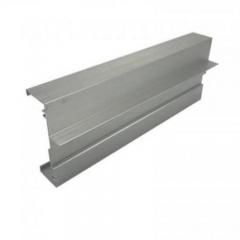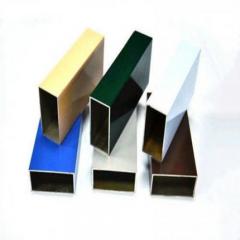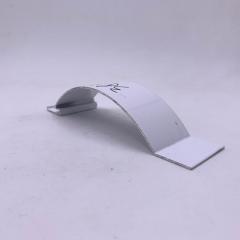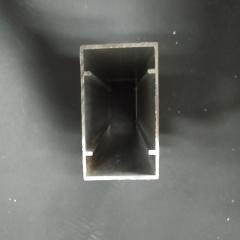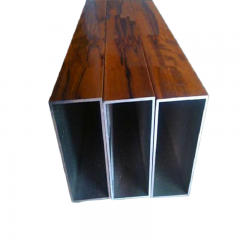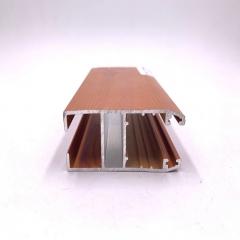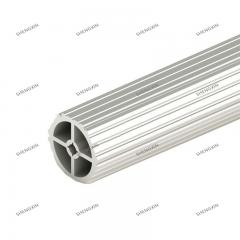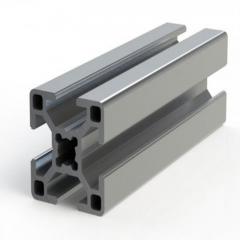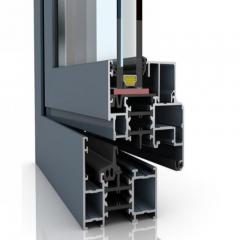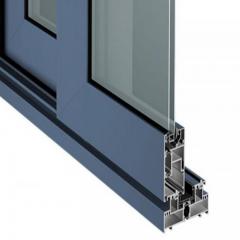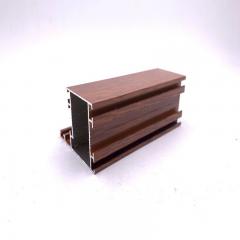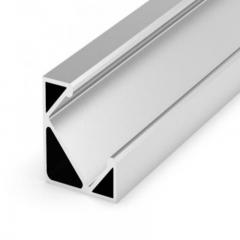
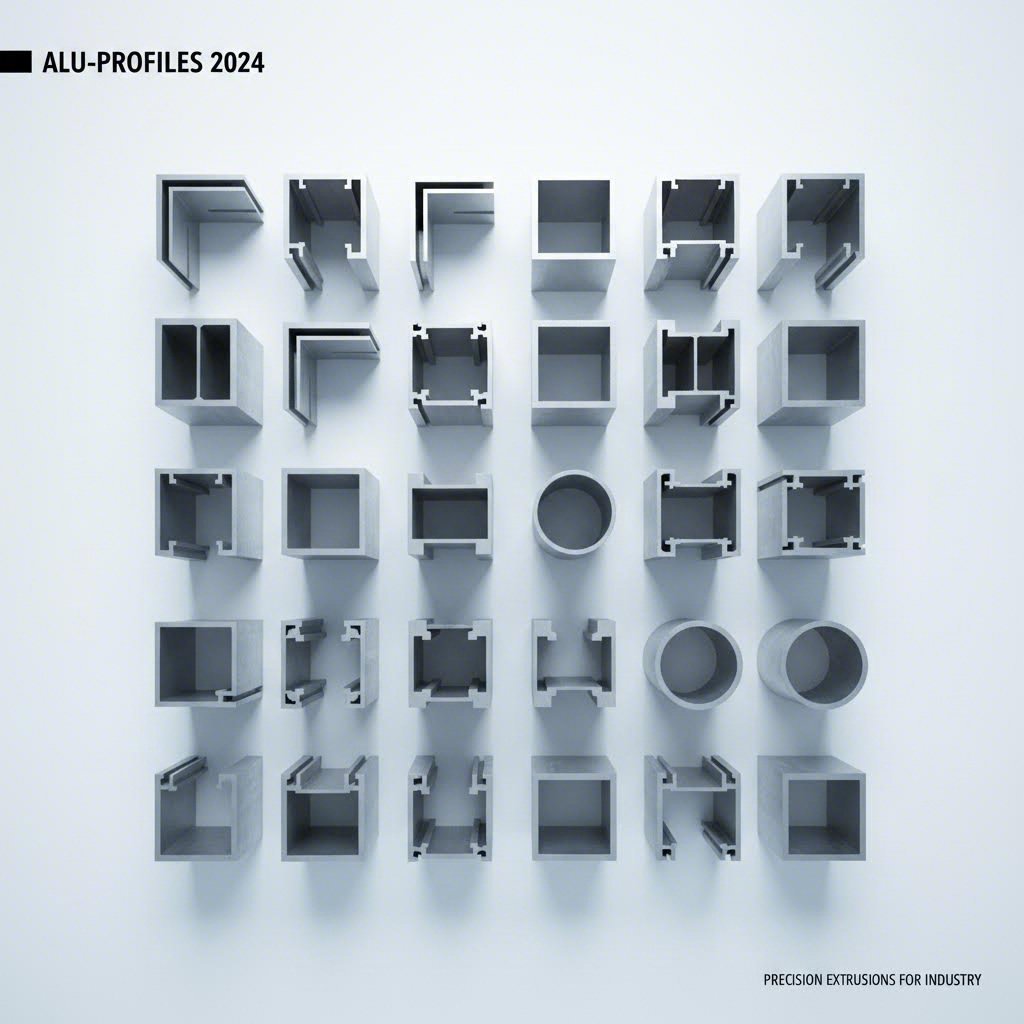
Imagine standing in front of thousands of aluminum shapes, each with different strengths, finishes, and dimensions. How do you find exactly what your project demands? This is where an aluminum extrusions catalog becomes indispensable. It serves as a comprehensive reference system that organizes profile shapes, alloy specifications, and dimensional data into a navigable format that engineers, architects, and procurement specialists rely on daily.
An aluminum extrusion catalog is essentially a technical database in printed or digital form. It transforms what could be an overwhelming selection process into a structured, logical journey from raw profiles to finished project solutions. According to the Aluminum Extruders Council, these catalogs help users create more effective products by providing essential information about extrusion profiles and their applications.
Think of a professional catalog as your project blueprint. It does far more than list products—it provides the technical foundation you need to make informed decisions. Whether you're designing a curtain wall system, engineering a structural frame, or sourcing components for aerospace applications, the catalog bridges the gap between concept and execution.
The fundamental purpose of these catalogs extends beyond simple product listings. They organize critical information that directly impacts your project's success:
Here's where catalog literacy becomes your competitive advantage. Many professionals approach catalogs simply looking for a shape that "looks right." However, understanding how to read and interpret catalog data transforms your selection process entirely.
Extruded aluminum offers what the Aluminum Extruders Council describes as "unique freedom in product design." The extrusion profiles listed in catalogs represent solutions that combine material properties with geometric precision. When you understand how to decode the specifications, you're not just picking a shape—you're selecting a complete material solution.
Consider this: a single catalog page might display an aluminum extrusion profile with a four-digit alloy number, a temper designation, cross-sectional dimensions, corner radii specifications, and tolerance classes. Each piece of data tells part of the story about how that profile will perform in your application.
Professional catalogs also differ significantly from basic product listings. They typically include:
As you progress through this guide, you'll develop the catalog literacy needed to navigate these resources with confidence. The sections ahead will decode alloy specifications, explain shape categories, and provide the selection methodology that transforms catalog browsing into strategic sourcing.
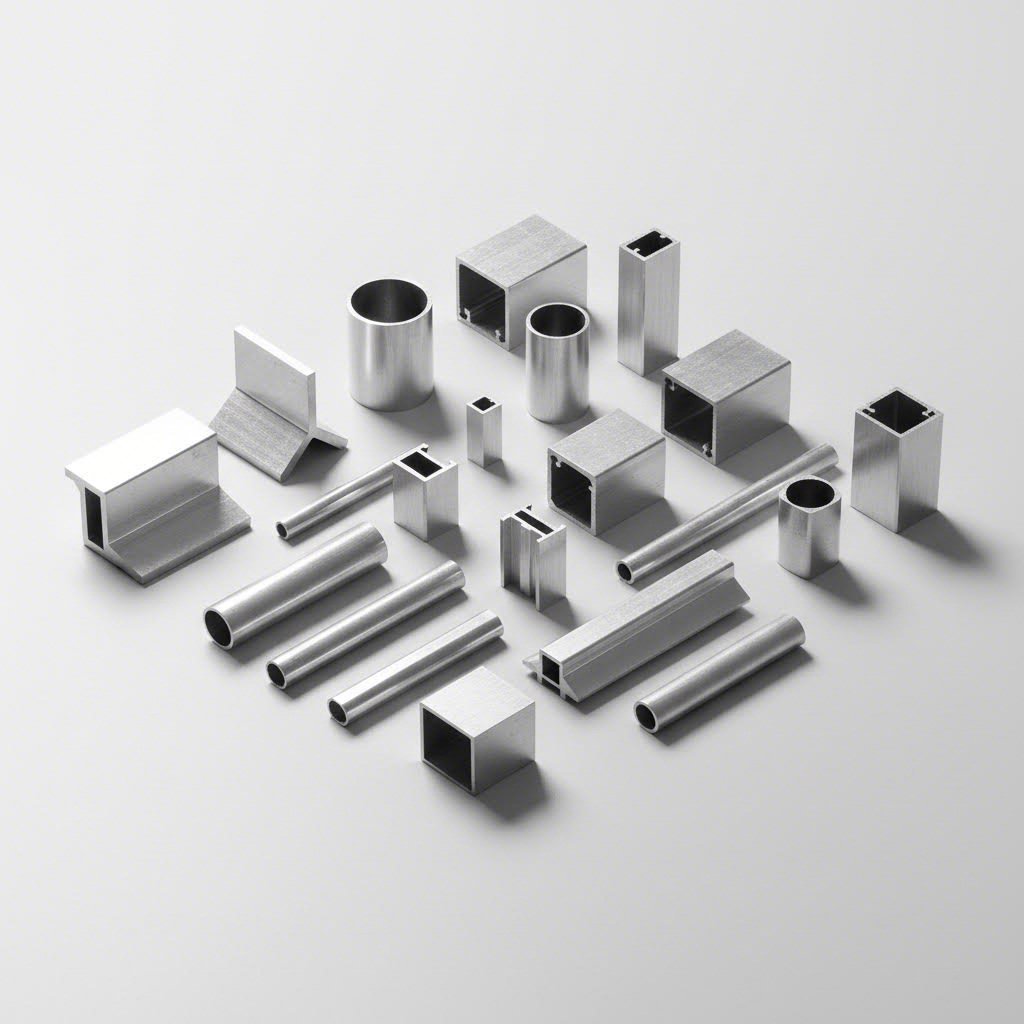
When you open an aluminum extrusions catalog for the first time, the sheer variety of aluminum shapes can feel overwhelming. Angles, channels, tubes, bars—each category serves distinct structural purposes, and understanding these differences is the first step toward confident selection. Let's break down the major shape families you'll encounter and explore when each type delivers optimal performance.
Professional catalogs organize extruded shapes into categories based on their cross-sectional geometry. Each shape has evolved to address specific engineering challenges, from load distribution to connection flexibility. The table below compares the primary aluminum extrusion shapes you'll find in most catalogs:
| Shape Category | Typical Applications | Load-Bearing Characteristics | Common Industries |
|---|---|---|---|
| Angles (L-shaped) | Corner reinforcement, brackets, frames, trim edging | Excellent for perpendicular connections; resists torsion at joints | Construction, furniture, signage |
| Channels (U-shaped) | Protective covers, railing systems, sliding tracks, brackets | Good lateral stiffness; ideal for enclosing or guiding components | Manufacturing, transportation, architecture |
| Round Tubes | Handrails, structural columns, conduit, roll cages | Uniform strength in all directions; efficient for compression loads | Automotive, aerospace, marine |
| Square/Rectangular Tubes | Frames, machine guards, furniture, door fabrication | High torsional rigidity; easier to connect than round tubes | Industrial equipment, construction, retail displays |
| Flat Bars | Support components, bracing, decorative trim, base plates | High stability under uniform loads; versatile foundation element | Construction, electronics, signage |
| I-Beams | Ceiling and floor joists, structural supports, heavy frames | Maximum bending resistance with minimal weight | Construction, industrial machinery |
| T-Slots | Modular framing, workstations, machine enclosures | Designed for fastener integration; adjustable load capacity | Automation, manufacturing, trade shows |
| Z-Profiles | Panel joining, corner reinforcement, shelving systems | Excellent for offset connections and edge stabilization | Construction, furniture, architectural |
Understanding when to select each shape becomes intuitive once you consider the forces at play. An aluminum angle excels at 90-degree corner connections where two surfaces meet—think of frame corners or bracket assemblies. Meanwhile, an aluminum square tube provides superior torsional rigidity compared to round alternatives, making it preferable when your design requires flat mating surfaces for mounting.
According to Orange Aluminum, tubes come in square, rectangular, and round shapes that are ideal for constructing frameworks and protective structures. This diversity lets you match the geometric requirements of your design while optimizing weight and strength characteristics.
Within each major category, you'll find subcategories that address more specific needs:
Beyond standard aluminum extruded shapes, professional catalogs feature specialty categories engineered for specific industries. These profiles exist because certain applications demand unique geometries that standard shapes simply cannot provide.
Motor Housings and Enclosures: These profiles feature integrated mounting bosses, cooling fins, and precise interior dimensions designed to accommodate specific motor sizes. The geometry combines structural integrity with thermal management—critical for electronics that generate heat during operation.
Aircraft and Aerospace Profiles: As noted by New Source Corporation, aircraft extrusions are created by pressing heated aluminum through dies to form shapes with sharp corners. The aerospace sector demands profiles with exceptional strength-to-weight ratios, often featuring complex void spaces that reduce mass while maintaining structural integrity. These aluminum extruded shapes must meet stringent certifications including AS9100 quality standards.
Architectural Heat Sinks: These profiles combine aesthetic considerations with thermal performance. You'll find them in LED lighting fixtures, electronic enclosures, and HVAC equipment where heat dissipation directly impacts product lifespan. The fin patterns and surface areas are calculated to maximize thermal transfer while maintaining clean visual lines.
Specialty Recreation Profiles: Categories like archery equipment profiles demonstrate how niche applications drive specialized catalog sections. Arrow shafts, bow risers, and stabilizer components require precise dimensional tolerances and specific alloy properties that recreational users depend upon.
When browsing specialty sections, you'll notice that catalogs often organize these profiles differently than standard shapes. Rather than grouping by geometry alone, they may categorize by:
The selection criteria for specialty profiles extend beyond simple shape matching. You're evaluating whether the profile was designed with your application's specific challenges in mind—thermal loads, environmental exposure, assembly methods, and aesthetic requirements all factor into the decision.
With a solid understanding of shape categories established, you're ready to explore the technical specifications that truly define profile performance: alloy types and temper designations.
You've identified the perfect profile shape for your project. But here's the critical question: which alloy and temper combination will deliver the performance you need? This is where an aluminum extrusions catalog reveals its true value—providing the technical specifications that separate a successful application from a costly mismatch.
Every aluminum profile listed in a professional catalog carries two essential designations: an alloy number and a temper code. Together, these tell you exactly how the material will behave under stress, how it will respond to finishing processes, and whether it's suited for your specific environment.
When browsing extruded aluminum profiles, you'll encounter four-digit alloy designations repeatedly. The 6000 series dominates extrusion catalogs because these alloys combine excellent extrudability with strong mechanical properties. But within this series, significant differences exist.
According to Eagle Aluminum, aluminum 6061 is a precipitation-hardened alloy developed in 1935 that remains one of the most versatile options available. Its major alloying elements include silicon and magnesium, with additional elements such as iron, copper, and zinc contributing to its performance characteristics.
The table below compares the properties of common alloys you'll find when reviewing aluminum profiles in professional catalogs:
| Property | 6063 Alloy | 6061 Alloy | Specialty Alloys (7075, 5052) |
|---|---|---|---|
| Ultimate Tensile Strength (T6) | 28,000+ psi | 42,000+ psi | Up to 83,000 psi (7075-T6) |
| Yield Strength (T6) | 23,000+ psi | 35,000+ psi | Varies by alloy and temper |
| Corrosion Resistance | Excellent | Very Good | Good to Excellent (5052 marine-grade) |
| Surface Finish Quality | Superior—smooth, anodize-ready | Good—may show die lines | Varies by application requirements |
| Weldability | Excellent | Very Good | Fair to Good depending on alloy |
| Machinability | Good | Excellent | Excellent (7075); Moderate (5052) |
| Primary Applications | Architectural trim, window frames, custom extrusions | Structural components, heavy-duty frames, marine parts | Aerospace, marine environments, high-stress applications |
Sounds complex? Here's the practical takeaway: when visual appeal matters more than raw strength, 6063 is your go-to alloy. As Eagle Aluminum notes, 6063 produces a much smoother surface finish and excels in applications where aesthetic considerations take priority—premium casework, architectural trim, and visible components in high-end installations.
When your aluminium extrusion profile must bear significant loads or serve structural purposes, 6061 delivers the strength advantage. This alloy is commonly specified for structural angles used in scaffolding, railroad cars, truck components, and floor framing systems.
The letter-number combination following the alloy designation—T5, T6, T4—indicates how the aluminum was processed after extrusion. This temper code directly impacts the mechanical properties of your aluminum extrusion profile.
According to Engineering Express, heat treatment involves raising the alloy temperature to approximately 980 degrees Fahrenheit and holding it there for about an hour. This dissolves all alloying elements into a solid solution within the aluminum matrix. The material is then quenched in water to prevent those elements from precipitating during cooling.
Here's where the temper designations come into play:
The aging process that creates T6 temper involves heating the material to between 325 and 400 degrees Fahrenheit. This causes alloying elements to form ordered atomic arrays called GP zones, which significantly strengthen the aluminum. Three common aging cycles achieve equivalent results: one hour at 400°F, five hours at 350°F, or eight hours at 325°F.
Matching alloy selection to application requirements isn't optional—it's the foundation of project success. The difference between 6063-T5 and 6061-T6 represents more than numbers on a catalog page; it determines whether your standard aluminum profiles will perform reliably for decades or fail prematurely under stress.
When reviewing an aluminium extruded profile in any catalog, always verify both the alloy and temper designations. A 6063-T5 profile behaves very differently from a 6063-T6 version of the same shape. The T6 temper delivers higher strength but may be unnecessary—and more expensive—if your application prioritizes surface finish over structural capacity.
With alloy and temper fundamentals established, you're now equipped to evaluate the technical specifications that appear throughout professional catalogs. The next section explores one of the most versatile profile systems in modern manufacturing: T-Slot aluminum framing.
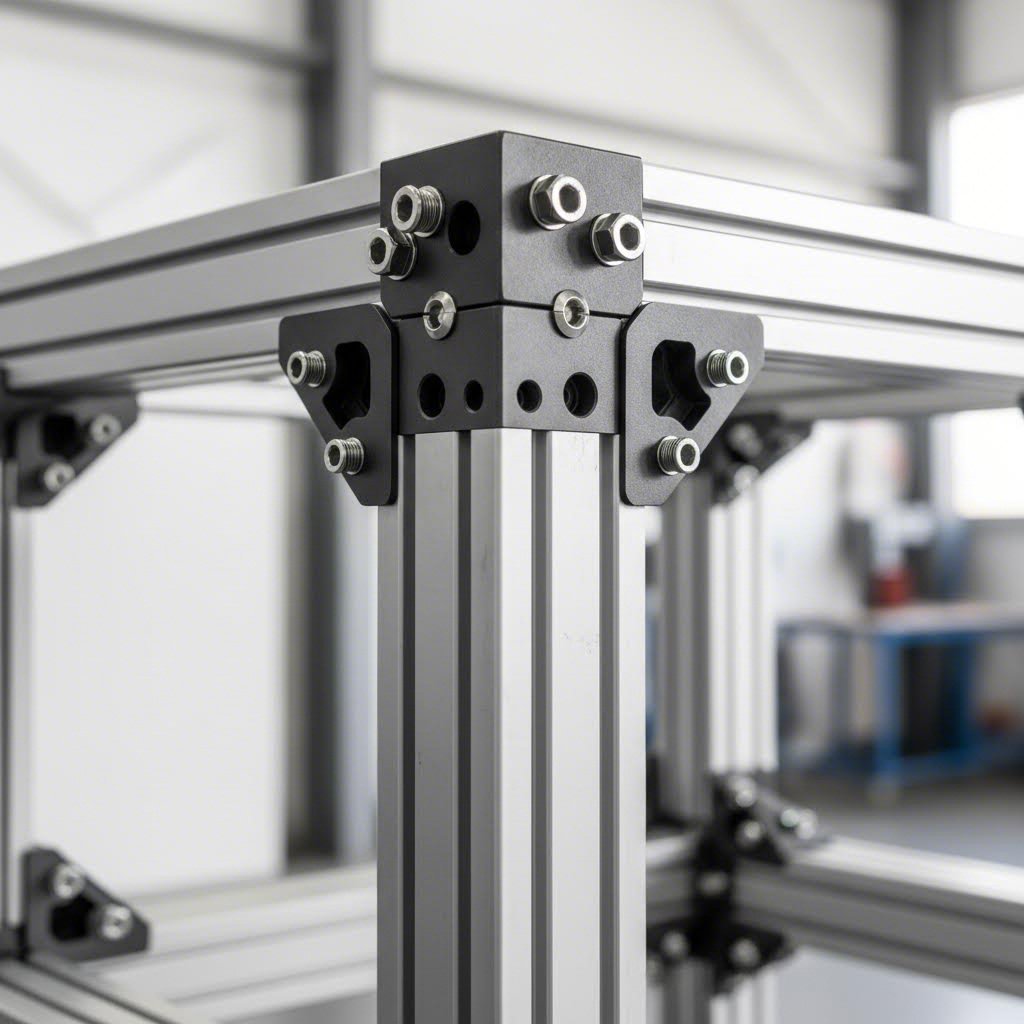
Imagine building a custom workstation, machine guard, or display structure without welding, without specialized tools, and with the flexibility to reconfigure everything next month. That's exactly what T-Slot aluminum systems deliver. These profiles have transformed how engineers and fabricators approach modular construction, and understanding their catalog organization unlocks tremendous design possibilities.
T-Slot extrusions feature channels running along their length—slots shaped like the letter "T" that accept specialized fasteners and hardware. This simple concept enables infinite configurations using standard components, making 80/20 aluminum and similar systems the backbone of countless industrial applications.
When you browse a T-Slot section in any aluminum extrusions catalog, you'll immediately notice profile designations like 20x20, 40x40, or 80x20. These numbers aren't arbitrary—they represent the cross-sectional dimensions in millimeters. A 4040 profile measures 40mm x 40mm, while an 80x20 profile spans 80mm wide by 20mm tall.
According to 80/20 Inc., their naming convention follows a structured pattern: [Series Number]-[Profile Size]x[Profile Size/Shape]-[Additional Features]. The series number indicates the product line and relates to load capacity requirements, while profile dimensions define the physical size and available T-slot channels.
Understanding these conventions helps you navigate catalogs efficiently:
The profile size directly impacts load capacity. As noted by Motion Automation Intelligence, a 1010 (1" x 1") 8020 aluminum extrusion will deflect 1/10" when 46 lbs. is applied to the center of a 36" span. Compare that to a 2020 series (2" x 2"), which handles 576 lbs. under identical conditions—over twelve times the capacity.
T-Slot systems derive their versatility from specialized hardware designed to slide into the channels and lock components together. Professional catalogs organize these fasteners by series compatibility, ensuring you select hardware that matches your chosen profile dimensions.
The primary hardware categories you'll encounter include:
According to Vention's engineering documentation, joint configuration dramatically affects structural integrity. They recommend positioning one extrusion directly on top of another rather than relying solely on friction-based connections. Force transmitted directly through contact provides significantly higher strength than friction alone.
| Connection Type | Load Capacity | Best Applications | Hardware Required |
|---|---|---|---|
| Friction Joint (plate only) | ~2,100 N per fastener | Light-duty, non-critical connections | Assembly plate, T-nuts, bolts |
| Three-Way Joint | Higher than friction alone | Structural frames, load-bearing applications | Bolt threading into extrusion end |
| End Fastener Connection | Matches bar strength | Heavy-duty frames, machine bases | End fasteners, anchor connectors |
| Gusseted Corner | Up to 127 Nm moment | Workstations, display structures | Corner gussets, L shaped brackets |
When calculating frame rigidity for your application, consider both the profile's area moment of inertia and the joint strength. Vention's testing shows that a 45mm x 45mm profile with 162,325 mm⁴ moment of inertia deflects only 5.58mm under a 1500 N cantilever load—significantly outperforming profiles with similar outer dimensions but lower rigidity values.
For workstations, machine guards, and display structures, follow these selection guidelines:
One often-overlooked consideration: 8020 slips and similar alignment accessories help achieve precise positioning during assembly. These small components eliminate the frustration of misaligned holes and ensure your finished structure meets dimensional requirements.
T-Slot catalogs typically organize products by series first, then by hardware compatibility. A rail button for 8020 aluminum, for instance, appears in the 10 Series or 15 Series hardware sections alongside other compatible components. This organization simplifies ordering by ensuring everything you select works together seamlessly.
With T-Slot systems mastered, you're ready to explore another specialized catalog category: architectural trim profiles designed for building applications where aesthetics meet functionality.
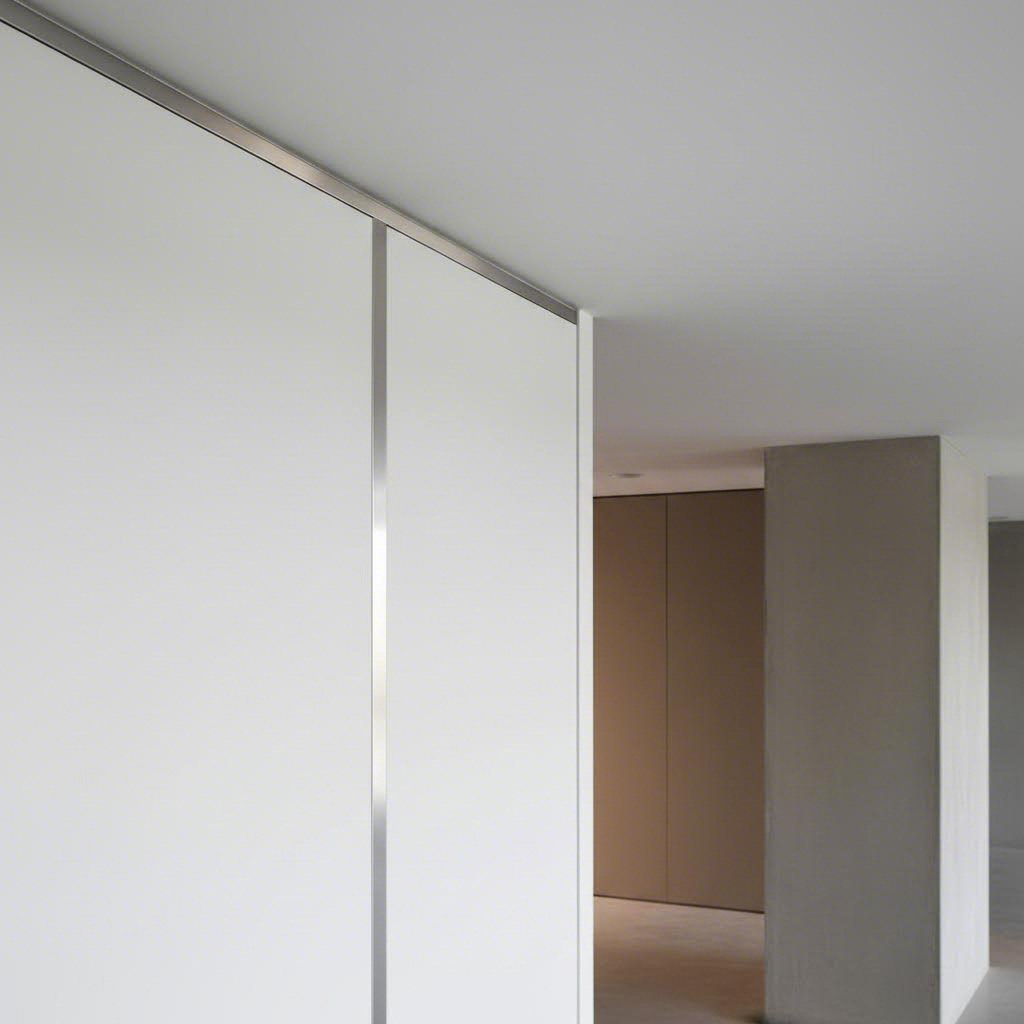
Step into a commercial building lobby, and you're surrounded by aluminum trim profiles—often without realizing it. The clean edge where drywall meets a window frame, the transition strip guiding your eye along a corridor, the polished casework edging on reception desks—these details define architectural quality. Yet navigating the architectural sections of an aluminum extrusions catalog requires a different mindset than browsing industrial profiles.
Architectural catalogs prioritize aesthetics alongside function. While an industrial aluminum profile catalog might organize products by load capacity or alloy specification, architectural sections typically categorize by installation environment and visual application. Understanding this organizational difference helps you locate the right aluminium profiles faster.
Professional architectural catalogs divide extruded aluminum trim profiles into categories based on where and how they'll be installed. Each category addresses specific substrate compatibility, environmental exposure, and aesthetic requirements.
According to Orange Aluminum, aluminum edge trims are essential for both functionality and aesthetics in construction and design projects. Their diverse applications range from decorative purposes to practical installations, ensuring durability and style across multiple environments.
The primary categories you'll encounter include:
When specifying aluminum trim profiles for commercial construction, your installation environment dictates material selection, finish requirements, and substrate compatibility. The table below organizes common trim types by these critical factors:
| Trim Category | Application Area | Substrate Compatibility | Recommended Finish Options |
|---|---|---|---|
| J Cap Edge Trim | Mirror installations, glass panels, retail displays | Glass, metal panels, acrylic | Mill finish, anodized, powder coated |
| Drip Edge Trim | Roofs, windows, door frames (exterior) | Sheathing, roofing materials | Anodized (Class I), PVDF coated |
| Push-In Edge Trim | Automotive interiors, furniture, cabinetry | Composite panels, plywood, MDF | Mill finish, powder coated |
| Round Edge Trim | Desks, countertops, safety applications | Laminate, solid surface, wood | Anodized, brushed finish |
| Heavy Lip Edge Trim | Industrial assemblies, thick glass, metal sheets | Tempered glass, steel, aluminum panels | Mill finish, anodized |
| Overlap Edge Trim | Machinery guards, equipment enclosures | Sheet metal, composite panels | Mill finish, powder coated |
Notice how exterior applications demand more robust finish specifications. As SAF Southern Aluminum Finishing explains, the lifetime of an anodized finish is proportional to coating thickness. For exterior architectural trim exposed to weather, Class I anodizing (0.7 mils) lasts approximately twice as long as Class II (0.4 mils)—a critical consideration when specifying framing corners and exposed trim elements.
Surface finish selection involves balancing durability, aesthetics, and budget:
For aluminum fence panels and other exterior applications, PVDF coatings have dominated the market because of their weather resistance and color consistency. SAF notes that specifiers should request Florida exposure test results when evaluating different coating systems—actual ten-year exposure data reveals performance that accelerated lab testing cannot replicate.
When specifying extruded aluminum trim profiles for commercial projects, consider these practical guidelines:
Understanding how architectural aluminum profile catalogs organize information accelerates your specification process. Unlike industrial catalogs that lead with mechanical properties, architectural sections typically group profiles by visual application first, then provide substrate and finish compatibility data. This organization reflects how architects and designers approach material selection—starting with the aesthetic vision, then validating technical requirements.
With architectural trim categories clarified, the next logical question emerges: when should you specify catalog profiles versus investing in custom extrusion solutions? The decision framework ahead will help you navigate that critical choice.
You've found a profile in the catalog that looks close to what you need—but is "close enough" actually good enough? This question sits at the heart of every aluminum extrusion sourcing decision. Choosing between standard aluminum extrusions and custom die development affects your project timeline, budget, and ultimately, product performance.
The decision isn't always obvious. Standard stock extrusions offer speed and lower upfront costs, while custom solutions unlock design freedom that catalog profiles simply cannot match. Understanding when each option delivers the best value transforms your procurement strategy from reactive to strategic.
Standard aluminum extrusion profiles are pre-designed shapes manufactured in high volumes and kept in inventory by suppliers. According to Sinoextrud, these profiles come in fixed dimensions and common shapes like tubes, angles, channels, and T-slots—ready to ship with zero tooling costs and faster order processing.
Custom extrusions, by contrast, are engineered to your specifications. A dedicated die creates exactly the geometry your application demands, whether that means integrated mounting brackets, specialized heat dissipation fins, or weight-optimized hollow sections.
The table below compares these two approaches across the factors that matter most during project planning:
| Factor | Standard Stock Extrusions | Custom Die Development |
|---|---|---|
| Minimum Order Quantity | Often as low as single pieces or cut lengths | Typically 1,000–2,000 lbs. per shape; some suppliers offer minimums for prototyping |
| Lead Time | Days to 1–2 weeks (inventory permitting) | 3–5 weeks including die design, testing, and approval |
| Tooling Costs | None—dies already exist | $1,000–$4,000 typical for 7–10" circle size; larger profiles cost more |
| Design Flexibility | Limited to existing catalog geometries | Virtually unlimited—place metal exactly where needed |
| Part Consolidation | May require multiple profiles plus hardware | Can integrate fastener slots, wire channels, and mounting features into one profile |
| Reorder Speed | Consistent—always available from stock | After initial run, reorders match stock lead times |
According to the Aluminum Extruders Council white paper, extrusion tooling costs remain among the lowest of any material process. A custom die for solid shapes typically runs $1,000–$2,000, while hollow profiles range from $1,200–$4,000. Compare that to rolled steel production tooling, which can easily exceed $30,000 with three-month lead times.
When does investing in custom tooling actually save money? The answer depends on your production volume, assembly complexity, and performance requirements.
Consider this real-world example from Sinoextrud: a lighting company initially used standard U-channels for LED fixtures. When their design team requested integrated heat sinks and mounting clips, a custom extruded aluminum profile replaced five separate parts with one—cutting assembly time by 40%.
Custom extrusions become cost-effective despite higher initial investment in these scenarios:
Industry-specific selection criteria add another layer to this decision framework:
Aerospace applications demand strength-to-weight optimization that standard profiles rarely achieve. Custom geometries with strategic void spaces reduce mass while maintaining structural integrity. These types of aluminum extrusions must meet AS9100 certification requirements, and working with experienced extruders early ensures compliance without costly redesigns.
Architectural projects often justify custom dies when a signature design element—a distinctive sunshade profile, unique railing system, or custom canopy shape—defines the building's identity. The Aluminum Extruders Council notes that the extrusion process's low tooling costs permit "full-scale prototyping with little penalty for subsequent revision."
Marine environments require careful alloy selection (typically 5052 or 6061 with appropriate tempers) combined with profiles optimized for corrosion resistance and structural demands. Stock aluminum extrusions in marine-grade alloys exist but may not address the combined requirements of your specific application.
As Paramount Extrusions advises, the question isn't "which is better?" but rather "which is better for you?" Standard aluminum extrusion profiles excel when your project uses generic shapes or demands immediate availability. Custom solutions win when better fit, performance, or aesthetics justify the initial investment.
Before finalizing your decision, evaluate these critical questions:
With this decision framework established, you're equipped to approach any aluminum extrusions catalog strategically. The next section builds on this foundation by decoding the terminology and dimensional specifications you'll encounter throughout professional catalogs.
You've selected an alloy, identified the right profile category, and decided between standard stock and custom options. Now comes the moment of truth: reading the actual catalog specifications without second-guessing every number. Technical terminology can trip up even experienced professionals when catalog formats vary between suppliers or when international sources use different notation conventions.
This section serves as your quick-reference guide—a resource you can bookmark and return to whenever you encounter unfamiliar terms or need to verify dimensional specifications before placing an order. Think of it as your translation key for any aluminum extrusion catalog or aluminum extrusion profiles catalog you encounter.
Professional catalogs assume you understand industry-standard terminology. The definitions below cover the terms you'll encounter most frequently when reviewing extruded aluminum profiles:
| Term | Definition | Why It Matters |
|---|---|---|
| Die Number | The unique identifier assigned to a specific extrusion die; catalogs reference this number when listing available profiles | Required for reorders; ensures you receive the exact same profile geometry each time |
| Wall Thickness | The distance through solid metal at any point in the profile cross-section; may vary across different sections of complex shapes | Determines structural capacity, weight, and minimum bend radius; thinner walls reduce cost but limit strength |
| Corner Radius | The radius of curvature where two surfaces meet; expressed as inside radius (IR) or outside radius (OR) | Sharp corners stress dies and may crack during bending; larger radii improve formability and die life |
| Tolerance Class | The category defining acceptable dimensional variation; standard tolerances are broader than precision tolerances | Precision tolerances cost more but ensure tighter fits; verify class matches your assembly requirements |
| Weight-per-Foot | The mass of one linear foot of the profile, typically expressed in pounds per foot (lbs/ft) or kilograms per meter (kg/m) | Essential for calculating shipping costs, structural loads, and material budgets |
| Circumscribing Circle Diameter (CCD) | The diameter of the smallest circle that completely encloses the profile cross-section | Determines which presses can produce the profile; larger CCDs require more powerful equipment |
| Tongue Ratio | For semihollow profiles, the ratio of enclosed void area to the square of the gap width (Area/Gap²) | Higher ratios indicate more challenging dies; affects tooling cost and production complexity |
| Bearing Length | The surface of the die opening that contacts the aluminum during extrusion; controls metal flow and surface finish | Longer bearings improve surface quality but slow extrusion speed; affects pricing on high-volume orders |
According to the Aluminum Extruders Council glossary, an extruded profile is a "profile brought to final dimension by the process of extrusion." The organization further distinguishes between solid profiles (cross-sections without enclosed voids), hollow profiles (completely enclosed voids), and semihollow profiles (partially enclosed voids with area substantially greater than the square of the gap width).
Additional terms you'll encounter in professional aluminum extrusion catalogs include:
Cross-sectional drawings in aluminum extrusion catalogs follow standardized notation conventions. Understanding these conventions prevents costly ordering errors and ensures the profiles you receive match your design intent.
Dimensional callouts on catalog drawings typically include:
When working with international catalogs, measurement conversions become essential. The reference materials from MK Metal provide decimal equivalents that bridge fractional and metric specifications:
| Fractional (inches) | Decimal (inches) | Millimeter Equivalent |
|---|---|---|
| 1/16 | 0.062 | 1.588 |
| 1/8 | 0.125 | 3.175 |
| 1/4 | 0.250 | 6.350 |
| 3/8 | 0.375 | 9.525 |
| 1/2 | 0.500 | 12.700 |
| 3/4 | 0.750 | 19.050 |
| 1 | 1.000 | 25.400 |
Similar conversions apply when interpreting metal stud dimensions or stud spacing specifications in architectural catalogs, where framing members often follow fractional inch conventions while international standards use millimeters.
Tolerance tables in professional catalogs follow the format established by industry standards. Cross-sectional dimension tolerances vary based on whether you're measuring metal dimensions (where 75% or more of the dimension is solid metal) or space dimensions (where more than 25% is void). Standard tolerances for profiles with circumscribing circles under 10 inches range from ±0.006 inches for dimensions up through 0.124 inches to ±0.054 inches for dimensions between 8.000 and 9.999 inches.
Before placing any order from an aluminum extrusion catalog, verify these critical specifications:
The industry standard tolerance tables from the Aluminum Association provide specific values based on profile dimensions and alloy family. For 5xxx series alloys with magnesium content of 4.0% or greater, tolerances are 150% of the standard values shown for other alloys—a detail that can significantly impact part acceptance if overlooked.
With terminology and dimensional specifications mastered, you're prepared to communicate effectively with suppliers and verify that delivered profiles meet your requirements. The next section guides you through the practical process of partnering with manufacturers to transform catalog selections into successful project outcomes.

You've decoded alloy specifications, identified the perfect profile shape, and determined whether standard stock or custom extrusion fits your needs. Now comes the practical question: how do you actually transform that catalog knowledge into delivered aluminum extruded profiles ready for your production line? The journey from catalog selection to purchase order involves multiple touchpoints, and understanding this workflow prevents costly miscommunications and delays.
Working with aluminum extrusion suppliers isn't just about placing an order—it's about building a partnership that supports your project from initial concept through final delivery. According to Sinoextrud's procurement guide, the buying process typically involves six distinct stages: defining requirements, requesting samples or drawings, agreeing on price and lead time, confirming the order, overseeing production, and arranging shipping and delivery.
First-time buyers often underestimate the preparation required before requesting quotes. Suppliers need specific information to provide accurate pricing and realistic lead times. The more complete your initial inquiry, the faster you'll receive actionable responses.
Here's the step-by-step process for moving from catalog browsing to confirmed order:
This structured approach applies whether you're ordering standard aluminum plate, 4x8 aluminum sheet, 2 square tubing, or complex custom profiles. The fundamentals remain consistent: clear communication, documented specifications, and verified quality at each stage.
The difference between an average supplier and a true manufacturing partner often comes down to technical support and processing capabilities. According to PTSMAKE's manufacturing guide, a premier aluminum extrusion manufacturer stands out through cutting-edge technology, superior material selection, expert craftsmanship, and comprehensive end-to-end services.
What does "end-to-end" really mean? Consider a typical project requiring finished components rather than raw extrusions. You might need:
As Tower Extrusions demonstrates, full-service providers can handle everything from 5-axis CNC machining on extrusions up to 50 feet long to precision cutting with tolerances as tight as +/-0.005 inches. This integrated approach—extrusion, fabrication, and finishing under one roof—eliminates the logistics of coordinating multiple vendors.
Surface treatment options deserve special attention during supplier selection. The finish you specify impacts durability, corrosion resistance, and aesthetics for years to come. Quality manufacturers offer comprehensive options:
For projects requiring custom profiles with integrated processing, manufacturers with substantial production capacity offer significant advantages. Shengxin Aluminium, for example, operates 35 advanced extrusion presses ranging from 600T to 5500T capacity, paired with state-of-the-art CNC machining centers capable of precise cutting, drilling, and bending operations. This combination of extrusion capacity and deep processing capabilities means your custom 6063 aluminum tubes, architectural window frames, or industrial profiles arrive ready for installation—not requiring additional fabrication at your facility.
When evaluating potential suppliers, prioritize these capabilities:
| Capability | Why It Matters | Questions to Ask |
|---|---|---|
| Technical consultation | Design-for-manufacturability feedback prevents costly revisions after die production | Do you provide DfM analysis? Can you suggest profile optimizations? |
| Die development | In-house tooling speeds lead times and enables rapid prototyping | What's your typical die lead time? Do you offer prototype runs? |
| Processing equipment | CNC capabilities, press capacity range, and automation affect quality and pricing | What's your press tonnage range? What secondary operations can you perform? |
| Quality systems | ISO certification and documented inspection procedures ensure consistent results | What certifications do you hold? Can you provide material test reports? |
| Surface treatment | In-house finishing eliminates coordination delays and quality variability | Which finishes do you offer? What's your coating thickness capability? |
Remember that communication responsiveness during the quoting phase often predicts how a supplier will perform during production. If responses are slow or vague before you've placed an order, imagine managing urgent production issues with that same team. The best manufacturing partnerships are built on transparent communication, documented processes, and mutual commitment to your project's success.
With supplier selection and ordering processes clarified, you're nearly ready to apply your complete catalog knowledge to real projects. The final section synthesizes everything covered and provides a practical checklist for your next aluminum extrusion procurement.
You've journeyed through alloy codes, temper designations, profile geometries, and supplier evaluation criteria. Now it's time to transform that knowledge into action. Whether you're specifying components for an architectural facade, engineering a modular workstation, or sourcing parts for industrial equipment, the principles covered in this aluminum extrusion profile catalog guide apply directly to your next procurement decision.
Catalog literacy transforms complex procurement into confident decision-making. When you understand alloy properties, recognize shape categories, and can interpret dimensional specifications, you're no longer guessing—you're selecting with precision.
The selection methodology we've explored follows a logical progression that mirrors how successful engineers and procurement specialists approach every project. Starting with application requirements and ending with supplier evaluation, this framework eliminates the trial-and-error approach that wastes time and budget.
Before you open another aluminum shapes catalog or request your next quote, work through this action checklist:
According to Gabrian's design guide, involving your extruder in the process as early as possible provides the perspective of manufacturing engineers with relevant experience. This collaborative approach catches potential issues before they become expensive problems.
The types of extruded aluminum you'll need evolve as your projects grow more complex. What starts as a simple order for standard stock often develops into requirements for custom alu extrusion profiles, integrated processing, and specialized finishes. Building relationships with capable manufacturing partners positions you for success across this entire spectrum.
When evaluating potential long-term partners, prioritize manufacturers who offer:
For readers seeking custom 6063 aluminum tubes, architectural window frames, or complex industrial profiles, choosing the right manufacturing partner makes the difference between projects that proceed smoothly and those plagued by delays and quality issues. Shengxin Aluminium exemplifies the comprehensive capability set worth seeking: 35 advanced extrusion presses ranging from 600T to 5500T, state-of-the-art CNC machining centers, and full surface treatment options including custom anodizing colors. With over 30 years of industry experience, their technical team provides the end-to-end support that transforms extruded aluminum shapes catalog selections into finished, assembly-ready components.
As PTSMAKE's manufacturing guide emphasizes, choosing a partner isn't just about transactions—it's about building relationships that support your goals from concept to completion. The best suppliers provide design-for-manufacturability feedback, maintain transparent communication throughout production, and deliver consistent quality that you can rely on order after order.
The aluminum extrusions catalog you're navigating today represents thousands of engineering solutions waiting to be applied. Armed with the knowledge to decode alloy specifications, interpret dimensional data, and evaluate manufacturing partners strategically, you're prepared to source aluminum profiles with the confidence of a seasoned professional. Your next project awaits—and now you have the catalog literacy to make it succeed.
A professional aluminum extrusions catalog includes profile shapes organized by geometry, alloy designations (like 6063 and 6061), temper codes (T5, T6), dimensional tolerances, weight-per-foot data, and cross-sectional drawings. Many catalogs also feature surface finish options, application guidance, and ordering information including minimum quantities and lead times. Industrial catalogs emphasize mechanical properties while architectural catalogs prioritize installation environment and aesthetic compatibility.
Choose 6063 aluminum when surface finish and aesthetics matter most—it produces smoother surfaces ideal for architectural trim, window frames, and visible components. Select 6061 when structural strength is paramount, as it offers approximately 50% higher tensile strength than 6063-T6. For applications requiring both appearance and moderate strength, 6063-T6 provides a balanced option. Marine and aerospace applications may require specialty alloys like 5052 or 7075 for specific corrosion resistance or strength requirements.
T5 temper indicates the aluminum was cooled from extrusion temperature and artificially aged, commonly used for profiles quenched directly from the press. T6 temper means the material underwent solution heat treatment at approximately 980°F, water quenching, and controlled artificial aging at 325-400°F. T6 delivers maximum strength through precipitation hardening but costs more than T5. Always verify both alloy and temper when ordering, as a 6063-T5 profile performs differently than 6063-T6 despite identical geometry.
Custom extrusions become cost-effective when catalog profiles require multiple secondary operations, when part consolidation can eliminate assembly steps, or when high-volume production amortizes tooling costs. Die costs typically range from $1,000-$4,000—far lower than other manufacturing processes. Consider custom solutions when weight optimization matters, when unique mounting features would simplify assembly, or when brand differentiation requires signature design elements unavailable in standard catalogs.
Catalog dimensions include overall width and height (bounding box), wall thickness at multiple points, corner radii marked with 'R' prefix, and angular dimensions in degrees. Reference dimensions shown in parentheses indicate calculated values not subject to inspection. Standard tolerances vary by profile size—cross-sectional dimensions under 0.124 inches typically allow ±0.006 inch variation. For international catalogs, convert between fractional inches, decimal inches, and millimeters using standard equivalents (1 inch = 25.4mm).



 Інтернет-сервіс
 0086 136 3563 2360
 sales@sxalu.com
 +86 136 3563 2360
 Українська
 English
 français
 Deutsch
 русский
 español
 português
 العربية
 ไทย
ไทย Việt
Việt