Picture this: you're designing a custom CNC machine, a 3D printer frame, or an industrial workstation. You've settled on aluminum extrusion as your building material. But then comes the question that stops countless builders in their tracks - should you choose T slot or V slot profiles?
This decision might seem minor at first glance. After all, both profile types look similar and serve as modular building systems. However, selecting the wrong slot type can derail your entire project, leading to incompatible hardware, wasted materials, and frustrating redesigns.
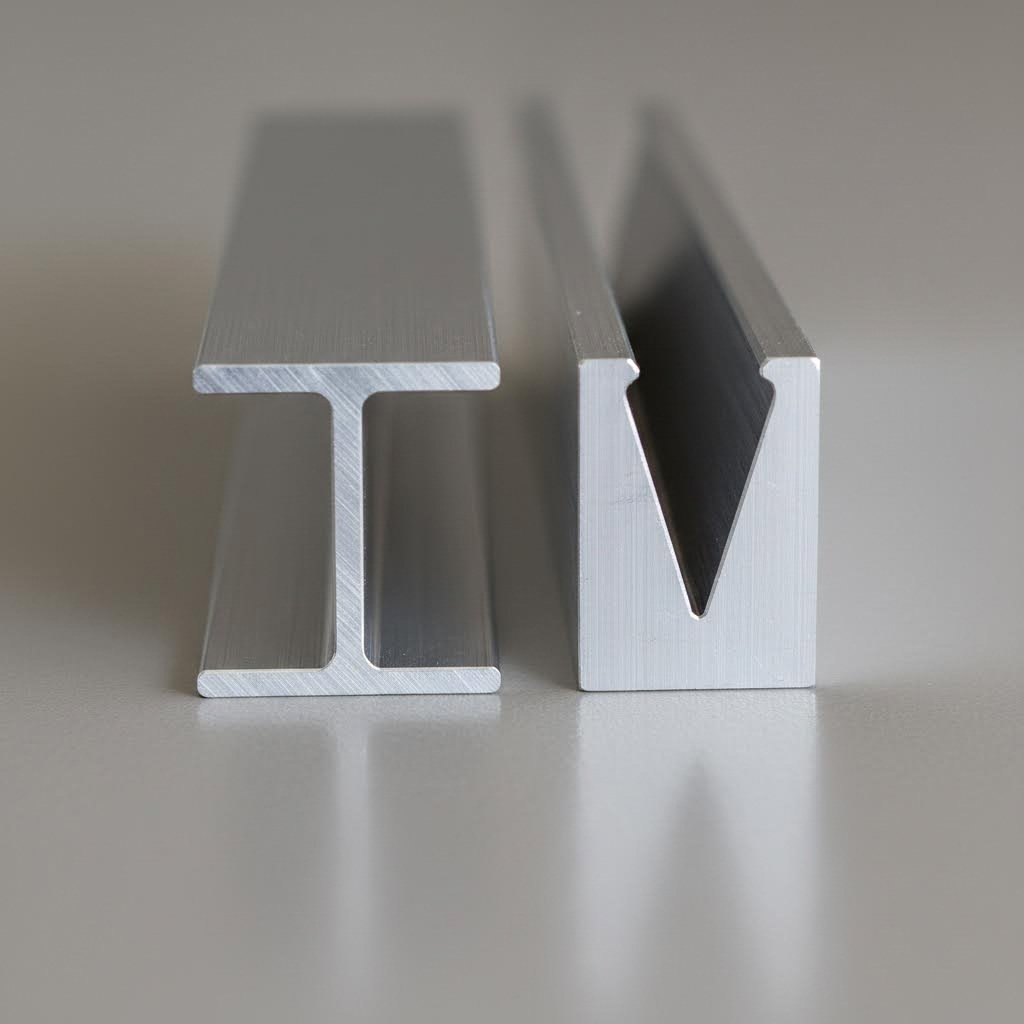
When comparing v slot vs t slot options, you're not just picking between two groove shapes. You're choosing between two fundamentally different design philosophies. T-slot profiles feature rectangular or trapezoidal grooves shaped like a "T," primarily designed for building static structural frames, jigs, and machine enclosures. V slot profiles, on the other hand, incorporate angled 90-degree grooves specifically engineered to accommodate wheels for smooth linear motion.
The distinction extends far beyond aesthetics. Your choice determines which fasteners you can use, whether your structure can support integrated motion systems, and how easily you can modify your build in the future. Engineers and DIY builders who overlook these differences often discover problems only after components arrive - and don't fit together as expected.
Selecting an inappropriate profile creates ripple effects throughout your project:
Whether you're a beginner confused by unfamiliar terminology or an experienced builder seeking detailed specifications, this guide delivers what you need. You'll discover the technical differences between these profile types, learn which applications suit each design, and gain a clear decision framework for your specific project requirements.
Ready to make an informed choice? Let's examine exactly what sets these two profile systems apart - and how to match the right one to your build.
How do you objectively compare two profile systems that serve overlapping yet distinct purposes? Simply stating preferences won't help you make the right choice. Instead, you need a structured framework grounded in measurable performance factors.
Our approach eliminates guesswork by focusing on technical specifications, dimensional standards, and practical application requirements rather than subjective opinions. Whether you're evaluating extruded t slot options for a workbench or v slot extruded aluminum for a motion-based machine, these criteria apply universally.
We analyzed both profile systems across real-world scenarios - from hobbyist 3D printer builds to industrial automation equipment. This evaluation draws on established engineering principles, manufacturer specifications, and documented performance data from completed projects.
Rather than simply declaring one profile "better" than the other, we examined how each performs under specific conditions. An aluminum extrusion v slot profile might excel in one application while falling short in another. Understanding these nuances prevents costly mismatches between your project requirements and your chosen materials.
Five critical dimensions determine which profile type suits your build. Each criterion addresses a specific aspect of project success:
These criteria matter because they translate directly into project outcomes. As noted by industry experts at Eleanor Aluminium, even minor dimensional deviations can affect efficiency and safety, while poor fit between components reduces equipment lifespan.
With this evaluation framework established, let's examine how T-slot profiles perform across each dimension - starting with their role as the industry standard for modular structural framing.
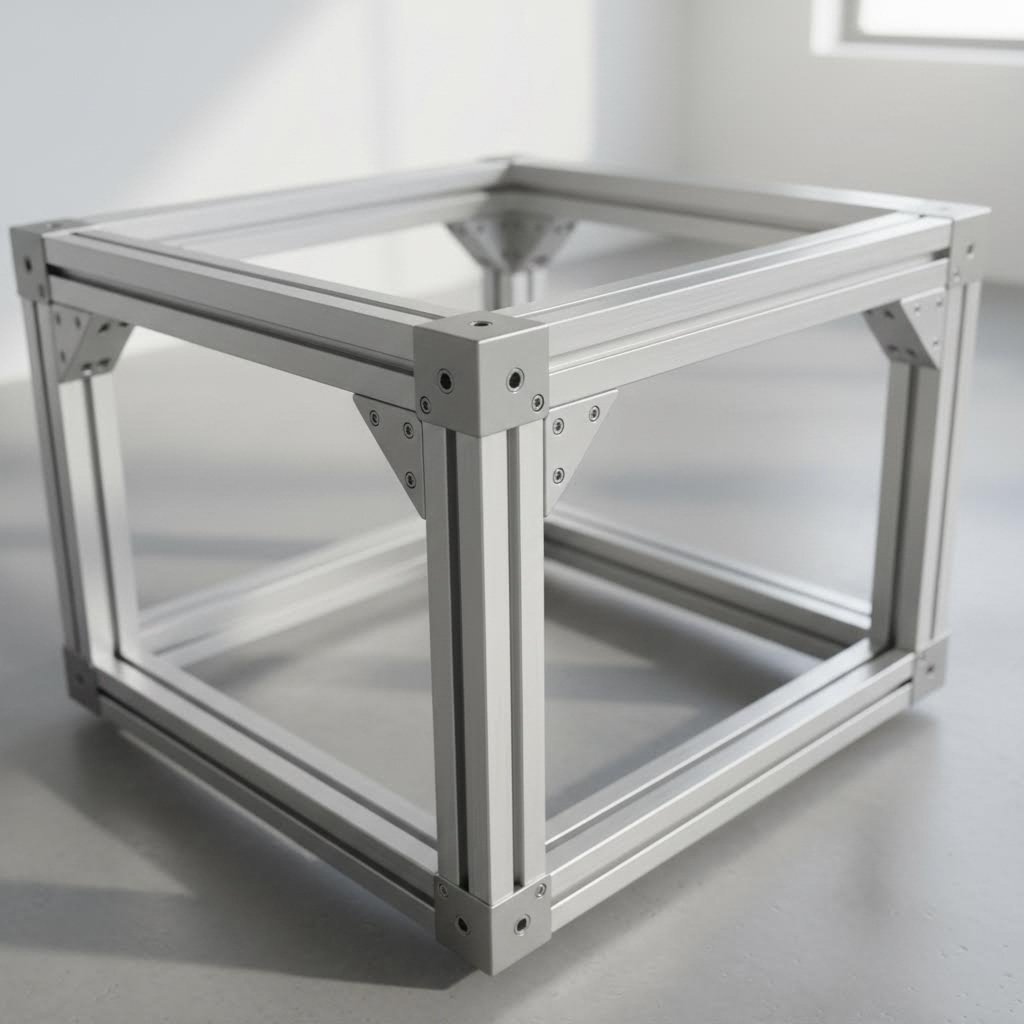
Walk into any modern manufacturing facility, machine shop, or maker space, and you'll spot them everywhere - those sleek aluminum frames with distinctive grooved channels running along their lengths. T-slot aluminum profiles have earned their reputation as the industry workhorse for modular construction. But what makes this particular groove design so universally adopted?
Think of T-slot profiles as industrial-grade building blocks. Unlike welded steel frames that demand specialized equipment and permanent joints, a t slot bar system lets you construct, modify, and reconfigure structures using simple hand tools. This fundamental advantage has made T-slot extrusions the go-to choice for everything from factory workstations to laboratory equipment enclosures.
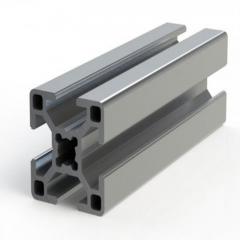
The magic lies in that distinctive T-shaped channel. When you examine a cross-section of extruded t slot aluminum, you'll notice the groove resembles an upside-down "T" - a narrow opening at the surface that widens into a broader cavity beneath. This geometry serves a brilliant purpose: it captures specially designed fasteners that slide in from the ends or drop in from above.
Here's how it works in practice. A T-nut features a rectangular head sized to fit within the slot's hidden cavity. You insert the nut, slide it to your desired position, then tighten a bolt through whatever component you're mounting. The nut rotates 90 degrees and locks against the slot's internal shoulders, creating a remarkably strong connection without any drilling or welding.
This system accepts multiple fastener types:
The 2 purpose of using t slots becomes clear when you understand this flexibility. First, the profiles provide robust structural framing - the aluminum extrusion itself carries loads and maintains rigidity. Second, those same slots enable component mounting flexibility, letting you attach brackets, panels, sensors, and accessories at virtually any position along the frame.
T-slot profiles follow standardized metric series based on their cross-sectional dimensions. The number typically indicates the profile's width and height in millimeters for square sections:
| Profile Series | Dimensions | Slot Width | Typical Applications |
|---|---|---|---|
| 20 Series | 20x20mm | 5-6mm | Light frames, 3D printer enclosures, small fixtures |
| 30 Series | 30x30mm | 8mm | Medium-duty workstations, guards, display stands |
| 40 Series | 40x40mm | 8-10mm | Machine frames, heavy workbenches, automation equipment |
| 45 Series | 45x45mm | 10mm | Industrial machinery, high-load structures |
Beyond square profiles, rectangular options like 20x40mm and 40x80mm provide directional strength where loads concentrate along one axis. These elongated sections deliver higher stiffness in their taller dimension while maintaining compact footprints.
Most manufacturers produce profiles from 6063-T6 aluminum alloy - an excellent choice that balances extrudability, surface finish quality, and structural strength. The T6 temper indicates the material underwent solution heat treatment and artificial aging, yielding tensile strength around 240 MPa and good corrosion resistance. Standard anodized finishes (typically clear or black) further enhance durability without additional coating requirements.
Where do T-slot profiles truly shine? Their sweet spot lies in static structural applications requiring modularity and precision. Consider these common use cases:
The v slotted aluminum insert you might encounter in some systems represents a hybrid approach - but pure T-slot profiles remain the dominant choice for structural framing where linear motion isn't the primary requirement.
Understanding these strengths and limitations helps you determine when T-slot profiles represent the optimal choice - and when you might need the specialized capabilities of V-slot designs for integrated linear motion systems.
Imagine building a CNC router or 3D printer without purchasing separate linear rails, bearings, or guide blocks. Sounds like a significant cost savings, right? That's precisely what vslot profiles deliver - a dual-purpose extrusion that functions as both structural frame and motion rail in a single component.
While T-slot profiles dominate static framing applications, V-slot aluminium extrusion carved out its niche by solving a specific engineering challenge. Builders needed affordable, accessible linear motion systems that didn't require precision-ground steel rails or complex bearing assemblies. The solution? Redesign the groove geometry itself.
Examine a v slot rail cross-section and you'll immediately notice the difference. Instead of the T-shaped cavity with its narrow opening and wider internal pocket, V-slot profiles feature precisely angled grooves forming a 90-degree "V" shape. This seemingly simple modification transforms the entire profile's functionality.
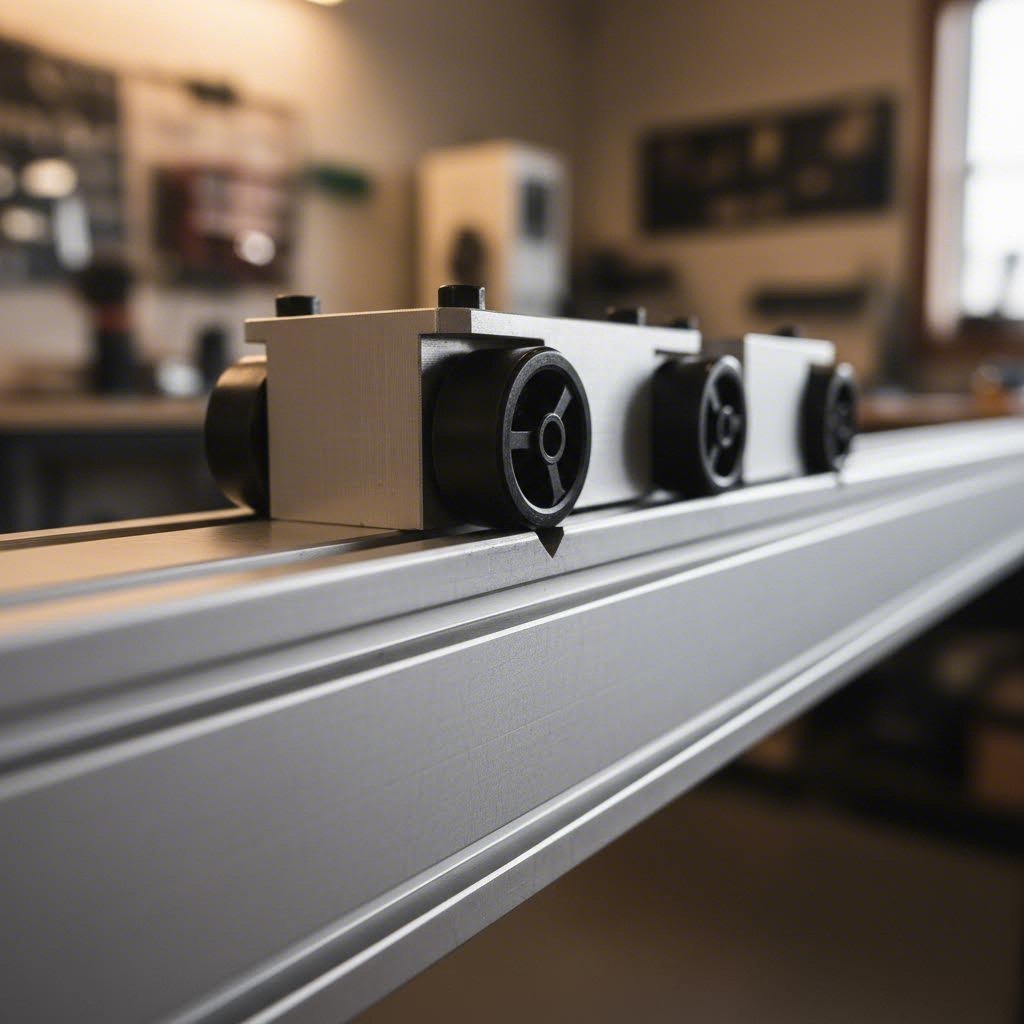
The V-shaped groove serves as a precision track for specialized wheels with matching angled edges. According to industry specifications, this design ensures that V-wheels glide effortlessly along the profile while maintaining a linear path - crucial for applications demanding repeatable positioning accuracy.
Here's what makes this geometry work:
Most V-slot profiles retain standard T-shaped slots on their remaining faces. This hybrid approach means you still access the familiar ecosystem of T-nuts, brackets, and connectors for mounting components - while gaining integrated motion capability on the V-groove faces.
The magic happens when you pair aluminium v slot extrusion with purpose-built wheel assemblies. These aren't ordinary casters or bearings - they're precision components engineered specifically for this application.
A typical V-wheel consists of:
When mounted in opposing pairs - typically three or four wheels per carriage plate - these assemblies create a stable platform that travels freely along the extrusion length. The wheel arrangement eliminates play in all directions except the intended travel axis.
This integration eliminates several components traditional motion systems require:
| Traditional Linear System | V-Slot Equivalent | Cost Impact |
|---|---|---|
| Precision steel rail | V-slot profile groove | Included in extrusion cost |
| Linear bearing blocks | V-wheel assemblies | Significantly lower cost |
| Separate mounting hardware | Integrated mounting slots | Reduced part count |
| Alignment fixtures | Self-aligning wheels | Simplified setup |
Where does V-slot technology truly excel? Projects requiring smooth, repeatable linear motion at accessible price points benefit most. The modular design allows users to configure and reconfigure setups without extensive machining - making it ideal for both prototyping and production applications.
Common V-slot implementations include:
This key differentiator - the ability to function as both structural member and motion rail - represents what sets V-slot apart from traditional T-slot profiles. For builders weighing these options, the next step involves understanding exactly how the two systems compare across specific technical specifications and hardware compatibility.
You've read about groove geometries and application scenarios. But when you're standing in front of a supplier catalog or configuring an online order, you need hard specifications - not general descriptions. What exactly fits where? Which fasteners work with which profiles? Can you mix components between systems?
These questions trip up even experienced builders. The aluminum slot ecosystem includes thousands of components, and manufacturers don't always clarify cross-compatibility. Let's cut through the confusion with detailed comparison tables that put all the critical specifications in one place.
Before selecting profiles for your project, you need to understand the fundamental differences in geometry, dimensions, and functional capabilities. This comprehensive comparison covers the specifications that matter most when choosing between extruded aluminum t profiles and V-slot alternatives.
| Specification | T-Slot Profiles | V-Slot Profiles |
|---|---|---|
| Groove Geometry | T-shaped channel with narrow opening (5-10mm) widening to internal cavity | 90-degree V-shaped groove with angled walls; remaining faces retain T-slots |
| Primary Function | Structural framing and component mounting | Integrated linear motion rail plus structural framing |
| Common Profile Sizes | 20x20, 30x30, 40x40, 45x45, 60x60mm (square); 20x40, 40x80mm (rectangular) | 20x20, 20x40, 20x60, 20x80, 40x40mm most common |
| Slot Width Standards | Slot 6 (6mm), Slot 8 (8mm), Slot 10 (10mm) | Typically Slot 6 or Slot 8 on T-slot faces |
| Standard Stock Length | Approximately 6 meters; cut-to-size available | Approximately 6 meters; cut-to-size available |
| Typical Alloy | 6063-T5 or 6063-T6 aluminum | 6063-T5 or 6063-T6 aluminum |
| Surface Finish Options | Clear anodized, black anodized, powder coated, raw mill finish | Clear anodized, black anodized (preferred for motion visibility) |
| Load-Bearing Capacity | Higher rigidity per kilogram for heavy static loads | Optimized for motion applications; adequate for light-medium structural loads |
| Linear Motion Capability | Requires separate linear rail systems | Built-in V-wheel track on groove faces |
| Precision Tolerance | Standard extrusion tolerances; precision options available | Standard extrusion tolerances; wheel preload compensates for minor variations |
Notice that both profile types share the same aluminum alloys and general manufacturing processes. The critical distinction lies in that groove geometry - and how it determines which hardware ecosystem each profile supports.
When comparing vs t slot options for structural applications, the T-slot's wider hardware availability often tips the scale. But for motion-centric builds, V-slot's integrated rail capability eliminates entire component categories from your bill of materials.
Here's where many projects encounter unexpected problems. You've ordered profiles, brackets arrive, and suddenly nothing fits together as planned. This compatibility matrix prevents those frustrating surprises by mapping exactly which components work with each system.
| Hardware Category | Component Type | T-Slot Compatible | V-Slot Compatible | Notes |
|---|---|---|---|---|
| Fasteners | Standard T-Nuts | Yes - all slot sizes | Yes - T-slot faces only | Slide in from profile ends |
| Drop-In T-Nuts | Yes - all slot sizes | Yes - T-slot faces only | Insert at any position along slot | |
| Hammer Nuts | Yes - spring-loaded variants | Yes - T-slot faces only | Quick installation without end access | |
| Roll-In T-Nuts | Yes - all slot sizes | Yes - T-slot faces only | Rotate into position at any point | |
| Brackets | L-Brackets / Angle Brackets | Yes - extensive selection | Yes - use T-slot faces | Multiple sizes and strength ratings |
| Corner Cubes | Yes | Yes | Three-way connections at frame corners | |
| Gusset Plates | Yes - various angles | Yes - mount to T-slot faces | Reinforces joints against vibration | |
| Connectors | Hidden Corner Connectors | Yes | Yes | Internal joints without visible hardware |
| End-to-End Joining Plates | Yes | Yes | Extends profile runs beyond stock lengths | |
| Pivot Joints | Yes | Yes | Adjustable angle connections | |
| Motion Components | V-Wheels (Delrin/Polycarbonate) | No - groove geometry incompatible | Yes - designed for V-groove | Require matching eccentric spacers |
| Gantry Plates | No - designed for V-wheels | Yes | Mount multiple wheels for carriage assemblies | |
| Timing Belt Tensioners | Yes - with rail mounting | Yes - integrated mounting | Essential for belt-driven motion systems | |
| Linear Rail Mounts | Yes - common application | Yes - T-slot faces | Required only if adding precision rails | |
| Accessories | End Caps | Yes - snap or press fit | Yes - snap or press fit | Covers open profile ends |
| Panel Mounting Clips | Yes | Yes - T-slot faces | Secures panels, guards, enclosure walls | |
| Cable Management Clips | Yes | Yes - T-slot faces | Organizes wiring along frame members |
Several critical takeaways emerge from this compatibility data:
The practical implication: you can mix T-slot and V-slot profiles in the same build, but motion components only work on V-slot sections while mounting hardware attaches to T-slot faces on either profile type.
This flexibility explains why many successful builds combine both profile types strategically - using V-slot where motion happens and T-slot where pure structural strength matters most. Understanding exactly which components cross over between systems helps you plan these hybrid approaches effectively.
With these specifications and compatibility data in hand, you're ready to apply a structured decision framework that matches the right profile to your specific project requirements.
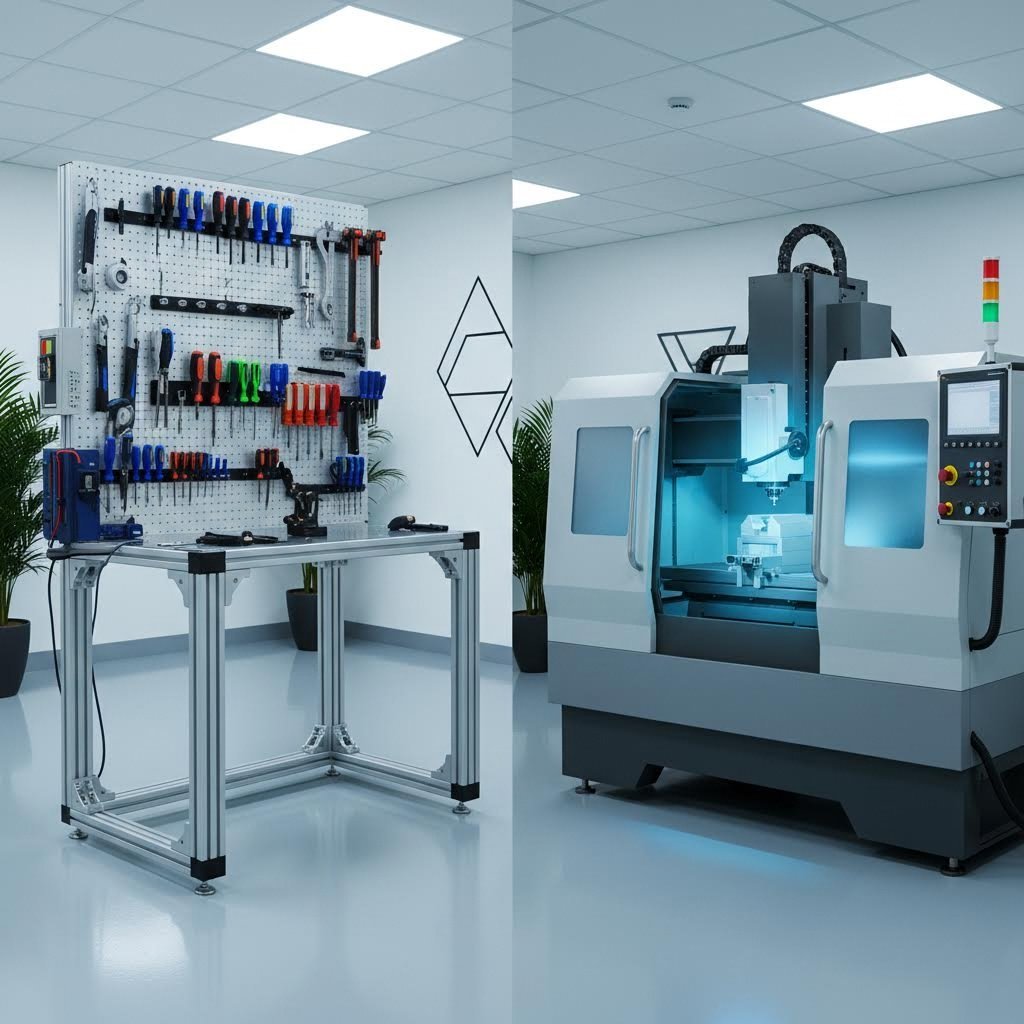
You've seen the specifications. You understand the hardware compatibility. But when it's time to click "add to cart," how do you actually decide? This is where many builders get stuck - paralyzed by options when the answer often comes down to one fundamental question.
Rather than leaving you to guess, let's walk through a structured decision framework. This approach transforms what feels like a complex technical choice into a straightforward process based on your project's primary function.
Start here: Does your project require components that move along the aluminum profile itself?
This single question eliminates most of the decision complexity. Your answer determines which branch of the selection process you follow:
Sounds simple enough? Let's add some nuance. Not all motion requirements justify V-slot selection. Consider these factors:
Still uncertain? This v slot profile guide matches common project categories directly to recommended profile types based on real-world performance requirements:
The key decision principle: Choose V-slot when motion is your primary requirement. Choose T-slot when structural versatility matters most. Combine both when your project demands the strengths of each system.
What about projects that don't fit neatly into these categories? Complex builds often require non-standard profiles or specialized geometries that neither off-the-shelf T-slot nor V-slot fully addresses. When standard solutions fall short, custom and hybrid approaches open up possibilities worth exploring.
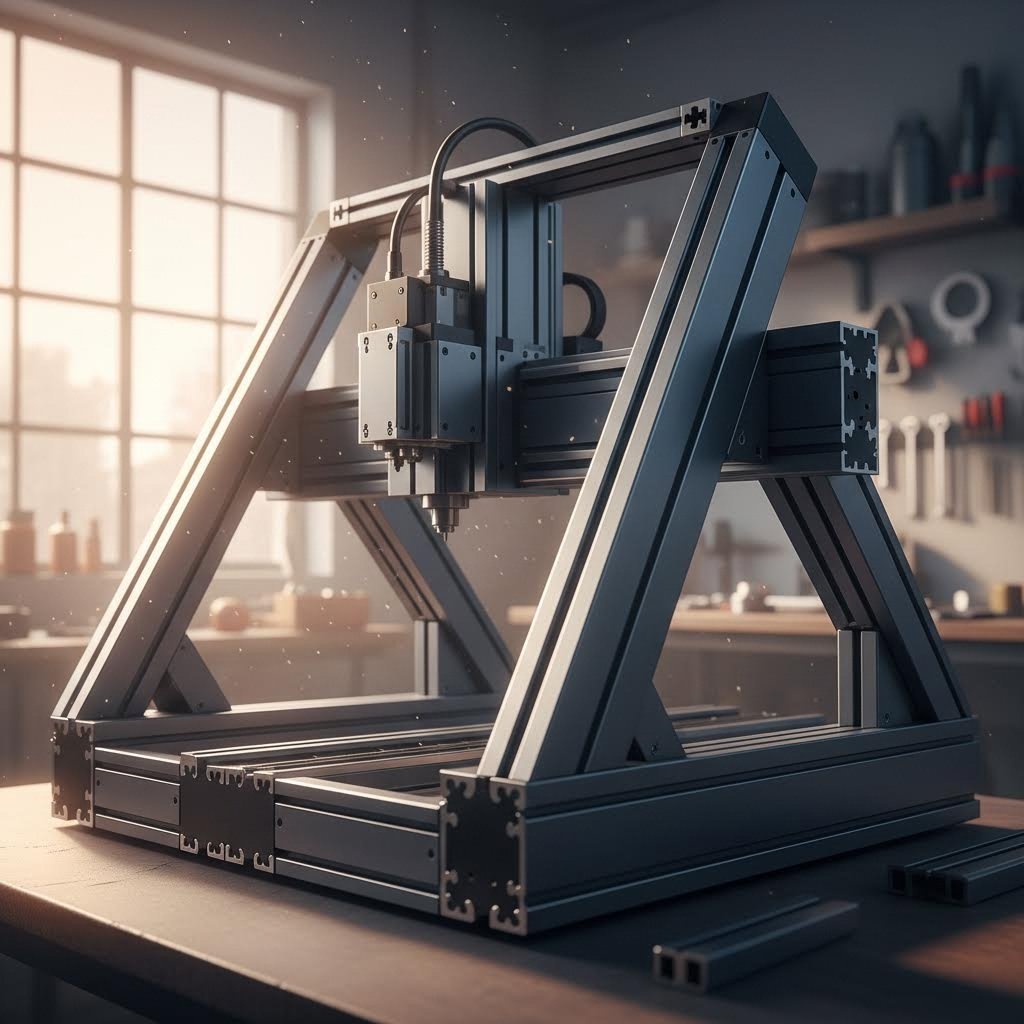
What happens when your project doesn't fit neatly into the T-slot or V-slot category? Perhaps you're building a CNC machine that needs smooth linear motion on two axes but requires maximum structural rigidity for the base frame. Or maybe you're designing automation equipment where standard profiles simply won't accommodate your unique mounting requirements.
The reality is that many successful builds don't rely exclusively on one profile type. Experienced builders have discovered that combining T-slot and V-slot strategically - or even commissioning custom aluminum extrusion profiles - often delivers superior results compared to forcing a single-profile approach.
Think about a typical CNC router build. The gantry needs to travel smoothly along the X-axis while the spindle carriage moves along the Y-axis. These motion requirements make V-slot the obvious choice for those specific members. But what about the base frame supporting the entire machine? That structure experiences static loads, vibration, and needs mounting points for motors, electronics, and work holding fixtures.
A hybrid t slot v slot system addresses both needs elegantly:
This combination approach works because both profile types share compatible connection hardware. Corner brackets, joining plates, and internal connectors attach to T-slot faces on either profile type. You're not creating an incompatible hybrid - you're leveraging each system's strengths where they matter most.
Consider these practical hybrid applications:
| Application | V-Slot Components | T-Slot Components | Benefit |
|---|---|---|---|
| CNC Router | X/Y gantry rails | Base frame, Z-axis tower | Motion where needed, rigidity where it matters |
| 3D Printer | Print head carriage rails | Frame corners, electronics mount | Smooth printing motion, flexible accessory mounting |
| Automated Assembly Station | Linear actuator rails | Workstation frame, guarding | Precise positioning with robust structure |
| Camera Motion Rig | Slider rails | Tripod mount, counterweight frame | Cinematic motion, stable support |
The key to successful hybrid builds lies in planning connection points carefully. Where V-slot and T-slot profiles meet, ensure you're joining through T-slot faces available on both. Most V-slot profiles include standard T-shaped grooves on three faces specifically to enable this integration.
Sometimes neither standard T-slot nor V-slot profiles quite fit your requirements. Maybe you need unusual dimensions, specialized groove configurations, integrated mounting features, or profiles optimized for specific load conditions. This is where aluminum profile manufacturing through custom extrusion enters the picture.
Custom extrusion isn't just for massive industrial operations. According to industry guidelines, custom aluminum extrusion enables the creation of complex geometries that reduce assembly steps and improve integration with other components - benefits that apply whether you're producing ten units or ten thousand.
The custom extrusion process involves several stages:
For projects requiring non-standard profiles, working with an experienced extrusion partner ensures your custom designs are manufacturable, cost-effective, and meet performance requirements.
Shengxin Aluminium offers comprehensive custom extrusion capabilities backed by over 30 years of industry experience. Their facility houses 35 advanced extrusion presses ranging from 600T to 5500T capacity, enabling production of profiles from delicate small sections to heavy industrial members. State-of-the-art CNC machining centers handle precise cutting, drilling, and bending operations to meet exact specifications.
What sets comprehensive aluminum profile manufacturing apart is end-to-end support:
Whether you need custom 6063 aluminum tubes, architectural window frames, or complex industrial profiles with integrated features, the right manufacturing partner transforms your unique requirements into production-ready solutions.
Custom profiles make particular sense when:
The decision between standard and custom profiles ultimately comes down to total project economics. Sometimes the flexibility of off-the-shelf T-slot and V-slot systems delivers the best value. Other times, custom extrusion reduces overall costs by eliminating assembly steps, secondary operations, or separate component purchases.
With both standard profile knowledge and custom manufacturing options at your disposal, you're equipped to match the right solution to your specific project requirements - whether that means pure T-slot, pure V-slot, a strategic hybrid, or something entirely unique to your application.
You've explored groove geometries, compared hardware compatibility, and examined hybrid approaches. Now it's time to translate all that knowledge into action. What should you actually buy for your specific project?
This aluminum profile buying guide distills everything into clear, ranked recommendations based on application type. No more second-guessing - just straightforward guidance to get your build started right.
After evaluating both profile systems across structural integrity, hardware compatibility, motion capability, cost-effectiveness, and application versatility, here's our t slot vs v slot recommendation broken down by project category:
Still weighing your options? Consider these final decision factors:
When evaluating surface finishes for your selected profiles, remember that both anodizing and powder coating offer distinct advantages. According to BRT Extrusions, anodizing provides superior corrosion resistance and works well for intricate shapes, while powder coating offers greater aesthetic versatility and environmental friendliness. Your application environment and design requirements should guide this secondary decision.
The fundamental principle remains simple: Choose V-slot when linear motion drives your design. Choose T-slot when structural versatility takes priority. Combine both strategically when your project demands the best of each system.
Armed with this knowledge, you're ready to move forward confidently. Whether you select standard V-slot for your next CNC build, T-slot for an industrial workstation, or partner with Shengxin Aluminium for custom profiles tailored to your exact specifications, you now have the technical foundation to make the right choice - and build something great.
T-slot aluminum extrusions made from 6063-T6 alloy offer a tensile strength of approximately 240 MPa (around 37,700 psi), which is lower than steel's 55,000 psi. However, aluminum's density is roughly one-third of steel's, giving it a significantly better strength-to-weight ratio. This makes T-slot aluminum ideal for applications requiring sturdy yet lightweight modular framing without the corrosion concerns of steel.
T-slot aluminum profiles feature T-shaped grooves running along their lengths that accept specialized fasteners like T-nuts, drop-in nuts, and hammer nuts. These fasteners slide into the narrow slot opening and lock against internal shoulders when tightened, creating strong connections without drilling or welding. This design serves two purposes: providing structural framing support and enabling flexible component mounting at virtually any position along the profile.
Yes, T-slot profiles follow standardized metric series. Common sizes include 20x20mm, 30x30mm, 40x40mm, and 45x45mm for square profiles, with rectangular options like 20x40mm and 40x80mm also available. Slot widths are standardized as Slot 6 (6mm), Slot 8 (8mm), and Slot 10 (10mm). This standardization ensures hardware compatibility across different manufacturers, though always verify specifications before purchasing.
T-nuts, drop-in fasteners, brackets, and most standard hardware work on T-slot faces of both profile types. V-slot profiles typically include standard T-shaped grooves on three faces, maintaining compatibility with the broader hardware ecosystem. However, V-wheels only work with V-slot grooves - the angled geometry is incompatible with T-slot channels. Plan connection points carefully when combining both profile types in hybrid builds.
While V-slot and T-slot profiles use the same aluminum alloys and extrusion processes, V-slot may cost slightly more due to its specialized groove geometry designed for linear motion applications. However, V-slot often delivers overall cost savings for motion-based projects by eliminating the need for separate precision linear rails, bearing blocks, and alignment fixtures - components that can cost significantly more than the profile price difference.



 Інтернет-сервіс
 0086 136 3563 2360
 sales@sxalu.com
 +86 136 3563 2360
 Українська
 English
 français
 Deutsch
 русский
 español
 português
 العربية
 ไทย
ไทย Việt
Việt