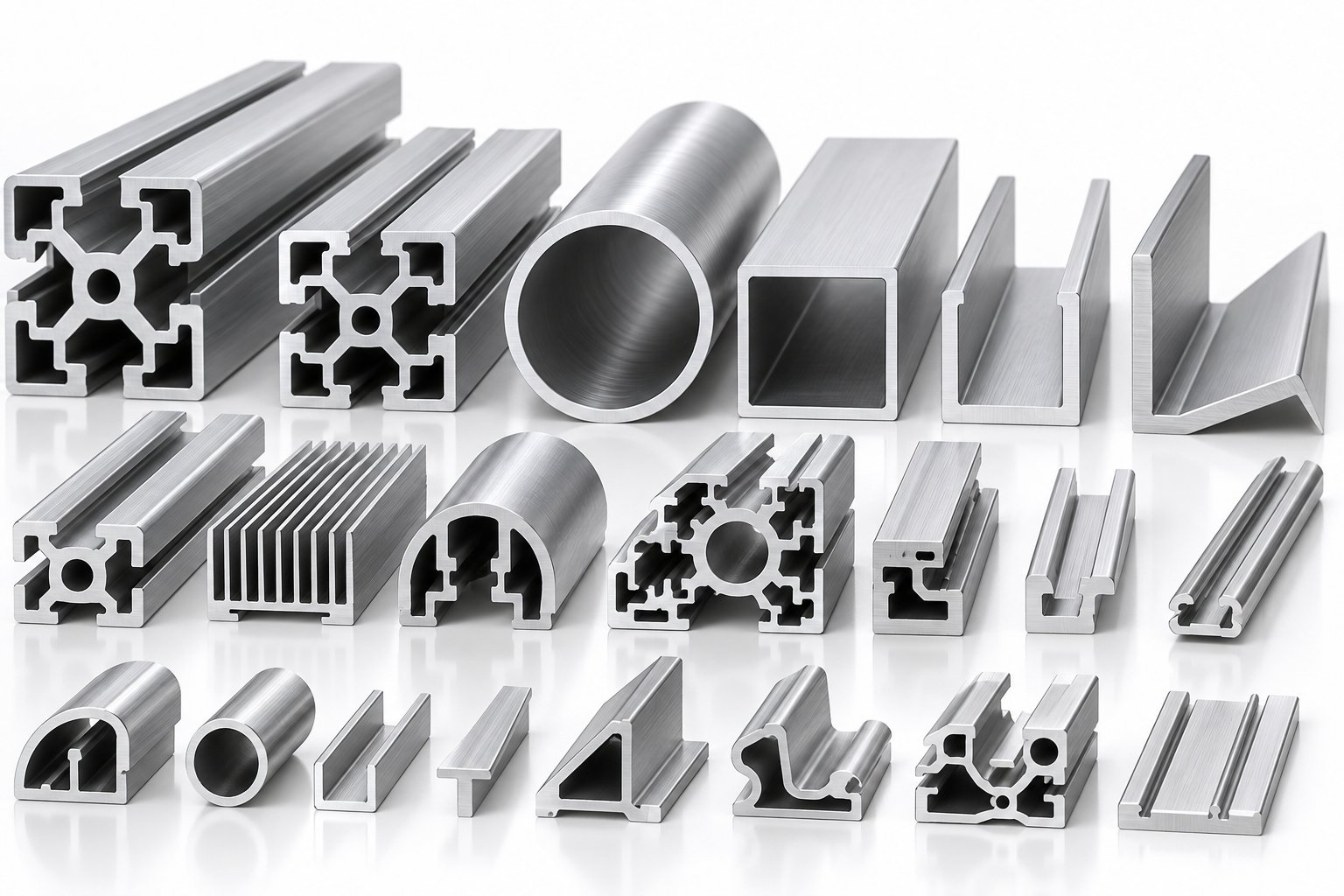
What is aluminum extrusion, and why do its specifications matter so much? When you're sourcing extruded aluminum profiles for engineering or manufacturing projects, the difference between success and costly failure often comes down to one thing: understanding the specifications that govern your material.
Aluminum extrusion material specifications represent the complete technical blueprint that defines every measurable characteristic of an extruded profile. These specifications encompass alloy composition, mechanical properties like tensile and yield strength, temper designations indicating heat treatment conditions, and dimensional tolerances that ensure proper fit and function. Together, they form the language engineers and procurement specialists use to communicate exact requirements to manufacturers.
Imagine ordering thousands of aluminum profiles for a structural application, only to discover they lack the strength your design requires. Or picture architectural extrusions arriving with surface qualities unsuitable for anodizing. These scenarios happen when specifications are overlooked or misunderstood.
To define extruded aluminum properly, you must consider it as a shaped product formed by forcing heated aluminum alloy through a die opening under immense pressure—typically ranging from 1,000 to 15,000 tons according to industry sources. The aluminium extrusion definition extends beyond the process itself to include the precise material characteristics that determine whether your finished product performs as intended.
Proper specification understanding prevents costly material selection errors that can derail projects, waste resources, and compromise structural integrity.
The world of aluminum specifications operates through interconnected standards. ASTM B221M serves as a crucial framework governing production and quality assurance, covering chemical composition, mechanical properties, heat treatment requirements, and dimensional tolerances as outlined by ASTM guidelines. Meanwhile, standards like ANSI H35.2M define permissible dimensional variations, ensuring components fit and function correctly in their intended applications.
What is extruded aluminum worth to your project if you can't verify its properties? This is precisely why understanding specifications matters. The tensile strength of pure aluminum sits around 90 MPa, but heat-treatable alloys can exceed 690 MPa according to materials research. Knowing which alloy-temper combination delivers your required performance is essential.
This guide bridges the gap between paywalled ASTM standards and practical application guidance. Whether you're an engineer selecting materials for aerospace components, a procurement specialist preparing RFQs, or a manufacturer optimizing production processes, you'll find actionable insights to make informed decisions about aluminum extrusion material specifications throughout this resource.
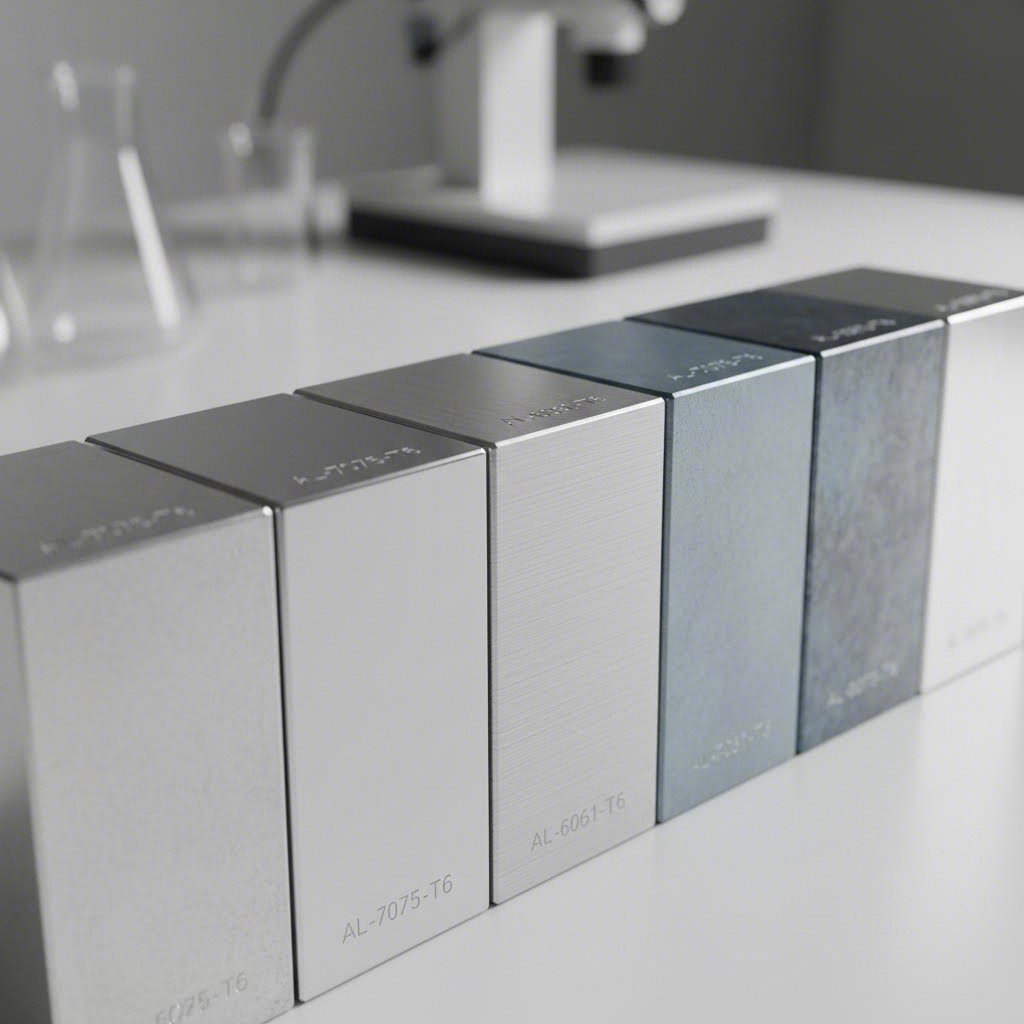
With specifications established as your project's foundation, the next critical decision involves selecting the right alloy. When comparing types of extruded aluminum, you'll encounter a range of options—each engineered for specific performance characteristics. But how do you choose between them?
The answer lies in understanding what each aluminum alloy extrusion brings to the table. From architectural facades requiring flawless finishes to aerospace components demanding exceptional strength, the alloy you select directly impacts mechanical performance, workability, and cost-effectiveness.
| Alloy | Yield Strength (MPa) | Tensile Strength (MPa) | Elongation (%) | Typical Hardness (HB) | Primary Applications |
|---|---|---|---|---|---|
| 6063-T6 | 214 | 241 | 12 | 73 | Architectural, decorative |
| 6061-T6 | 276 | 310 | 17 | 95 | Structural, automotive |
| 6005-T5 | 241 | 262 | 8 | 85 | Rail cars, ladders |
| 6082-T6 | 250 | 290 | 10 | 90 | Bridges, cranes, structural |
| 7075-T6 | 505 | 572 | 11 | 150 | Aerospace, high-stress components |
Note: Values represent typical properties at room temperature. Consult material specifications and supplier data sheets for design allowables. Data sourced from AmesWeb aluminum properties reference.
When engineers discuss 6061 aluminum extrusion versus its siblings, they're comparing alloys that share a common foundation—magnesium and silicon as primary alloying elements—yet deliver distinctly different performance profiles.
The debate around 6063 aluminum vs 6061 often comes down to one question: Do you prioritize surface quality or structural strength? Here's what sets them apart:
The aluminium fatigue strength of 6000-series alloys makes them suitable for applications involving cyclic loading. However, keep in mind that welding these alloys typically reduces strength in the heat-affected zone—a consideration we'll explore further when discussing application requirements.
Sometimes, 6000-series alloys simply won't deliver the mechanical performance your application demands. That's when 7075 extrusion enters the conversation.
With zinc as its primary alloying element, 7075 aluminum extrusion achieves remarkable strength characteristics. According to materials reference data, 7075-T6 delivers yield strength of approximately 505 MPa and tensile strength reaching 572 MPa—nearly double the values of 6061-T6. This positions it among the strongest aluminum alloys available for extrusion.
However, this exceptional strength comes with trade-offs worth considering:
When does 7075 make sense? Aerospace components, high-performance sporting equipment, and precision mechanical parts where the alumina tensile strength requirements exceed what 6000-series alloys can deliver. The elongation percentage of 11% for 7075-T6 indicates it maintains reasonable ductility despite its high strength.
Selecting between these alloys requires balancing mechanical requirements against fabrication considerations, surface finish needs, and budget constraints—factors that become clearer as we examine chemical composition in the next section.
Now that you understand how different alloys compare in mechanical performance, let's explore what actually creates those differences. The secret lies in chemical composition—the precise recipe of elements that transforms pure aluminum into specialized extruded aluminum alloy variants designed for specific applications.
Understanding aluminium classification through chemical composition helps you predict how a material will behave during fabrication and in service. Each alloying element plays a distinct role, and even small percentage changes can significantly alter extrudability, strength, corrosion resistance, and surface finishing quality.
| Element | 6063 Aluminum Alloy (%) | 6061 (%) | 7075 (%) | Primary Function |
|---|---|---|---|---|
| Aluminum (Al) | Balance (97.5 min) | Balance (95.8-98.6) | Balance (87.1-91.4) | Base metal |
| Magnesium (Mg) | 0.45-0.9 | 0.8-1.2 | 2.1-2.9 | Strength enhancement |
| Silicon (Si) | 0.2-0.6 | 0.4-0.8 | 0.4 max | Extrudability, forms Mg2Si |
| Copper (Cu) | 0.1 max | 0.15-0.4 | 1.2-2.0 | Strength (reduces corrosion resistance) |
| Zinc (Zn) | 0.1 max | 0.25 max | 5.1-6.1 | High strength in 7xxx series |
| Chromium (Cr) | 0.1 max | 0.04-0.35 | 0.18-0.28 | Grain structure control |
| Iron (Fe) | 0.35 max | 0.7 max | 0.5 max | Impurity element |
Note: Values represent typical specification ranges per Aluminum Association standards. Actual mill certifications should be verified against project requirements.
Ever wonder why 6063 aluminum alloy flows so smoothly through extrusion dies while 7075 presents challenges? The answer comes down to chemistry—specifically, how magnesium and silicon interact within the aluminum matrix.
In aluminium alloy extrusion, magnesium and silicon combine to form magnesium silicide (Mg2Si), a compound that enables precipitation hardening during heat treatment. According to materials science research, the stoichiometric ratio of magnesium to silicon at 1.73:1 represents the optimal balance for forming this strengthening compound. Here's how key elements influence your extrusion:
The extrusion of aluminium alloys becomes more challenging as total alloying content increases. Pure aluminum extrudes easily, but the strengthening elements that make alloys useful also increase flow stress and reduce extrudability—explaining why complex architectural profiles favor 6063 while simpler, high-strength components might use 7075.
When your extrusion shipment arrives, how do you verify you received the correct material? Mill test certificates—also called material test reports—provide the answer. These documents list the actual chemical analysis of your specific production lot.
Here's what to look for when reviewing composition certificates:
Chemical composition directly connects to practical outcomes you'll care about. Lower copper content in 6063 produces cleaner anodized finishes with more consistent coloring. Higher magnesium in structural alloys delivers the strength your calculations require. And proper silicon levels ensure your supplier's dies produce profiles with the surface quality your project demands.
Understanding these chemical relationships prepares you to evaluate temper designations—the heat treatment conditions that unlock the full potential of your selected alloy chemistry.
You've selected your alloy and verified its chemical composition—but the material story doesn't end there. The same 6061 aluminum can behave completely differently depending on its temper designation. Sounds complex? It's actually a logical system once you understand what's happening at the metallurgical level.
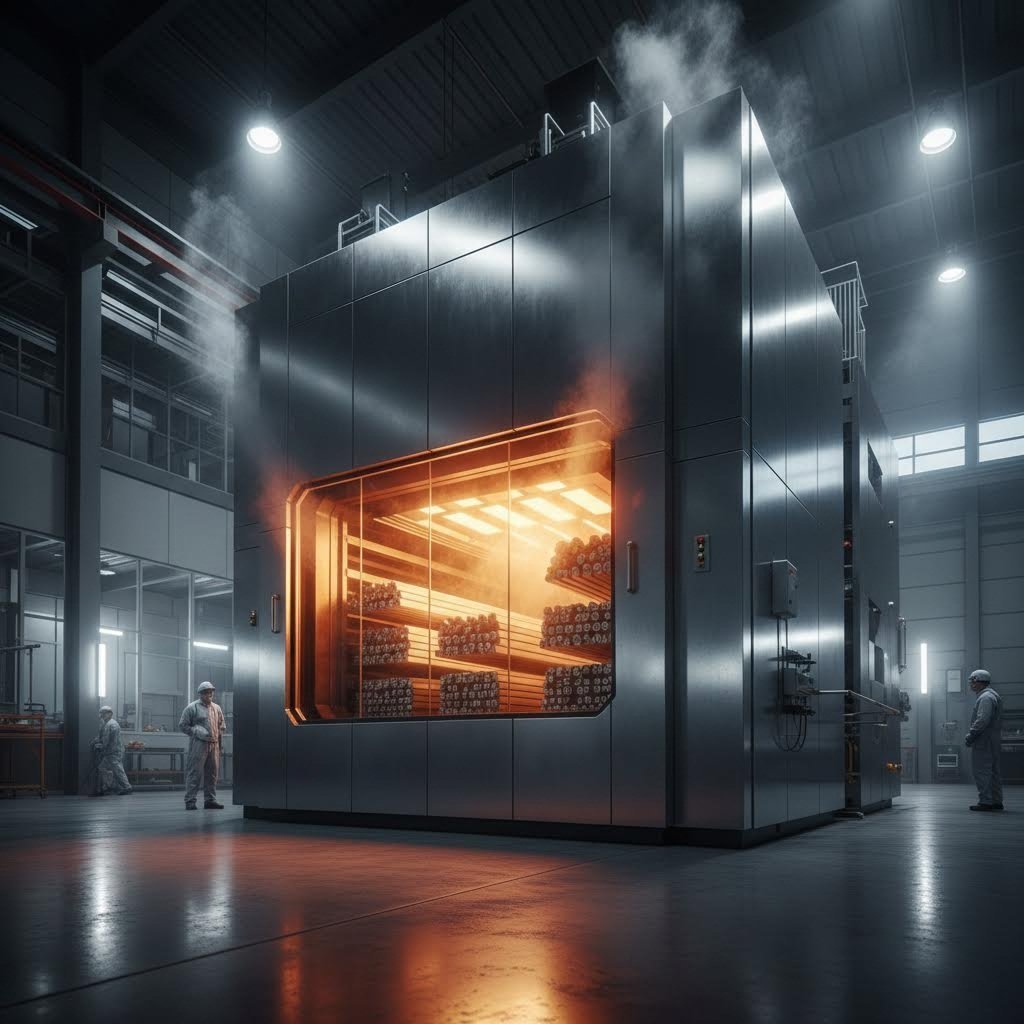
Tempering aluminum involves controlled heating and cooling operations that transform the alloy's internal structure, directly affecting hardness of aluminum, strength, and workability. According to the ANSI H35.1(M) standard, the temper designation system applies to all forms of wrought and cast aluminum alloys, using letters and digits to communicate the exact thermal processing history. Understanding this system—particularly the T-temper codes—ensures you specify materials that meet your project's mechanical requirements.
When you see "6061-T6" on a material specification, that T6 suffix tells you precisely how the aluminum was heat treated. The T designation indicates solution heat treatment, and the following digits specify the exact sequence of thermal and mechanical operations performed.
According to MatWeb's reference guide, the T-temper system uses numerals 1 through 10 to indicate specific heat treatment sequences. Here's what the most common designations mean for your aluminum extrusion projects:
The ANSI H35.2 standard further defines how these temper designations relate to dimensional tolerances and mechanical property requirements. When reviewing specifications, you'll notice that additional digits after the primary temper code—like the "51" in T651—indicate stress-relief treatments that dramatically affect how the material behaves during fabrication.
Here's where many specifications go wrong: engineers select tempers based solely on strength values without considering how the material will perform during manufacturing or in service. Let's explore why specific tempers are chosen for different applications.
When to choose T4:
When to choose T5:
When to choose T6:
When to choose T651:
According to machining industry research, T651 undergoes stretching that "significantly improves dimensional stability, making T651 preferred for applications requiring tight tolerances and consistent machining accuracy." This stress relief minimizes the warping that occurs when residual stresses release during material removal—a common problem with unstress-relieved T6.
The aluminum hardness you achieve depends directly on temper selection. T6 and T651 deliver similar hardness values (around 95 Brinell for 6061), while T4 and T5 produce softer material that machines differently. If your application involves sliding contact or wear resistance, specifying minimum hardness values alongside temper designation ensures consistent performance.
Tempering aluminum isn't just about achieving a number on a data sheet—it's about matching material behavior to your manufacturing process and end-use requirements. A precision aerospace bracket machined from T651 will hold tolerances that the same geometry in T6 might not, simply because the stress-relief stretching eliminated the internal tensions that cause distortion during cutting.
With temper designations clarified, you're ready to understand how hardness testing verifies that your material meets specification—and how different measurement scales relate to the properties you're designing around.
You've specified your alloy and temper—but how do you verify the material actually meets those requirements? Hardness testing provides the answer. It's one of the most practical quality control tools available, offering quick insights into whether your aluminum extrusion will perform as expected in service.
Hardness for aluminum isn't just a single number on a datasheet. The aluminium hardness you measure depends on which testing method you use, and understanding these methods helps you interpret supplier certifications, set appropriate acceptance criteria, and predict how your material will behave during machining and in final applications.
When evaluating hardness of al extrusions, three primary testing methods dominate industry practice: Rockwell, Brinell, and Vickers. Each approaches the measurement differently, and selecting the right method depends on your material, specimen size, and testing environment.
According to materials testing research, here's how each method works:
Why does Rockwell dominate production environments? Speed and simplicity. A Rockwell test takes seconds and displays results directly—no microscope measurements or calculations required. However, when you need to reference ASTM B221 PDF documentation or other specification standards, you'll often find Brinell values listed as the primary hardness requirement for aluminum extrusions.
Imagine receiving a mill certificate showing Brinell hardness when your specification calls for Rockwell values. How do you verify compliance? Hardness scale conversion becomes essential.
According to ASTM E140 guidelines, approximate conversions exist between scales, though exact values vary with material composition and testing conditions. The following table shows typical hardness ranges for common aluminum alloy-temper combinations across multiple scales:
| Alloy-Temper | Brinell (HB) | Rockwell B (HRB) | Vickers (HV) | Rockwell A (HRA) |
|---|---|---|---|---|
| 6063-T5 | 60 | 45 | 68 | 30 |
| 6063-T6 | 73 | 52 | 82 | 35 |
| 6061-T4 | 65 | 48 | 73 | 32 |
| 6061-T6/T651 | 95 | 60 | 107 | 40 |
| 7075-T6 | 150 | 87 | 175 | 53 |
Note: Converted values are approximations based on ASM material data and standard conversion references. Always verify against actual test results for critical applications.
When interpreting these values, keep several practical considerations in mind:
Why specify hardness at all when you already have tensile strength requirements? Because hardness testing is fast, non-destructive (or minimally destructive), and correlates reliably with other mechanical properties.
For 6061-T6 aluminum, the relationship between hardness and strength is well established. At 95 HB, you can expect aluminum tensile strength psi values around 45,000 (310 MPa) and yield strength of approximately 40,000 psi (276 MPa) according to ASM data. This correlation means a quick hardness check on incoming material provides confidence that mechanical properties meet specification—without destroying samples in tensile testing.
When should you specify tighter hardness requirements? Consider these scenarios:
The tensile strength of alumina-reinforced composites behaves differently, but for standard aluminum extrusions, hardness testing remains one of the most efficient quality verification tools available. It bridges the gap between laboratory tensile testing and production floor reality, giving you confidence that your specified temper and mechanical properties are present in the material you receive.
Understanding hardness helps verify your material meets specifications—but dimensional tolerances determine whether your extrusions actually fit your application. Let's examine how industry standards govern the geometric accuracy of extruded profiles.
Your alloy is selected, temper verified, and hardness confirmed—but will the extrusion actually fit your assembly? Dimensional tolerances answer this critical question. They define the acceptable variation in aluminum extrusion dimensions that determines whether your profiles integrate seamlessly or create frustrating fit problems during installation.
Understanding aluminum extrusion tolerances isn't just about reading specification tables. It's about knowing when standard aluminum extrusion profiles meet your needs, when to request precision tolerances, and how those decisions affect both cost and project timelines.
The Aluminum Extrusion Council references tolerance tables published by The Aluminum Association in their "Aluminum Standards & Data" publication. These tables—specifically Tables 11.5 through 11.14 and Tables 12.2 through 12.14—establish both industry standard and precision tolerance requirements that govern extruded aluminum sizes across the industry.
What's the practical difference between standard and precision classes? According to dimensional tolerance research, six primary tolerance categories define aluminum extrusion accuracy:
| Tolerance Category | Standard Grade | Precision Grade | Critical Applications |
|---|---|---|---|
| Angular Tolerance | ±1° typical | ±0.5° or tighter | Window frames, sealing surfaces |
| Flatness | 0.3-0.5mm per 300mm | 0.15-0.25mm per 300mm | Heat sinks, mounting surfaces |
| Straightness | 1mm per meter | 0.5mm per meter | Structural assemblies, linear guides |
| Twist | 1° per meter | 0.5° per meter | Interlocking profiles, sliding systems |
| Shape Deviation | ±0.4mm typical | ±0.2mm or tighter | Decorative profiles, visible assemblies |
| Dimensional Accuracy | ±0.3-0.5mm | ±0.1-0.2mm | Precision mechanical components |
Note: Values represent typical ranges. Actual tolerances vary with profile complexity, wall thickness, and circumscribing circle diameter. Consult aluminum association standards for specific dimensional requirements.
ASTM B221 (imperial) and ASTM B221M (metric) serve as the foundational specifications for aluminum extrusion tolerances in North America. These standards work alongside aluminum association standards to define acceptable variations for:
For aerospace and defense applications, specifications like AMS-QQ-A-200/3 (covering 6061 extrusions) and AMS-QQ-A-225/8 (covering 7075) impose additional requirements beyond commercial ASTM standards. These military and aerospace material specifications often mandate tighter dimensional controls, enhanced inspection protocols, and complete material traceability.
Here's the question every engineer and procurement specialist faces: Should you specify precision tolerances or accept standard grades? The answer depends on your application—and understanding when tighter aluminum extrusion tolerances genuinely add value versus when they simply add cost.
According to industry guidance, dimensional tolerances directly impact safety and functionality. Excessive deviations can cause misaligned components, compromised load-bearing capacity, and assembly failures. For example, an aluminum beam with uneven straightness may create uneven weight distribution, increasing structural failure risk.
When precision tolerances are justified:
When standard tolerances suffice:
The cost implications of specifying tighter tolerances extend beyond the per-piece price. Precision extrusions often require slower production speeds, more frequent die maintenance, additional inspection steps, and higher rejection rates. These factors can add 15-30% to your component cost—sometimes more for complex profiles.
Before specifying precision tolerances, ask: Will this dimensional requirement genuinely improve my product's function, or am I over-engineering at unnecessary cost?
Many extruders can achieve tighter tolerances than published standard tables indicate, as noted by the Aluminum Extrusion Council. This makes tolerance requirements an important discussion topic between designer and extruder early in the project. A collaborative approach often identifies where tighter controls truly matter—and where standard tolerances provide adequate performance at lower cost.
For international projects, remember that B221 uses imperial units while B221M specifies metric values. Ensure your drawings and specifications clearly indicate which standard applies, preventing confusion that can lead to rejected material or costly rework. When working with global supply chains, metric specifications (B221M) often simplify communication with manufacturers outside North America.
With dimensional tolerances understood, you're equipped to match these geometric specifications to specific application requirements—where material selection, tolerance classes, and surface finish work together to meet your project's performance goals.

Now that you understand alloys, tempers, hardness, and tolerances—how do you put it all together? The most effective approach flips traditional specification thinking on its head: start with your application requirements, then work backward to the right material combination.
What are aluminum extrusions used for? The answer spans virtually every industry, from architectural facades to aerospace components. But each application brings unique demands for strength, corrosion resistance, surface finish, and fabrication characteristics. Understanding these aluminum extrusion applications helps you avoid the costly mistake of specifying materials based solely on familiar alloy numbers rather than actual performance needs.
When building with aluminum extrusion for architectural projects, surface appearance often drives material selection more than mechanical properties. Think about it—curtain walls, window frames, and decorative trim are visible elements where surface quality matters as much as structural performance.
For architectural aluminum extrusions, consider these application-specific recommendations:
The anodizing response difference between 6063 and 6061 is significant. If your project requires a consistent, high-quality anodized finish—especially with color matching across multiple extrusion runs—6063's lower alloy content produces more predictable results. Save 6061 for applications where you'll paint, powder coat, or leave the mill finish hidden.
When strength becomes your primary concern, the material selection equation changes. Structural aluminium extrusions must meet calculated load requirements while considering factors like fatigue resistance, connection design, and fabrication methods.
For high-performance aluminum extrusions in industrial applications, match these alloys to your structural needs:
Structural extruded aluminum selection must account for connection methods—particularly welding. Here's a critical consideration many specifications overlook: TIG welding heat-treatable aluminum alloys like 6061-T6 reduces strength in the heat-affected zone by approximately 40 percent. This means a welded connection may be significantly weaker than the base material unless you account for this reduction in your design.
Any aluminum specifier or designer must account for the weakened state of welded members when designing connections for structural applications.
To address weld-related strength loss, consider these strategies:
Saltwater environments demand alloys with exceptional corrosion resistance—a requirement that eliminates some otherwise attractive options. When specifying aluminum for marine applications, copper content becomes a critical factor.
For marine applications, avoid 7075 and other high-strength alloys with elevated copper and zinc content. Their stress corrosion cracking susceptibility in marine environments creates unacceptable risk despite their mechanical property advantages.
Solar panel mounting systems represent one of the fastest-growing aluminum extrusion applications. These outdoor energy systems require profiles that balance strength, corrosion resistance, and cost-effectiveness over 25+ year service lives.
Beyond specific industry recommendations, several cross-cutting factors should influence your alloy selection:
According to alloy selection guidance, no single aluminum extrusion alloy is perfect for all applications. Understanding the limitations of each alloy and determining if they align with your project requirements leads to better outcomes than defaulting to familiar specifications.
With your alloy selected based on application requirements, the next consideration involves surface finish specifications—where material choice, anodizing compatibility, and treatment options work together to achieve your desired final appearance and performance.
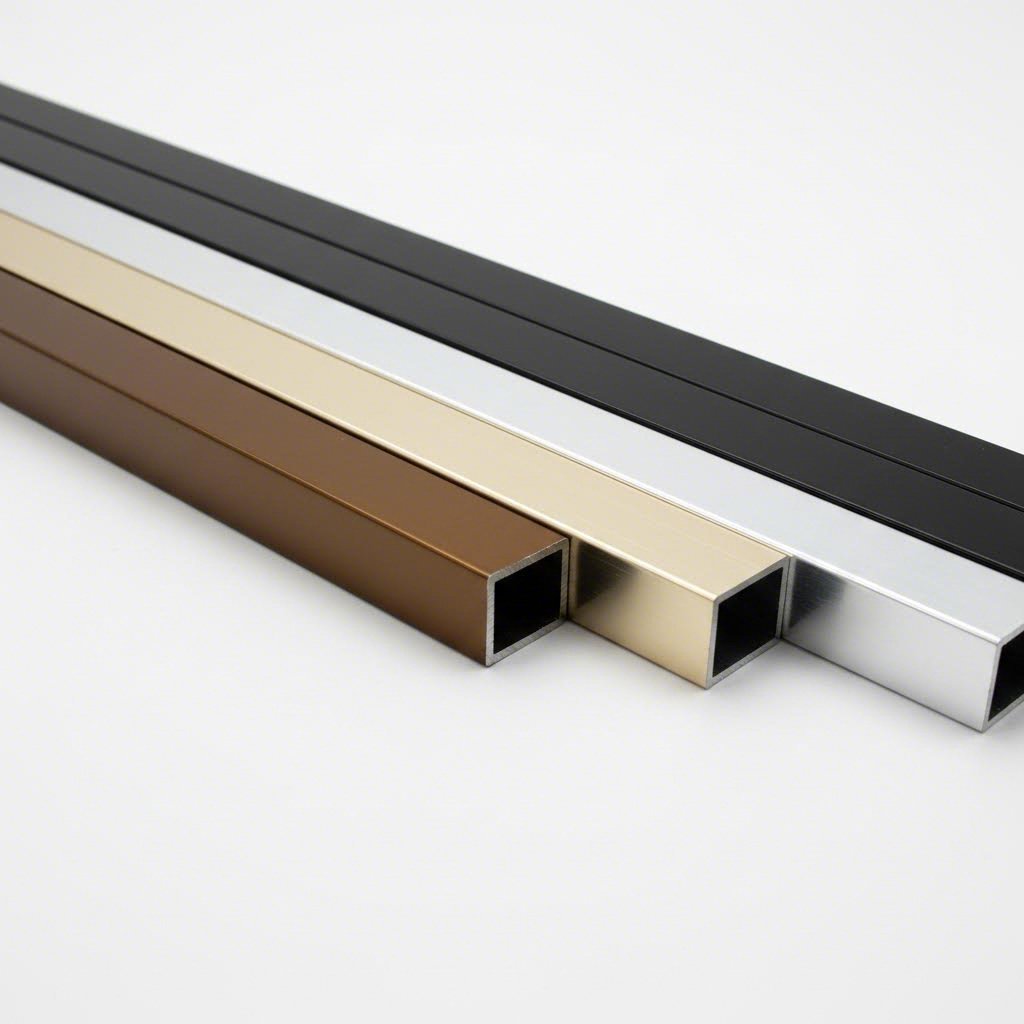
You've selected the right alloy for your mechanical requirements—but will it deliver the surface appearance your project demands? Surface finish specifications bridge the gap between raw extrusion and finished product, determining everything from aesthetic appeal to long-term durability.
When developing your aluminum extrusion design, surface treatment isn't an afterthought—it's a specification that can influence alloy selection from the start. Understanding this relationship helps you avoid costly surprises when profiles arrive at the finishing line.
Every aluminum extrusion leaves the press with a "mill finish"—the as-extruded surface created by the die and cooling process. But what does that finish look like, and when is it acceptable for your application?
Mill finish surfaces exhibit characteristic extrusion lines running parallel to the profile length, along with minor variations in surface texture. For hidden structural components, this finish is often perfectly adequate. However, visible applications typically require additional treatment.
According to aluminum extrusion design guidelines, surface requirements fall into several categories:
The aluminium extrusion design guidelines from industry associations emphasize that surface preparation directly affects final finish quality. A profile destined for high-gloss anodizing requires different handling throughout the supply chain than one receiving industrial powder coating.
Here's where alloy selection and surface finish intersect most dramatically: anodizing response varies significantly between aluminum alloys. According to Aluminum Extrusion Council research, "the importance of knowing the temper of each piece of aluminum anodized" directly impacts quality outcomes including coating weight density and anodic oxide thickness.
Why does 6063 dominate architectural anodizing applications? The answer lies in chemistry. Lower alloying content—particularly copper—produces more uniform oxide layers with consistent coloring. When you specify 6061 for its higher strength, expect these anodizing differences:
For aluminium extruded tubes and profiles requiring color anodizing, 6063 remains the specification of choice. According to industry finish specifications, architectural anodizing follows AAMA 611 standards with Class I (thicker coating for exterior use) and Class II options available in colors ranging from clear through bronze tones to black.
Beyond anodizing, aluminum extrusions accept a range of surface treatments—each with specific specification requirements:
According to specification guidelines, painted finishes meeting AAMA 2605 requirements undergo cleaning, conversion coating for adhesion, primer application, and thermo-cured topcoat application—a multi-step process requiring specialized equipment and quality controls.
When surface finish specifications are critical to your project, partnering with manufacturers offering integrated finishing capabilities streamlines your supply chain. Rather than coordinating between extruders and separate finishing houses, full-service providers handle everything from die development through final surface treatment.
Look for manufacturers offering:
Shengxin Aluminium's surface treatment capabilities exemplify this full-service approach, offering the complete range of finishing options alongside 35 extrusion presses and CNC machining centers. This integration ensures aluminum tube extrusion and complex profiles receive consistent quality from raw material through finished product.
With surface finish specifications established, you're ready to consolidate all these material considerations into actionable procurement guidance—turning your specification knowledge into successful project outcomes.
You've explored alloys, tempers, tolerances, and finishes—but how do you translate this knowledge into a successful procurement process? The gap between understanding specifications and applying them correctly is where many projects stumble. Let's bridge that gap with actionable guidance you can use immediately.
Understanding how aluminum extrusion is made helps you appreciate why clear specifications matter. The extrusion aluminium process involves forcing heated billets through precision dies under tremendous pressure, with every variable—from alloy chemistry to cooling rates—affecting your final aluminium extrusion parts. When you specify materials correctly from the start, you avoid costly revisions, rejected shipments, and project delays.
Before submitting your next request for quotation, work through this prioritized checklist. According to industry best practices, providing complete information upfront streamlines quoting and ensures you receive accurate pricing for your actual requirements.
Even experienced engineers make specification mistakes that create problems downstream. According to aluminum extrusion design research, several common errors appear repeatedly when manufacturers receive new profile designs.
Here's what to watch for—and how to avoid these pitfalls:
Clear specifications prevent costly material selection errors—but they require collaborative dialogue between designer and extruder, not just completed paperwork.
The aluminum extrusion process involves far more than pushing metal through a die. According to supplier collaboration research, successful projects depend on establishing solid partnerships with suppliers who understand your requirements and offer genuine technical support.
What should you look for in an extrusion partner?
Shengxin Aluminium exemplifies this technical partnership approach with over 30 years of industry experience. Their facility houses 35 extrusion presses and state-of-the-art CNC machining centers, providing end-to-end support from die development through finished aluminium extrusion parts. Whether you need custom 6063 architectural profiles or complex industrial components, partnering with experienced suppliers transforms specifications from paperwork into successful products.
Your aluminum extrusion specifications represent more than technical requirements—they're the communication bridge between your design intent and manufactured reality. Master these specifications, partner with capable suppliers, and your projects will deliver the performance your applications demand.
ASTM B221 (imperial) and ASTM B221M (metric) are the foundational specifications for aluminum extrusions in North America. These standards cover chemical composition, mechanical properties, heat treatment requirements, and dimensional tolerances. For aerospace applications, additional specifications like AMS-QQ-A-200/3 for 6061 and AMS-QQ-A-225/8 for 7075 impose stricter requirements including enhanced inspection protocols and material traceability.
The most common aluminum grades for extrusion are from the 6000 series, particularly 6063 and 6061. 6063 is the architectural alloy offering superior surface finish and anodizing response, while 6061 provides higher structural strength for load-bearing applications. For aerospace-grade requirements demanding exceptional strength, 7075 aluminum with zinc as its primary alloying element achieves yield strengths approaching 505 MPa.
Yes, 6061-T6 is widely extruded and serves as the structural workhorse in aluminum extrusion applications. The T6 temper indicates the material has been solution heat treated and artificially aged to achieve maximum strength—approximately 310 MPa tensile strength and 276 MPa yield strength. Its excellent extrudability makes it suitable for automotive, structural, and industrial applications where strength takes priority over surface finish.
The choice depends on whether you prioritize surface quality or structural strength. Choose 6063 for architectural applications requiring flawless anodized finishes and moderate strength. Select 6061 when load-bearing capacity and weldability are primary concerns. Keep in mind that 6063's lower copper content produces more consistent anodizing colors, while 6061's higher strength comes with slightly grayer anodized appearance.
TIG welding heat-treatable aluminum alloys like 6061-T6 reduces strength in the heat-affected zone by approximately 30-40%. This significant reduction must be factored into structural design calculations. To address this, engineers can increase profile thickness near weld locations, use mechanical fasteners instead of welding, position welds at lower-stress areas, or specify post-weld heat treatment to recover some strength.



 Інтернет-сервіс
 0086 136 3563 2360
 sales@sxalu.com
 +86 136 3563 2360
 Українська
 English
 français
 Deutsch
 русский
 español
 português
 العربية
 ไทย
ไทย Việt
Việt